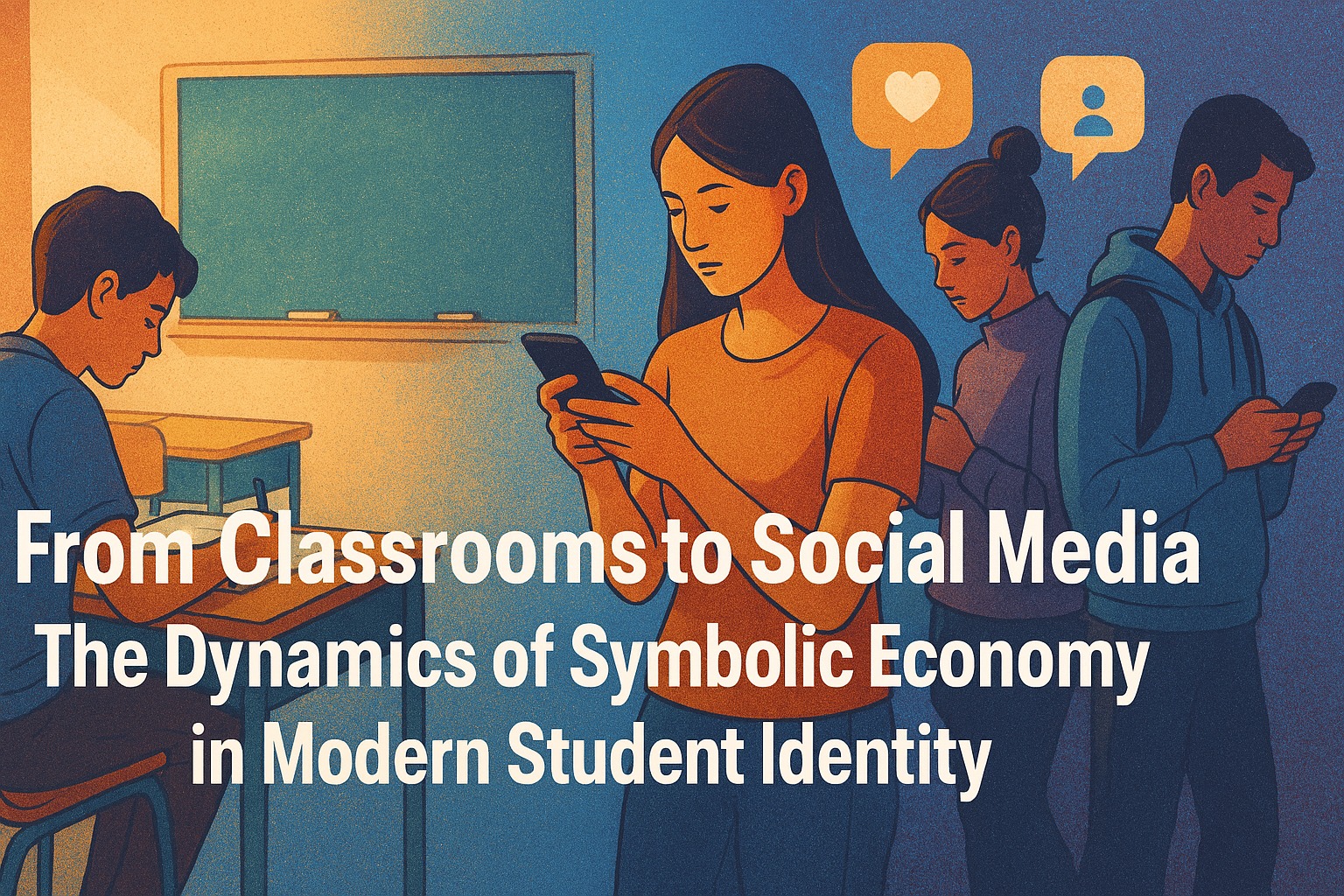
The modern university experience no longer exists solely within lecture halls and libraries. Student identity today is shaped simultaneously in classrooms and across digital platforms. From academic discussions to curated Instagram feeds, the symbolic economy extends beyond physical campuses into virtual spaces.As students navigate both academic expectations and digital visibility, symbolic markers become central in constructing modern student identity. The dynamics of symbolic economy now operate at the intersection of education, technology, and self-presentation.
CAMPUS LIFE IN THE AGE OF DIGITAL EXTENSION
Traditionally, social recognition on campus was earned through academic excellence, leadership roles, and peer engagement. However, the rise of social media platforms such as Instagram and TikTok has transformed how identity is performed and validated.
Students now document academic achievements, internships, conference attendance, and even study routines. Digital storytelling amplifies symbolic signals, turning everyday academic activities into publicly consumed narratives.
SYMBOLIC ECONOMY IN ONLINE SPACES
In digital environments, visual aesthetics, follower counts, and engagement metrics function as new forms of symbolic capital. A well-designed personal brand can elevate a student’s perceived influence, even before professional credentials are established.
The classroom may assess knowledge, but social media often assesses visibility. The merging of these spaces creates a hybrid system in which offline achievement and online presentation mutually reinforce one another.
CURATED IDENTITY AND SOCIAL COMPARISON
Modern student identity is increasingly curated. Photos of minimalist study desks, branded laptops, and international experiences construct an aspirational narrative. While such representation may inspire motivation, it can also intensify social comparison.
Students may feel compelled to align their academic journeys with digitally dominant standards of success. This pressure can blur the line between authentic growth and performative identity construction.
THE ROLE OF SYMBOLIC CAPITAL IN SELF-BRANDING
The theory of symbolic capital, introduced by Pierre Bourdieu, remains relevant in explaining these dynamics. In digital academic culture, symbolic capital accumulates through recognition, shares, endorsements, and network connections.
Students who successfully integrate intellectual competence with digital branding often gain broader opportunities, including collaborations and professional exposure.
RISKS AND OPPORTUNITIES
The expansion of symbolic economy into social media presents both advantages and challenges. On one hand, students can build personal brands, showcase achievements, and access global networks. On the other hand, constant visibility may foster anxiety, perfectionism, and identity fragmentation.
The key challenge lies in balancing authenticity with strategic presentation.
CONCLUSION
From classrooms to social media, the symbolic economy shapes modern student identity in profound ways. Academic competence alone no longer defines recognition; digital representation and symbolic visibility play equally significant roles.
Universities must encourage digital literacy and critical awareness so that students can navigate symbolic competition responsibly while preserving genuine intellectual development.
About the Author
Gusti Ayu Tita
Author — STEKOM University
An active author focused on academic issues, educational technology, and human resource development in the campus environment.