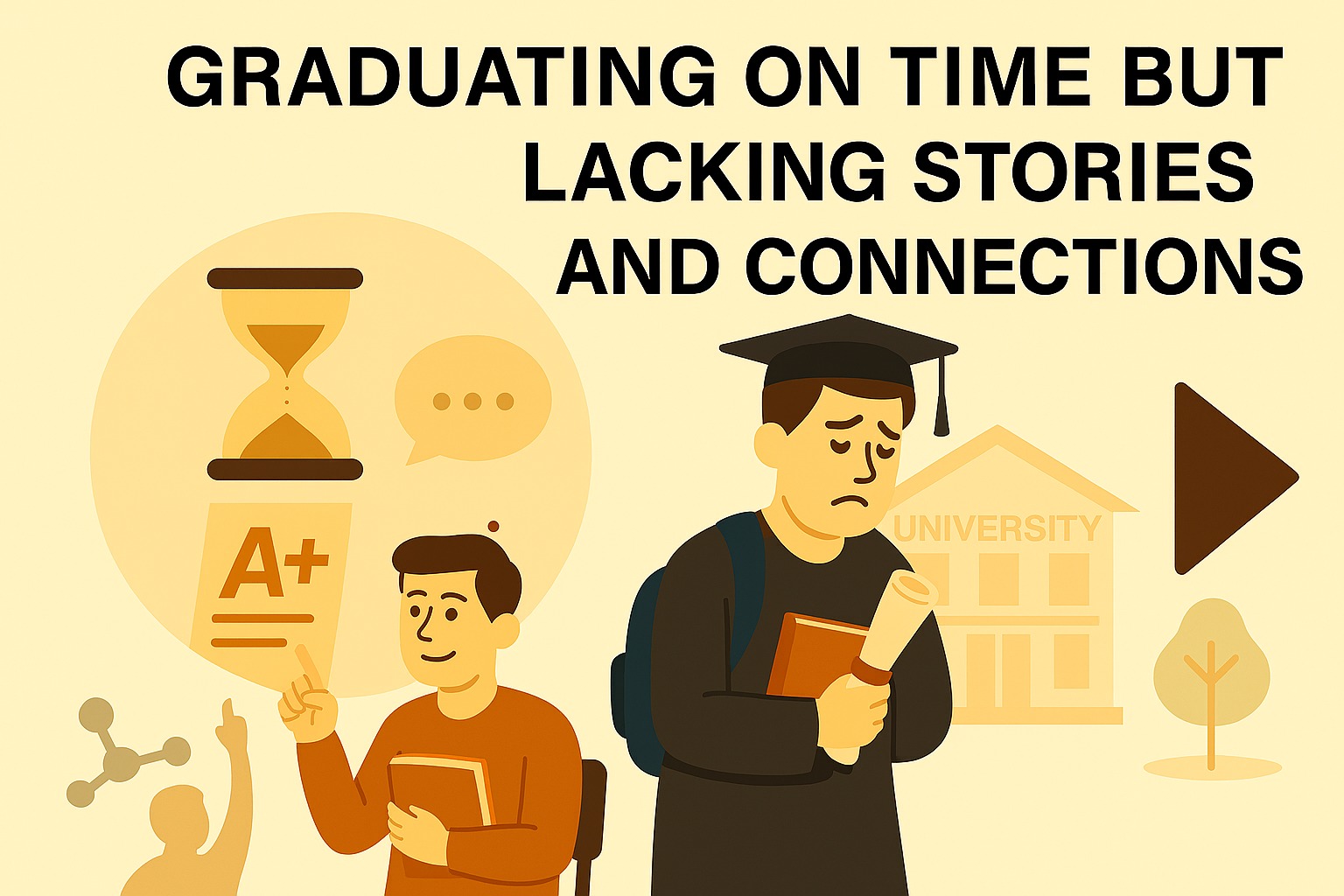
Graduating on time is an achievement many students proudly pursue. Completing courses as scheduled, meeting academic requirements, and earning a degree without delay demonstrate discipline and focus. However, finishing college on time does not automatically guarantee a meaningful or well-rounded experience.
Some students cross the graduation stage with impressive transcripts but realize they lack memorable stories, strong networks, and practical exposure. In a competitive world, these missing elements can quietly affect long-term success.
THE PRESSURE TO FINISH QUICKLY
For many students, the primary goal is efficiency. They aim to avoid extended semesters, minimize costs, and move directly into the workforce. This mindset encourages strict focus on coursework and academic milestones.
While this approach is practical, it may also limit exploration. Students who prioritize speed often decline extracurricular opportunities, internships, or campus involvement because they fear distractions from their main objective.
Over time, the college journey becomes a checklist rather than a transformative chapter.
WHY STORIES MATTER BEYOND A DIPLOMA
Stories reflect experience. They reveal how a student handled challenges, led initiatives, collaborated with teams, or adapted to unexpected situations. During job interviews or professional networking events, these stories become powerful evidence of capability.
Without real experiences to draw from, graduates may struggle to differentiate themselves. Academic achievements are important, but personal narratives demonstrate character, resilience, and initiative—qualities employers highly value.
Meaningful stories are built through participation, not observation.
THE POWER OF CONNECTIONS IN COLLEGE
Connections formed during college can shape future opportunities. Friendships evolve into professional partnerships. Mentors become references. Peers introduce new career paths.
Students who limit their involvement to classrooms often interact with only a small circle. As a result, their network remains narrow. A broader campus presence—through organizations, events, and collaborative projects—expands both perspective and opportunity.
Strong connections can open doors long after graduation day.
BALANCING TIMELY GRADUATION AND FULL ENGAGEMENT
Graduating on time and gaining rich experiences are not mutually exclusive goals. With effective time management, students can maintain academic progress while participating in meaningful activities.
Joining one organization, applying for internships during semester breaks, or attending professional seminars can create valuable exposure without delaying graduation. The key lies in intentional involvement rather than excessive commitments.
Small but consistent engagement can lead to lasting impact.
BUILDING A COLLEGE JOURNEY WORTH REMEMBERING
College is more than a race to the finish line. It is a period of exploration, growth, and connection. Students who invest time in building relationships and embracing opportunities often graduate with both competence and confidence.
When graduation arrives, the diploma should represent more than completed credits. It should symbolize experiences gained, challenges overcome, and networks built.
Graduating on time is commendable. Graduating with meaningful stories and strong connections, however, creates a foundation for long-term success.
About the Author
Gusti Ayu Tita
Author — STEKOM University
An active author focused on academic issues, educational technology, and human resource development in the campus environment.