In modern life filled with demands, endless choices, and an overflow of information, people are increasingly vulnerable to feeling overwhelmed. Many are unaware that the greatest burdens in life do not always come from work or major problems, but from the accumulation of small things that disturb the mind every day.
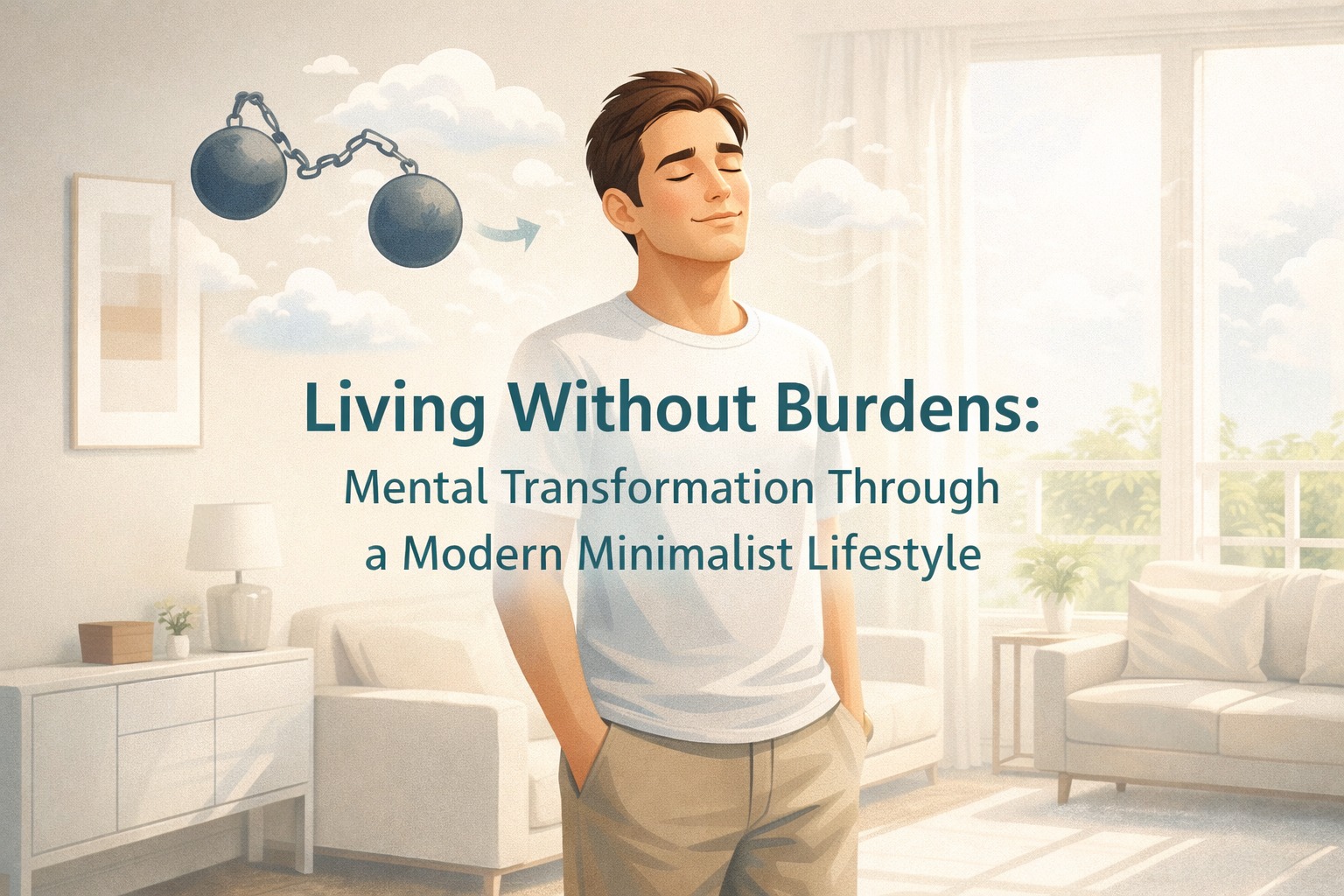
Amid these conditions, the modern minimalist lifestyle emerges as an approach capable of creating mental transformation—helping individuals live more lightly, stay focused, and find inner peace.
Modern minimalism is no longer merely about owning fewer possessions; it is a journey of simplifying life so that mental energy can be directed toward what truly matters. This article explores how minimalism can transform the way we think, feel, and live our daily lives.
WHAT IS MODERN MINIMALISM?
Modern minimalism is a lifestyle approach that emphasizes choosing what is essential while letting go of what adds no value. It adapts to the needs of contemporary life, making it flexible rather than rigid or extreme. Its primary focus is quality of life, not the quantity of possessions.
Modern minimalism includes:
- Simplifying physical belongings
- Managing digital consumption
- Organizing activities and time
- Filtering social relationships
- Strengthening self-awareness
The less “noise” we have in life, the clearer our minds become in recognizing what truly matters.
WHY DO WE LIVE WITH INVISIBLE BURDENS?
Mental burdens are not always obvious. They can stem from overly packed routines, excessive information, or social expectations we unconsciously follow. Common sources of mental burden include:
- Visual clutter from crowded rooms or messy workspaces
- Digital distractions that gradually steal focus
- Productivity pressure that makes us feel the need to always be busy
- Social comparison fueled by social media
- Small daily decisions that accumulate and drain mental energy
All of these factors quietly weigh on the mind. Minimalism offers a way to gradually release these burdens.
MENTAL TRANSFORMATION THROUGH A MINIMALIST LIFESTYLE
Adopting modern minimalism has a profound impact on mental well-being. This transformation occurs through simplifying life, redefining priorities, and removing elements that disrupt inner calm.
1. A Calmer Mind
When environments are more organized and distractions are reduced, the brain no longer needs to process excessive visual and informational stimuli, creating a more stable sense of calm.
2. Improved Focus
Minimalism helps reduce distractions and encourages choosing meaningful activities, resulting in stronger concentration.
3. More Stable Emotional Energy
Living with fewer burdens reduces stress and allows emotions to remain more balanced, as we are no longer weighed down by unnecessary matters.
4. Clearer Decision-Making
With fewer insignificant choices, making decisions becomes easier, faster, and more intentional.
5. Higher-Quality Social Relationships
By filtering social connections, we can devote time and energy to people who truly bring positive value into our lives
This transformation does not happen overnight, but consistent small changes create powerful long-term results.
MODERN MINIMALIST STRATEGIES FOR A LIGHTER LIFE
Practicing minimalism does not require extreme measures. Here are gradual strategies that can be applied:
- Physical Decluttering
Start with small areas such as drawers or desks and remove items that are rarely used.
*Explanation:* A clean environment helps the brain relax and increases comfort.
- Reducing Digital Consumption
Limit social media use and curate accounts that provide real value.
*Explanation:* Excessive digital consumption increases anxiety and reduces focus.
- Simplifying Schedules
Review daily routines and remove activities that offer no long-term value.
*Explanation:* Overpacked schedules drain emotional energy more quickly.
- Applying “Essential Priorities”
Set three important goals to accomplish each day.
Explanation: Focusing on fewer priorities leads to better results and less stress.
- Managing Mental Space
Train yourself to stop overthinking things beyond your control.
Explanation: A clear mental space promotes emotional stability.
- Learning to Let Go
Release possessions, relationships, habits, or expectations that are no longer relevant.
Explanation: Letting go creates room for growth and renewal.
Each small step serves as a foundation for building a simpler yet more meaningful lifestyle.
THE LONG-TERM IMPACT OF MINIMALISM ON MENTAL HEALTH
Minimalism is not just an external change—it deeply affects emotional well-being:
- Sustained calmness through organized environments and schedules
- Increased self-awareness through intentional choices
- Natural productivity without excessive pressure
- More authentic happiness aligned with personal values
- Greater life satisfaction due to focused attention and a lighter mind
Modern minimalism helps individuals build a stronger, healthier mindset that aligns with the demands of contemporary life.
CONCLUSION
Mental transformation through a modern minimalist lifestyle is not about living with as little as possible, but about living with awareness. By choosing what matters, releasing unnecessary burdens, and maintaining a clear mental space, we can create a lighter and more fulfilling life.
Living without burdens is not an unattainable ideal. It begins with small actions—organizing a desk, limiting digital time, or making a simple decision to prioritize oneself. When life becomes simpler, the mind naturally rediscovers its calm.
Keywords:**
About the Author
Gusti Ayu Tita
Author — STEKOM University
An active author focused on academic issues, educational technology, and human resource development in the campus environment.