
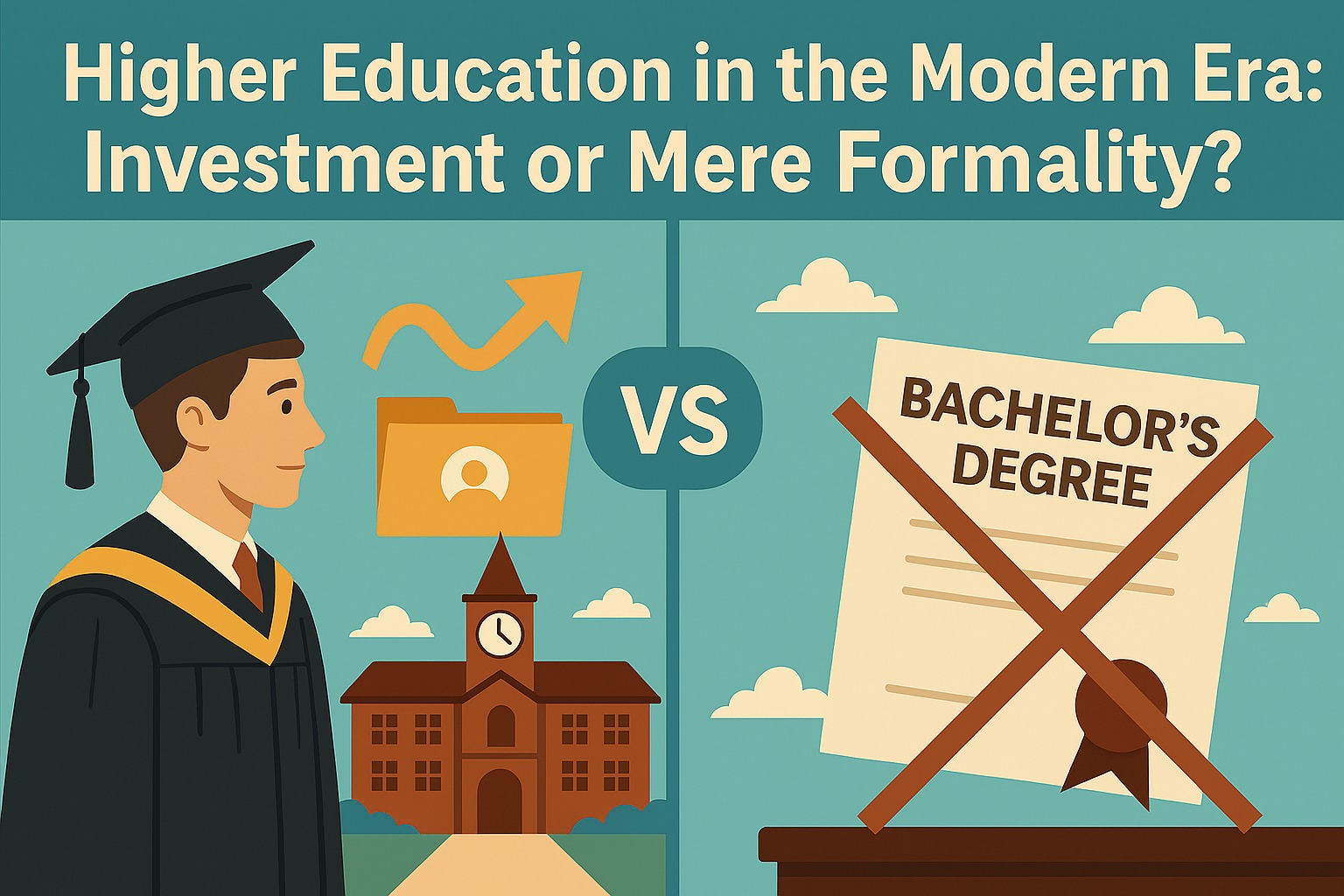
Higher education has long been considered a powerful stepping stone toward career advancement and financial stability. Yet in the modern era—shaped by rapid technological change, digital disruption, and alternative learning platforms—many people are reexamining its true value. Is higher education still a meaningful investment, or has it become merely a formality in today’s competitive world?
As industries evolve and hiring practices shift, understanding the real impact of higher education is essential for students, parents, and professionals planning their future.
THE CHANGING LANDSCAPE OF EDUCATION AND EMPLOYMENT
The global workforce has transformed significantly over the past decade. Automation, artificial intelligence, and remote work have redefined job roles and required competencies. Employers now seek adaptable individuals who can apply knowledge effectively in dynamic environments.
At the same time, online courses, professional certifications, and short-term training programs offer faster and often more affordable alternatives to traditional degrees. These developments have sparked debate about whether a university diploma remains essential for career success.
However, the transformation of the job market does not automatically diminish the importance of structured academic learning.
HIGHER EDUCATION AS A LONG-TERM INVESTMENT
Higher education offers more than just a diploma. Universities provide systematic learning, critical thinking development, research opportunities, and exposure to diverse perspectives. These elements contribute to intellectual maturity and professional readiness.
Graduates often benefit from expanded career opportunities and higher earning potential over time. In regulated fields such as medicine, law, engineering, and education, formal degrees remain mandatory. In these sectors, higher education is clearly an investment rather than a choice.
Moreover, campus environments foster networking, mentorship, and collaboration, which can significantly influence long-term career growth.
WHEN EDUCATION BECOMES A FORMALITY
Higher education may feel like a mere formality when pursued without clear goals or active engagement. Students who rely solely on academic credentials without developing practical skills or real-world experience may struggle in competitive industries.
In fast-moving sectors like technology, digital marketing, and creative media, employers frequently prioritize demonstrable skills and portfolios. Without complementary experience, a degree alone may not guarantee employment.
Therefore, the value of higher education often depends on how effectively individuals leverage their academic journey.
ADAPTING TO THE MODERN ERA THROUGH CONTINUOUS LEARNING
The modern era demands continuous learning. Professionals must regularly update their skills to remain relevant in a rapidly changing marketplace. Combining traditional education with online certifications, internships, and hands-on projects can strengthen employability.
Rather than viewing higher education and alternative learning as opposing paths, many successful individuals integrate both. A degree can provide foundational knowledge, while specialized training ensures industry alignment.
The key lies in strategic planning and proactive self-development.
CONCLUSION
Higher education in the modern era is neither purely an investment nor merely a formality—it can be either, depending on how it is approached. When pursued with purpose, engagement, and continuous skill development, it remains a powerful long-term investment.
However, relying solely on a diploma without adapting to evolving industry demands may limit its impact. In today’s world, success is shaped by a balanced combination of formal education, practical expertise, and lifelong learning.
About the Author
Gusti Ayu Tita
Author — STEKOM University
An active author focused on academic issues, educational technology, and human resource development in the campus environment.



