
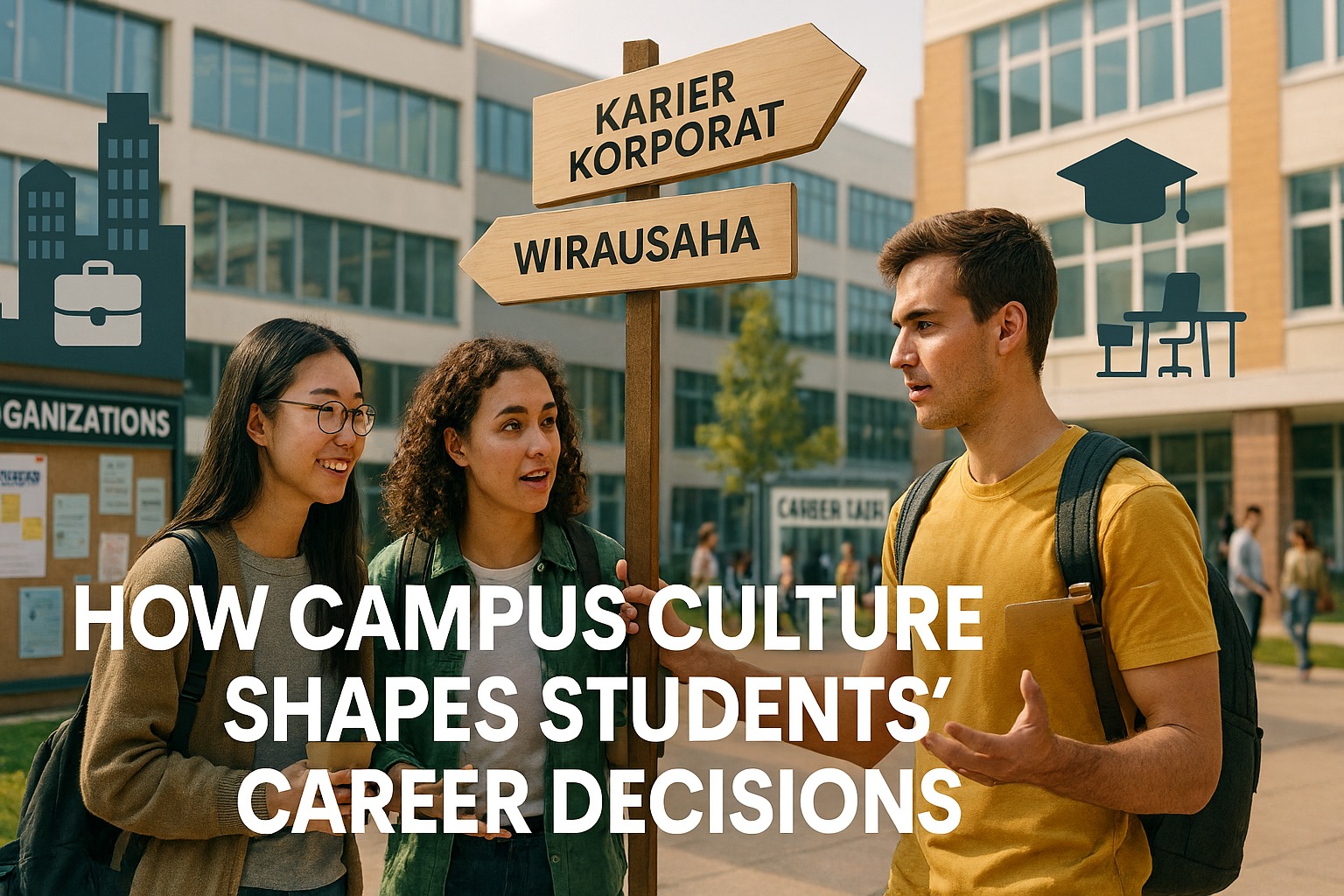
Choosing a career is rarely a purely individual decision. For many students, the university environment plays a powerful and often subtle role in shaping professional goals. Campus culture influences how success is defined, which industries are celebrated, and what paths are considered safe or prestigious.
From classroom discussions to student organizations, every aspect of university life contributes to how students see their future. Understanding how campus culture shapes students’ career decisions is essential for educators, parents, and students who want to make thoughtful and authentic choices.
THE MEANING OF CAMPUS CULTURE
Campus culture refers to the shared values, norms, expectations, and habits that define daily life in a university environment. It includes academic standards, social dynamics, leadership structures, and even informal traditions that shape student behavior.
Every university develops its own identity. Some campuses emphasize research and academic excellence, while others focus on entrepreneurship, activism, or industry connections. These dominant values gradually influence how students measure achievement.
Students are constantly exposed to messages about what success looks like. If high-paying corporate jobs are frequently celebrated, students may feel encouraged to pursue similar paths. If social impact projects receive more recognition, different ambitions may grow.
Over time, this environment becomes a silent guide. Even without direct pressure, students absorb expectations that shape how they imagine their professional future.
PEER INFLUENCE AND SOCIAL COMPARISON
Peers play a significant role in career decision-making. Students often observe what their friends are applying for, which internships are considered impressive, and which industries attract the most attention.
Social comparison can be motivating, but it can also create pressure. When many classmates aim for competitive sectors like consulting or technology, others may question their own interests if they differ from the trend.
Conversations in study groups, dormitories, and student communities frequently revolve around achievements. Internship offers, scholarships, and job interviews become benchmarks of success that influence collective aspirations.
As a result, career decisions may shift from personal passion to social alignment. Students sometimes adjust their goals to match what feels accepted or admired within their campus circle.
THE ROLE OF ACADEMIC ENVIRONMENT AND FACULTY
Faculty members and academic systems strongly shape professional direction. Professors not only teach theory but also model career pathways through their own experiences and networks.
When lecturers emphasize research excellence, students may be inspired to pursue postgraduate studies. When practical industry collaboration is prioritized, corporate careers may seem more attractive and accessible.
Academic evaluation systems also matter. If grades and awards are closely tied to specific skills, students may develop strengths aligned with certain professions. Recognition influences confidence, and confidence influences career choice.
Moreover, mentorship plays a critical role. Guidance from trusted lecturers can validate a student’s interest or redirect them toward opportunities they had not previously considered.
ORGANIZATIONAL INVOLVEMENT AND LEADERSHIP EXPERIENCE
Student organizations provide more than extracurricular activity. They function as training grounds where students discover interests, develop soft skills, and build professional networks.
Leadership roles can significantly shape identity. A student active in debate clubs may develop confidence in public speaking, while involvement in entrepreneurship communities may spark interest in startups.
Exposure to real projects through campus organizations often clarifies career preferences. Practical experiences help students understand whether they enjoy teamwork, strategy, creativity, or structured systems.
In many cases, these organizational experiences become turning points. They transform abstract academic knowledge into tangible professional direction.
COMPETITIVE ATMOSPHERE AND CAREER PRESTIGE
Some campuses cultivate highly competitive environments. Achievement is visible and frequently compared, creating a culture where students strive to outperform one another.
Competition can drive growth, pushing students to improve their skills and aim higher. However, it may also narrow definitions of success. Certain careers gain prestige, while others receive less recognition.
When prestige dominates the narrative, students may pursue roles associated with status rather than genuine interest. High salaries, international exposure, or brand reputation can overshadow personal fulfillment.
Balancing ambition with authenticity becomes challenging in such environments. Students must actively reflect on whether their choices reflect their own values or external expectations.
BUILDING A CONSCIOUS AND AUTHENTIC CAREER PATH
Understanding campus culture allows students to make more mindful decisions. Instead of passively following trends, they can evaluate how environmental influences shape their thinking.
Self-awareness is essential. Students benefit from asking themselves whether their goals align with personal strengths and long-term aspirations, not just campus norms.
Universities also carry responsibility. By promoting diverse career paths and celebrating multiple definitions of success, institutions can create healthier environments for decision-making.
Ultimately, campus culture will always influence students’ career decisions. The key is not to eliminate influence but to recognize it, reflect on it, and choose consciously.
About the Author
Gusti Ayu Tita
Author — STEKOM University
An active author focused on academic issues, educational technology, and human resource development in the campus environment.



