
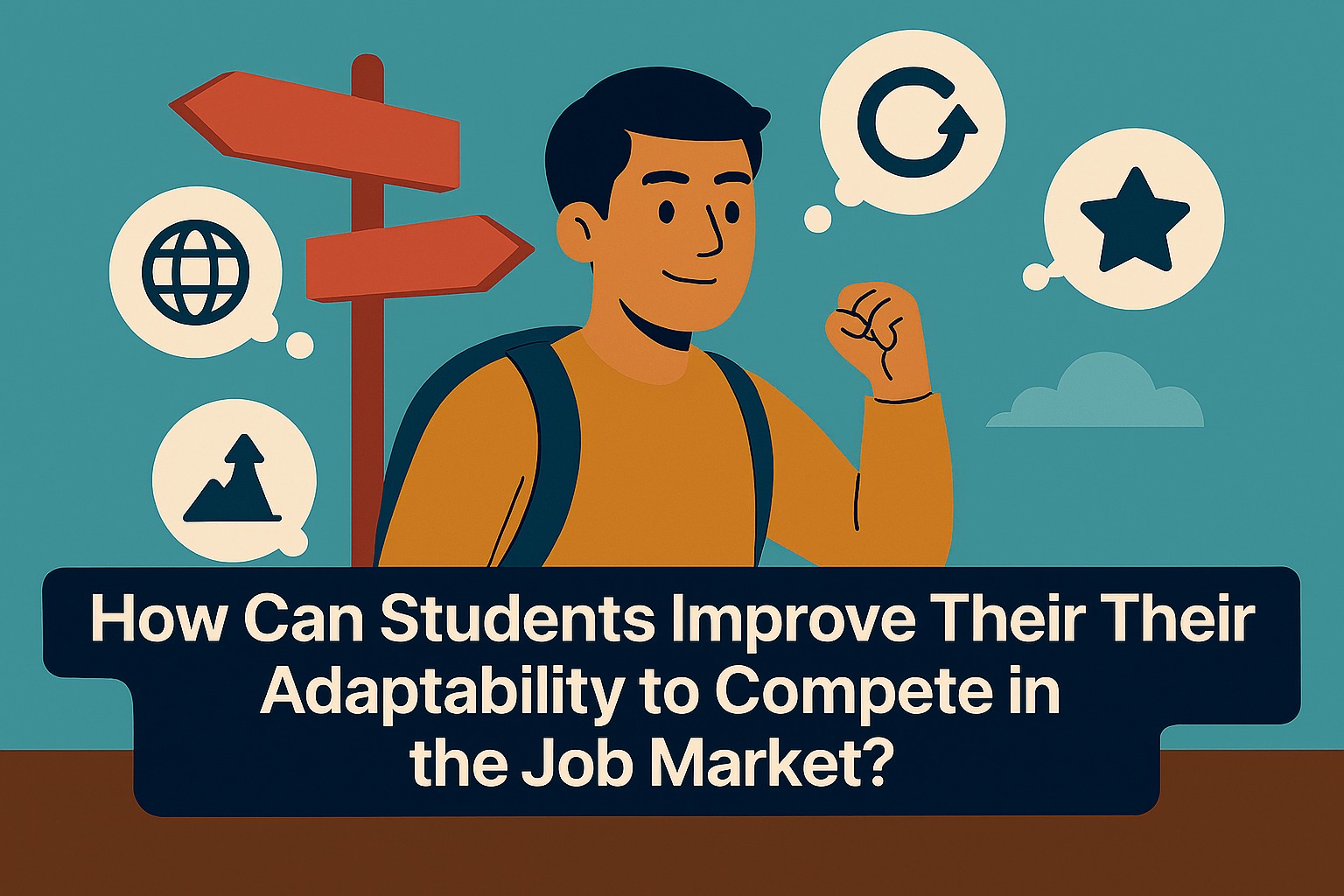
Facing the increasingly competitive job market requires more than just technical skills. One crucial factor determining a student’s success in the workforce is their adaptability skills . Adaptability is not only important in terms of technological or industrial changes but also in dealing with diverse work environments and company cultures. This article will discuss how students can improve their adaptability skills to prepare themselves for career competition in the
THE IMPORTANCE OF ADAPTABILITY IN THE WORKFORCE
In the workforce, change is inevitable. Technology continues to evolve, industry trends shift, and even company cultures may transform. Therefore, the ability to adapt quickly becomes essential to survive and thrive in the workforce. Students who can adapt to various changes will have an easier time adjusting and discovering new opportunities.
Adaptability is not just about external changes but also about internal changes that individuals need to make to grow personally and professionally. Students who are accustomed to adapting to change early on will have a competitive advantage when entering the workforce.
LEARNING TO FACE CHANGE WITH A POSITIVE ATTITUDE
One way to improve adaptability is by developing a positive attitude toward change. Students who view change as a challenge and an exciting opportunity will find it easier to adapt than those who tend to resist or feel intimidated by it. With an open and flexible mindset, students will be better prepared to face changes in the workforce.
For example, if new technology is introduced at work, students with a positive attitude will quickly learn how to use it effectively. On the other hand, those who are not open to change may struggle and feel anxious, which ultimately affects their performance.
IMPROVING INTERPERSONAL COMMUNICATION SKILLS
The ability to communicate with others is also a part of adaptability skills. Good interpersonal communication will help students interact with various parties, whether bosses, colleagues, or clients. In the workplace, these communication skills will help students better understand company expectations and culture, and adapt to new environments.
With effective communication, students can prevent misunderstandings, build better relationships with colleagues, and contribute more to teams. Therefore, students need to practice their communication skills through various activities, both on and off campus, to better adapt in the workplace.
ENGAGING IN TRAINING AND FIELD EXPERIENCES
One of the best ways to enhance adaptability is by participating in training or gaining field experiences relevant to the field of interest. These experiences give students an opportunity to directly interact with challenges present in the workforce and learn to adapt to conditions that may not be encountered in the classroom.
Internships, volunteer projects, or extracurricular activities provide valuable insights and speed up the adaptation process for students. Through direct experiences, students can practice the skills they've learned, tackle challenging situations, and expand their adaptability skills.
DEVELOPING EMOTIONAL INTELLIGENCE (EQ)
Emotional intelligence (EQ) is the ability to recognize, understand, and manage one’s own emotions and the emotions of others. In the context of adaptability, EQ is crucial because it helps students stay calm and focused even in stressful situations. Students with high EQ are better at managing stress, empathizing with others, and adapting quickly in new work environments.
EQ also plays a significant role in social interactions at the workplace. Students with good EQ can adapt to various characters and work styles, making it easier for them to build positive and productive professional relationships.
IMPROVING PROBLEM-SOLVING SKILLS
Problem-solving ability is an important part of adaptability skills. The workforce often presents unexpected and challenging situations. Students with good problem-solving skills will be better equipped to find solutions to obstacles that arise.
Creative thinking and finding new ways to solve problems are highly valued skills by employers. Students who can overcome challenges with innovative approaches will stand out in the workforce, and they will also find it easier to adapt to the changes that occur.
CONCLUSION
Adaptability skills are essential for students to face the increasingly competitive job market. By developing a positive attitude toward change, improving interpersonal communication, engaging in field experiences, and strengthening emotional intelligence, students will be better prepared to adapt to the challenging work environment.
Moreover, problem-solving skills and managing unexpected situations are equally important in building adaptability. Students who can adapt quickly will be more prepared for success in an ever-changing job market, and they will open up greater opportunities to grow in their careers.
About the Author
Gusti Ayu Tita
Author — STEKOM University
An active author focused on academic issues, educational technology, and human resource development in the campus environment.



