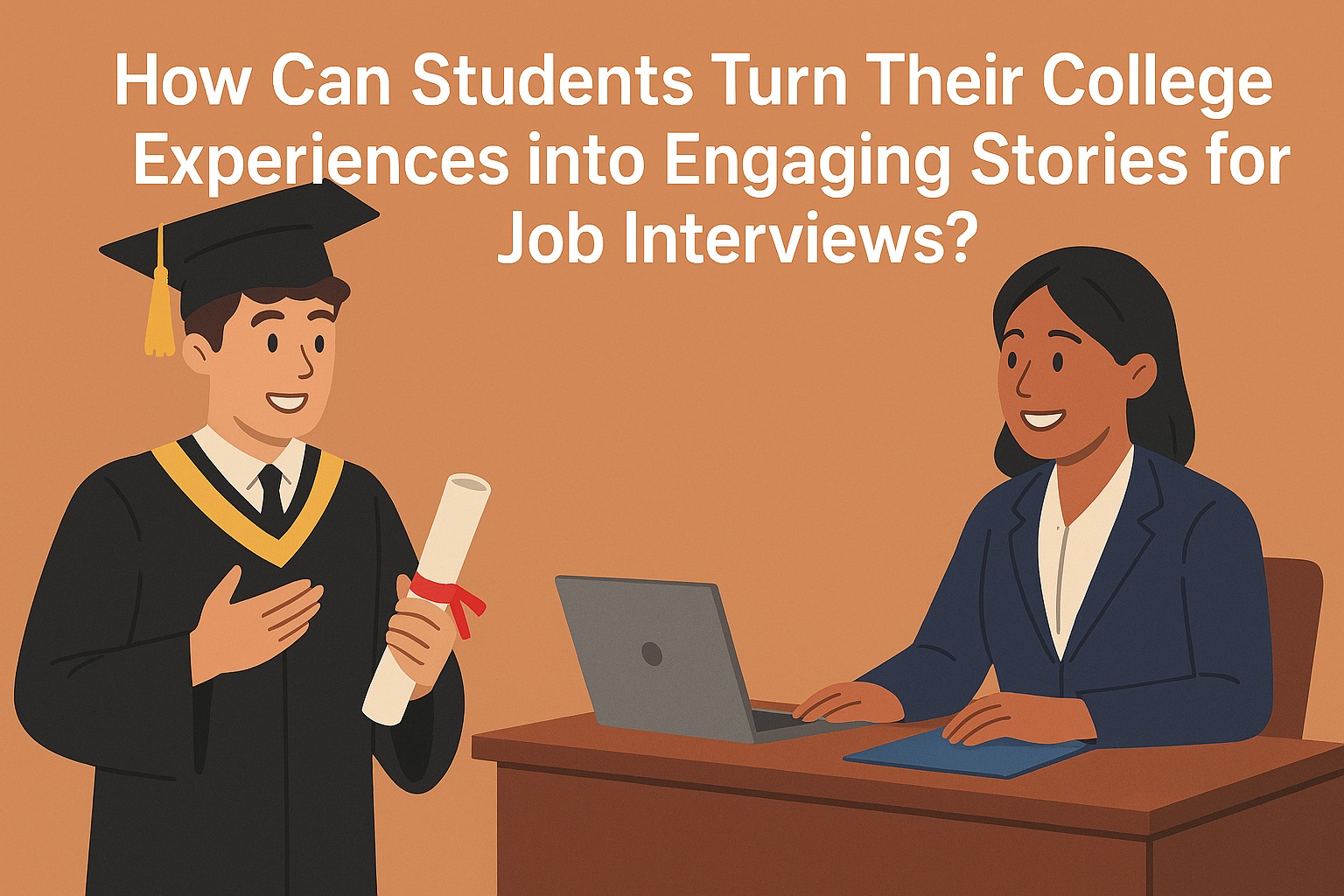
Many students might feel nervous when facing a job interview. One of the biggest challenges is how to convey their diverse college experiences in an interesting and relevant way. After all, college experiences are not always directly related to the job they're applying for. However, with the right approach, students can transform their college experiences into compelling stories that capture the interviewer's attention. So, how can they do this? Check out the explanation below.
1. IDENTIFY RELEVANT EXPERIENCES
The first step is to select college experiences that are relevant to the job position you're applying for. These experiences could include group projects, organizational activities, or even academic challenges that were successfully overcome. For instance, if you’re applying for a managerial role, talking about your experience in managing projects or teams would be more relevant than discussing social activities unrelated to the job.
It's essential to reflect on college experiences that showcase skills needed in the workplace, such as leadership, communication, problem-solving, or teamwork. Look for moments that demonstrate these qualities, and think about how they could add value to the company.
2. FOCUS ON LESSONS LEARNED FROM THE EXPERIENCE
It’s not enough to just recount what happened; it’s also crucial to show what you learned from those experiences. Interviewers want to know not only what you did but how that experience shaped your skills and attitudes. For example, if you were involved in a project that failed, you could turn it into a story about how you learned to overcome failure and find better solutions in the future.
By emphasizing personal growth and learning, you demonstrate that you are a reflective individual who is capable of developing—an essential trait in the workplace.
3. STRUCTURE YOUR STORY CLEARLY
A good story is one that has a clear structure. During a job interview, it’s important to present your college experience in a way that is easy to follow and doesn’t confuse the interviewer. One technique you can use is the STAR method (Situation, Task, Action, Result). Here’s how you use it:
- Situation : Describe the context or background of the experience.
- Task : Mention what you had to do in that situation.
- Action : Explain the steps you took to accomplish the task or tackle the challenge.
- Result : Share the outcome of your actions and how it impacted you or your team.
By using this method, you can present your story in a structured and understandable way, which will engage the interviewer and highlight the contribution you made.
4. TAILOR YOUR STORY TO THE COMPANY’S PERSONALITY AND VALUES
It’s important to align your college experience story with the company’s values and culture. If the company prioritizes innovation, share a college experience that demonstrates your creativity. If the company emphasizes teamwork, focus on a story about successful collaboration. This way, you'll easily show how well you fit with the company, which can increase your chances of being hired.
5. LEAVE A LASTING IMPRESSION
Finally, make your story memorable by concluding with a statement that reminds the interviewer of your most outstanding qualities. This could be a sentence showing your readiness to face challenges in the workplace or how that college experience has prepared you to be the right candidate. Ending your story with a strong impression will help the interviewer remember you long after the interview is over.
Conclusion
Turning your college experience into a captivating story during a job interview is not difficult if you prepare well. By selecting relevant experiences, emphasizing lessons learned, using a clear structure, aligning your story with the company’s values, and leaving a strong impression, you can present yourself as a candidate ready for the workforce. Remember, every college experience has value—it’s all about how you package it in the right way.
About the Author
Gusti Ayu Tita
Author — STEKOM University
An active author focused on academic issues, educational technology, and human resource development in the campus environment.