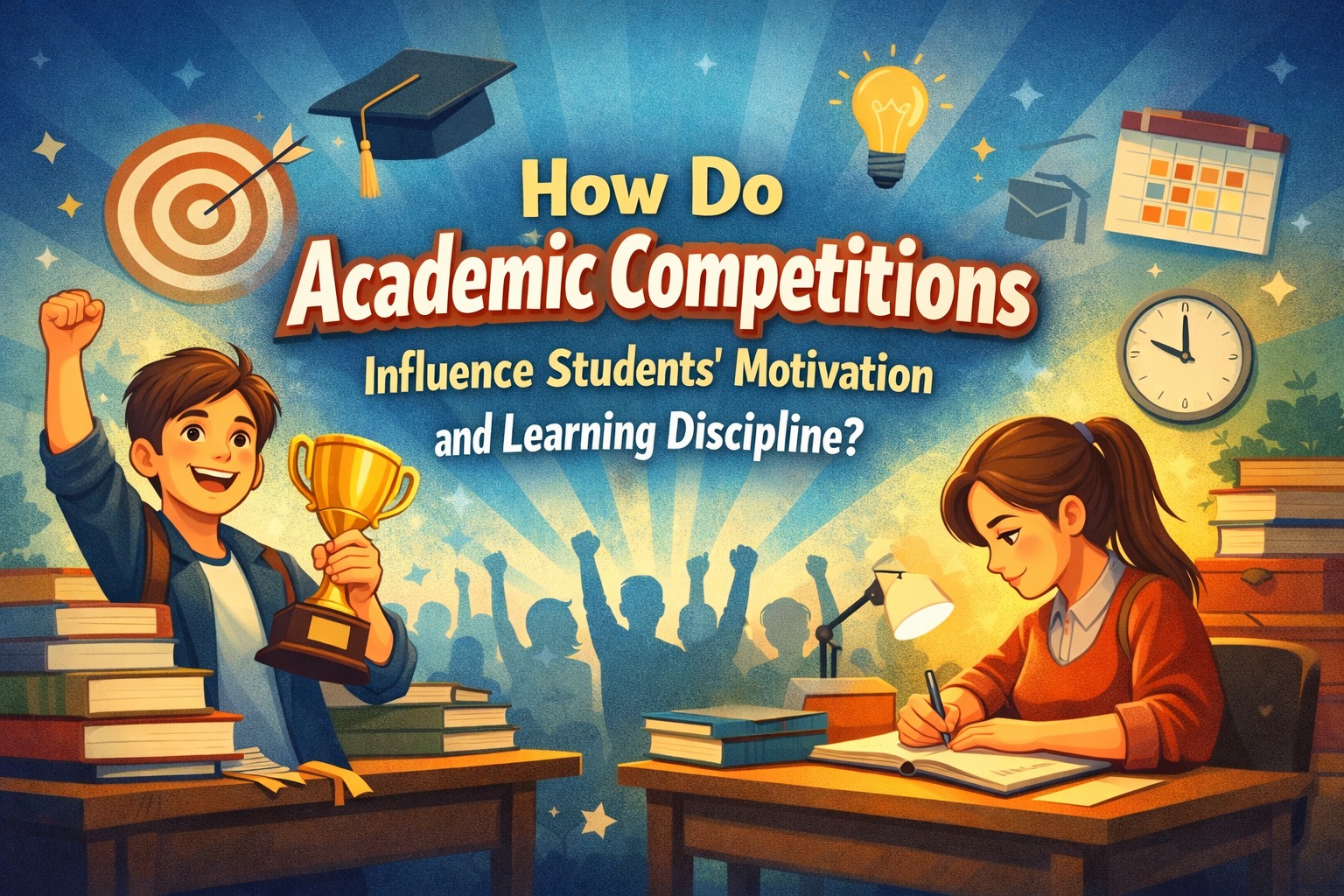
Academic competitions have become increasingly popular among university students. Various contests such as scientific writing competitions, debates, research challenges, and business innovation programs are often seen as platforms to prove one’s abilities. However, behind the achievements and awards, an important question arises: how exactly do academic competitions influence students’ motivation and study discipline?
This article comprehensively examines the impact of academic competitions on intrinsic motivation, the development of discipline, and the potential challenges that may accompany them.
ACADEMIC COMPETITIONS IN THE HIGHER EDUCATION ECOSYSTEM
Academic competitions are knowledge-based events designed to test students’ analytical skills, creativity, and problem-solving abilities. In Indonesia, many competitive programs are facilitated by the Kementerian Pendidikan, Kebudayaan, Riset, dan Teknologi Republik Indonesia through initiatives such as Program Kreativitas Mahasiswa (PKM).
Events like the National University Debating Championship also provide opportunities for students to sharpen their argumentation and critical thinking skills. This competitive environment creates a learning dynamic that differs from regular classroom settings.
THE IMPACT OF COMPETITIONS ON LEARNING MOTIVATION
INCREASING INTRINSIC MOTIVATION
Competitions often encourage students to study more deeply due to clear achievement targets. The desire to deliver their best performance can stimulate intrinsic motivation—learning driven by internal satisfaction and personal growth.
Students tend to actively seek additional references, engage in discussions with lecturers, and independently explore course materials more thoroughly.
BUILDING AN ACHIEVEMENT ORIENTATION
Academic competitions foster a results-oriented culture. Students learn to set goals, design strategies, and evaluate progress. This mindset enhances focus and consistency in the learning process.
BOOSTING SELF-CONFIDENCE
Success in competitions—even simply passing the selection stage—can strengthen self-efficacy. This increased confidence positively influences students’ willingness to take on further academic challenges.
THE IMPACT OF COMPETITIONS ON STUDY DISCIPLINE
MORE STRUCTURED TIME MANAGEMENT
Competition preparation usually involves strict deadlines. Students must balance coursework, practice sessions, and material development. This situation trains them to manage time more effectively.
CONSISTENCY AND COMMITMENT
Repeated practice, proposal revisions, and presentation simulations help build disciplined study habits. Students learn that achievement is not instant but the result of a systematic and consistent process.
RESPONSIBILITY IN TEAMWORK
In team-based competitions, discipline becomes both individual and collective. Each team member has specific roles and responsibilities that must be fulfilled according to schedules and targets.
POTENTIAL NEGATIVE IMPACTS TO ANTICIPATE
Despite its many benefits, academic competition can also create excessive pressure if not managed properly. An overly strong focus on winning may reduce the true meaning of learning.
Additionally, imbalance between competition activities and regular academic responsibilities can negatively affect academic performance if time management is poor.
Therefore, it is essential for students to maintain balance between ambition and mental well-being.
CONCLUSION
Academic competitions have a significant influence on students’ motivation and study discipline. A competitive environment can enhance intrinsic motivation, strengthen achievement orientation, and train effective time management skills.
However, these benefits will be optimal only if students view competitions as learning opportunities rather than merely platforms to win titles. With a balanced and reflective approach, academic competitions can become an important catalyst in shaping disciplined, motivated, and highly competitive students.
About the Author
Gusti Ayu Tita
Author — STEKOM University
An active author focused on academic issues, educational technology, and human resource development in the campus environment.