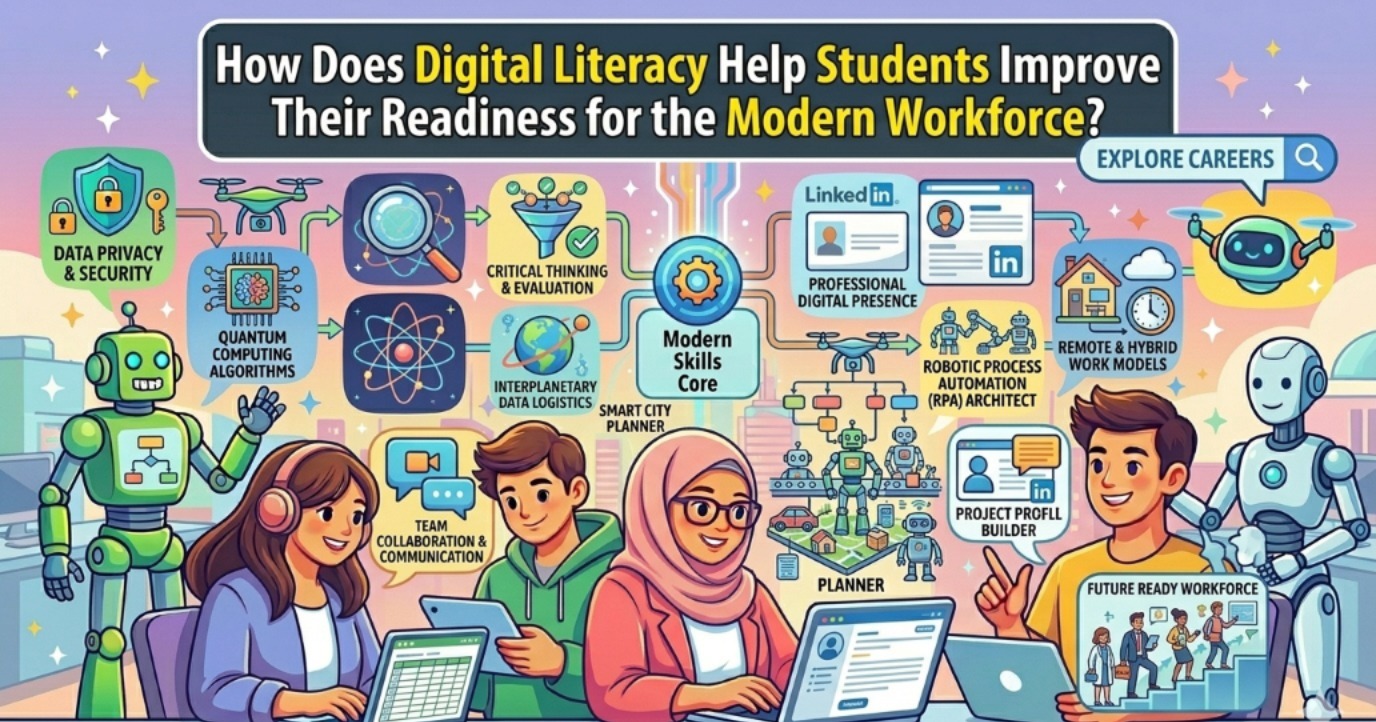
The rapid development of digital technology has brought significant changes to many sectors, including education and the professional world. Many workplace activities today rely on technology to accelerate processes, increase efficiency, and simplify communication among teams. Therefore, students need to prepare themselves with skills that are relevant to current technological developments, one of which is digital literacy.
Digital literacy does not only mean being able to use technological devices such as computers or smartphones. More importantly, it involves understanding digital information, using technology productively, and utilizing various digital platforms to support learning and personal development. These abilities become valuable assets for students as they prepare to enter the modern workforce.
CHANGES IN THE WORKPLACE IN THE DIGITAL ERA
Today’s workplace is increasingly influenced by digital technology. Many companies rely on various digital applications and systems to run their business operations, including internal communication, data management, and team collaboration.
As a result, future employees are expected to be familiar with technological tools and digital systems. Students who are accustomed to using technology effectively are usually better prepared to understand modern work environments that rely heavily on digital platforms.
DIGITAL LITERACY HELPS IMPROVE STUDENTS’ COMPETENCIES
Students with strong digital literacy tend to develop important skills more easily. They can use the internet to search for academic references, join online training programs, and learn new skills related to their career interests.
By using technology wisely, students can improve their competencies while also expanding their understanding of current professional trends and industry developments.
SUPPORTING COMMUNICATION AND COLLABORATION SKILLS
In the modern workplace, communication and collaboration are often carried out through digital platforms. Many organizations use online communication tools, project management systems, and other internet-based collaboration applications.
Students who possess digital literacy are usually more familiar with these platforms. This familiarity helps them work effectively in teams and communicate clearly in digital work environments.
HELPING STUDENTS FACE JOB MARKET COMPETITION
Competition in the job market continues to grow every year. Because of this, students need additional skills that can increase their value in the eyes of employers.
Digital literacy can be one of the factors that make students appear more prepared for professional life. The ability to use technology productively shows that students can keep up with modern developments and are ready to face workplace challenges.
CONCLUSION
Digital literacy plays an important role in helping students improve their readiness for the modern workforce. This skill enables students to understand technology, develop their competencies, and adapt to work environments that are increasingly digital.
By using technology positively during their university years, students can build a strong foundation to enter the workforce and face future professional challenges.
About the Author
Gusti Ayu Tita
Author — STEKOM University
An active author focused on academic issues, educational technology, and human resource development in the campus environment.