
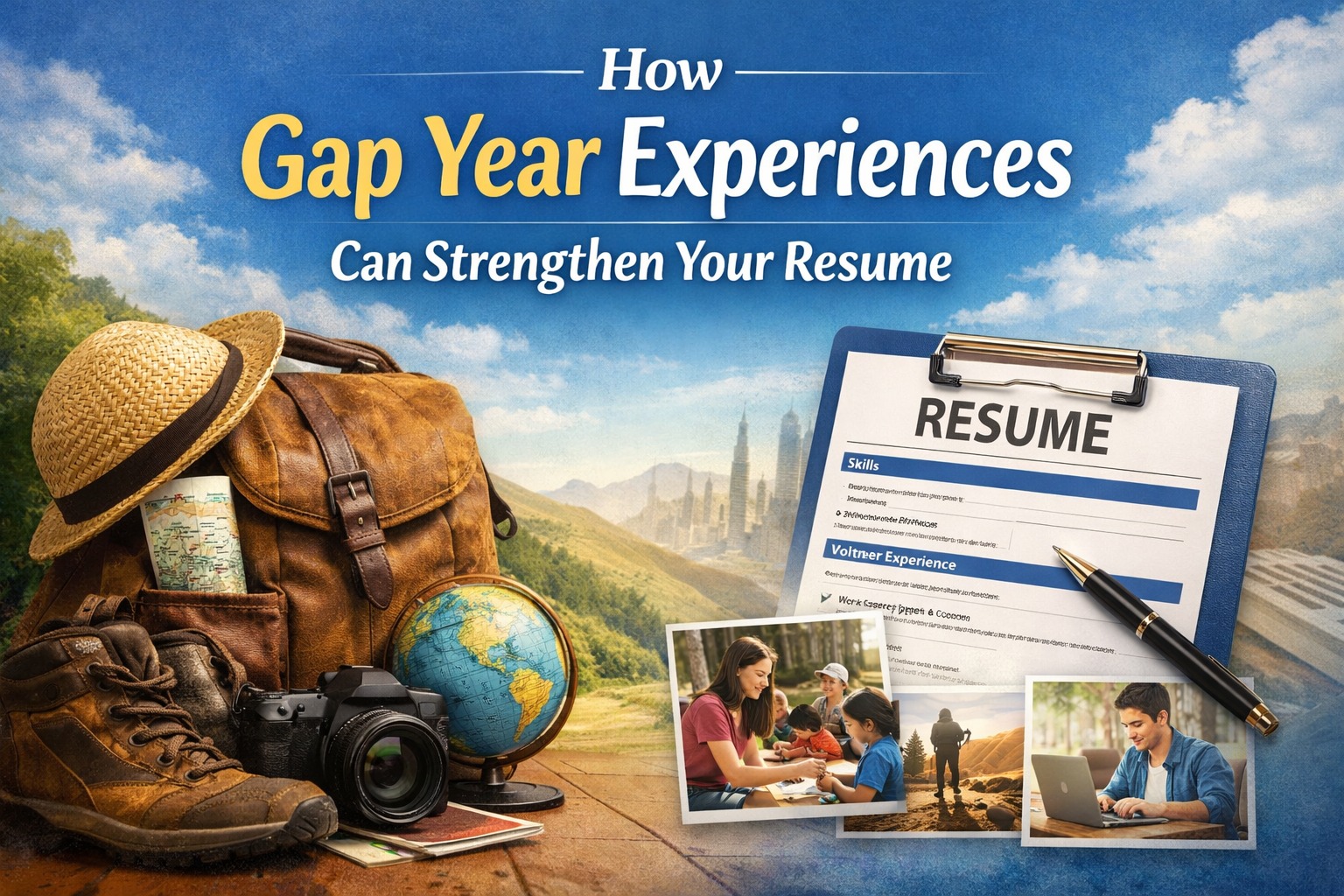
Taking a gap year is no longer seen as wasting time. In today’s competitive world, many students and young professionals use a gap year to gain valuable experiences, improve personal skills, and build stronger career foundations. Employers now appreciate candidates who can demonstrate adaptability, creativity, leadership, and real-world experience beyond academic achievements.
A well-planned gap year can become a powerful advantage on your resume. Whether through volunteering, traveling, freelancing, internships, or learning new skills, these experiences can help you stand out from other applicants.
WHY GAP YEAR EXPERIENCE MATTERS
Many companies look for candidates who possess both technical and soft skills. A gap year provides opportunities to develop qualities that are difficult to gain only from classroom learning.
During a gap year, individuals often learn how to solve problems independently, communicate with different people, manage time effectively, and adapt to new environments. These abilities are highly valuable in modern workplaces.
Instead of viewing a gap year negatively, recruiters increasingly see it as proof of initiative and personal growth when explained properly on a resume.
SKILLS YOU CAN DEVELOP DURING A GAP YEAR
A productive gap year can help strengthen multiple professional skills, including:
COMMUNICATION SKILLS
Traveling, volunteering, or joining community projects allows individuals to interact with diverse people. This improves confidence in speaking, teamwork, and interpersonal communication.
LEADERSHIP ABILITY
Managing projects, organizing events, or leading volunteer activities can demonstrate leadership potential. Employers value candidates who can take responsibility and motivate others.
TIME MANAGEMENT
Balancing travel schedules, freelance work, or learning programs requires strong organization skills. These experiences show discipline and responsibility.
PROBLEM-SOLVING SKILLS
Unexpected situations during a gap year often require quick thinking and adaptability. This helps individuals become more resilient and resourceful.
DIGITAL AND TECHNICAL SKILLS
Many people use a gap year to study graphic design, coding, digital marketing, content creation, or foreign languages. These additional skills can improve employability significantly.
TYPES OF GAP YEAR EXPERIENCES THAT IMPROVE A RESUME
Not all gap years look the same. Here are several productive activities that can enhance your resume:
VOLUNTEER WORK
Volunteering shows empathy, social responsibility, and teamwork. It also reflects a willingness to contribute positively to society.
INTERNSHIPS
Internships provide hands-on experience in professional environments. Even short-term internships can help build industry knowledge and professional connections.
FREELANCING
Freelance projects demonstrate independence, creativity, and practical work experience. Freelancers also learn how to communicate with clients and manage deadlines.
TRAVELING WITH PURPOSE
Traveling can become valuable when combined with cultural learning, language improvement, or international programs. It helps develop adaptability and global perspectives.
ONLINE COURSES AND CERTIFICATIONS
Completing certifications during a gap year proves commitment to self-improvement. Many employers appreciate candidates who continue learning outside formal education.
HOW TO PRESENT GAP YEAR EXPERIENCE ON YOUR RESUME
The key to making a gap year valuable is presenting it professionally. Avoid leaving unexplained gaps in your resume. Instead, clearly describe what you learned and achieved.
Use specific examples and measurable results whenever possible. For example:
- Managed social media content for a small business
- Volunteered in environmental campaigns
- Completed digital marketing certification
- Improved English communication through international travel
Focus on transferable skills that relate to the job you are applying for.
COMMON MISTAKES TO AVOID
Some people fail to maximize the value of their gap year because they do not plan properly. Here are common mistakes to avoid:
- Spending the entire year without productive activities
- Failing to document achievements and experiences
- Not connecting gap year experiences with career goals
- Including irrelevant information on a resume
A structured and goal-oriented gap year creates stronger career benefits in the future.
FINAL THOUGHTS
A gap year can become one of the most valuable periods for personal and professional development. Rather than delaying success, it can help individuals gain practical experience, discover new interests, and build important career skills.
When used wisely, gap year experiences can strengthen your resume and make you more attractive to employers. The key is to stay productive, continue learning, and present your experiences confidently.
About the Author
Gusti Ayu Tita
Author — STEKOM University
An active author focused on academic issues, educational technology, and human resource development in the campus environment.



