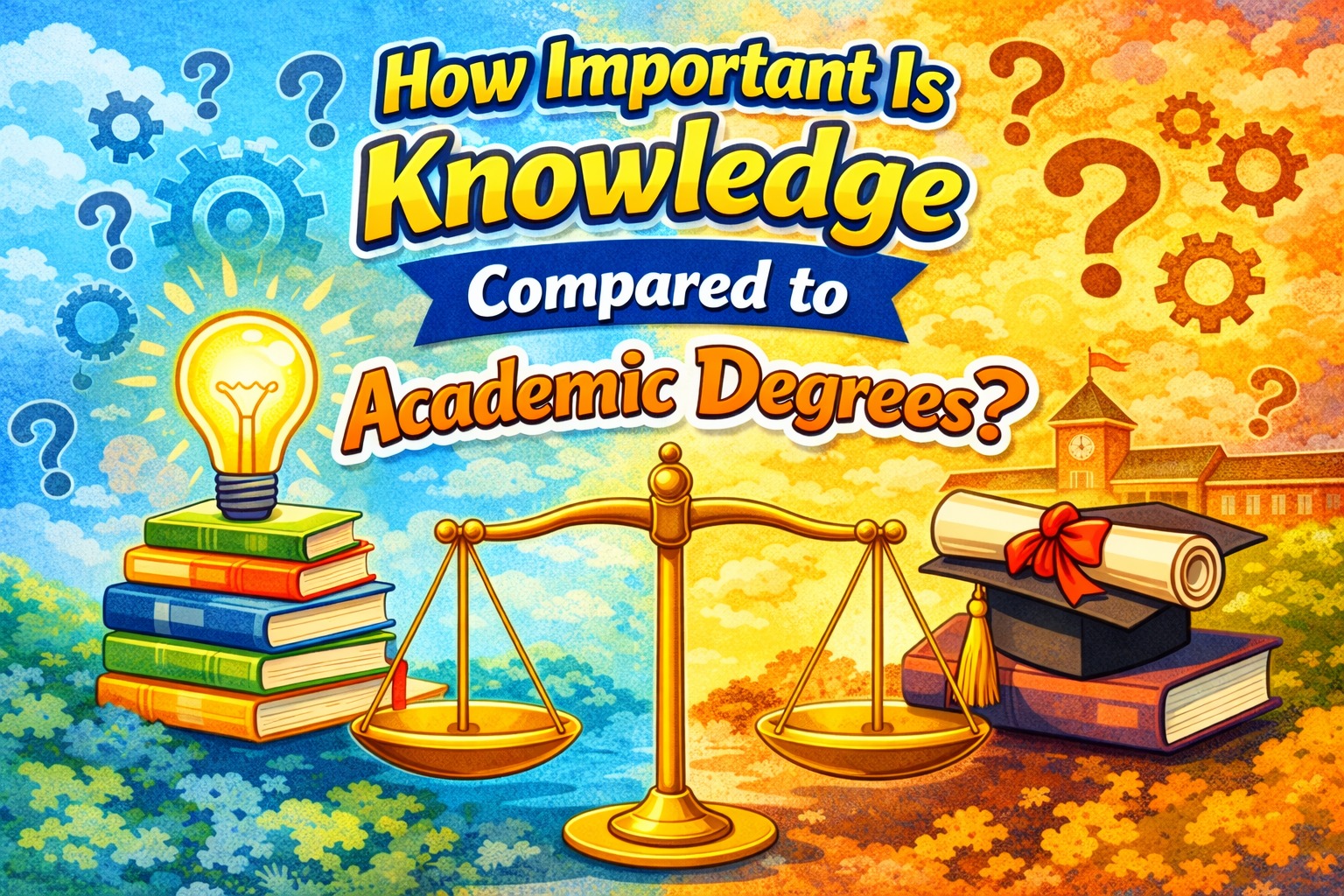
In the modern world, academic degrees are often seen as key indicators of success. Many students and professionals aim to earn prestigious degrees, believing they guarantee career opportunities and recognition. However, knowledge—the ability to understand, apply, and innovate—often holds more value in real-world scenarios than a certificate alone.
Recognizing the role of both degrees and knowledge can help students and professionals make better decisions about their education and career paths.
THE VALUE OF ACADEMIC DEGREES
Academic degrees serve as formal proof of education.
Degrees provide credibility, signal dedication, and are often required for certain jobs or further studies. Employers may initially assess candidates based on qualifications, making degrees a practical necessity. However, degrees alone do not guarantee competence or the ability to solve real-world problems.
THE POWER OF KNOWLEDGE
Knowledge empowers individuals to think critically and adapt.
Those who understand concepts deeply can apply skills, innovate, and respond to challenges effectively. Knowledge enhances problem-solving abilities, fosters creativity, and supports lifelong learning, making it a critical factor for long-term success.
BALANCING DEGREES AND KNOWLEDGE
A degree and strong knowledge complement each other.
While a degree can open doors and provide recognition, knowledge ensures effectiveness in applying what has been learned. Students who prioritize understanding and practical application, alongside earning their degrees, are better equipped to face professional challenges.
THE IMPACT ON CAREER SUCCESS
Focusing solely on degrees may limit personal and professional growth.
Employers increasingly value candidates who demonstrate competence, critical thinking, and the ability to learn continuously. Combining formal credentials with solid knowledge provides a competitive advantage and long-term career sustainability.
CONCLUSION
Academic degrees and knowledge each play distinct but interconnected roles.
While degrees provide formal recognition, knowledge drives competence, creativity, and problem-solving abilities. Students and professionals who balance both are more likely to succeed, adapt, and make meaningful contributions in their careers.
About the Author
Gusti Ayu Tita P
Author — STEKOM University
An active author focused on academic issues, educational technology, and human resource development in the campus environment.