
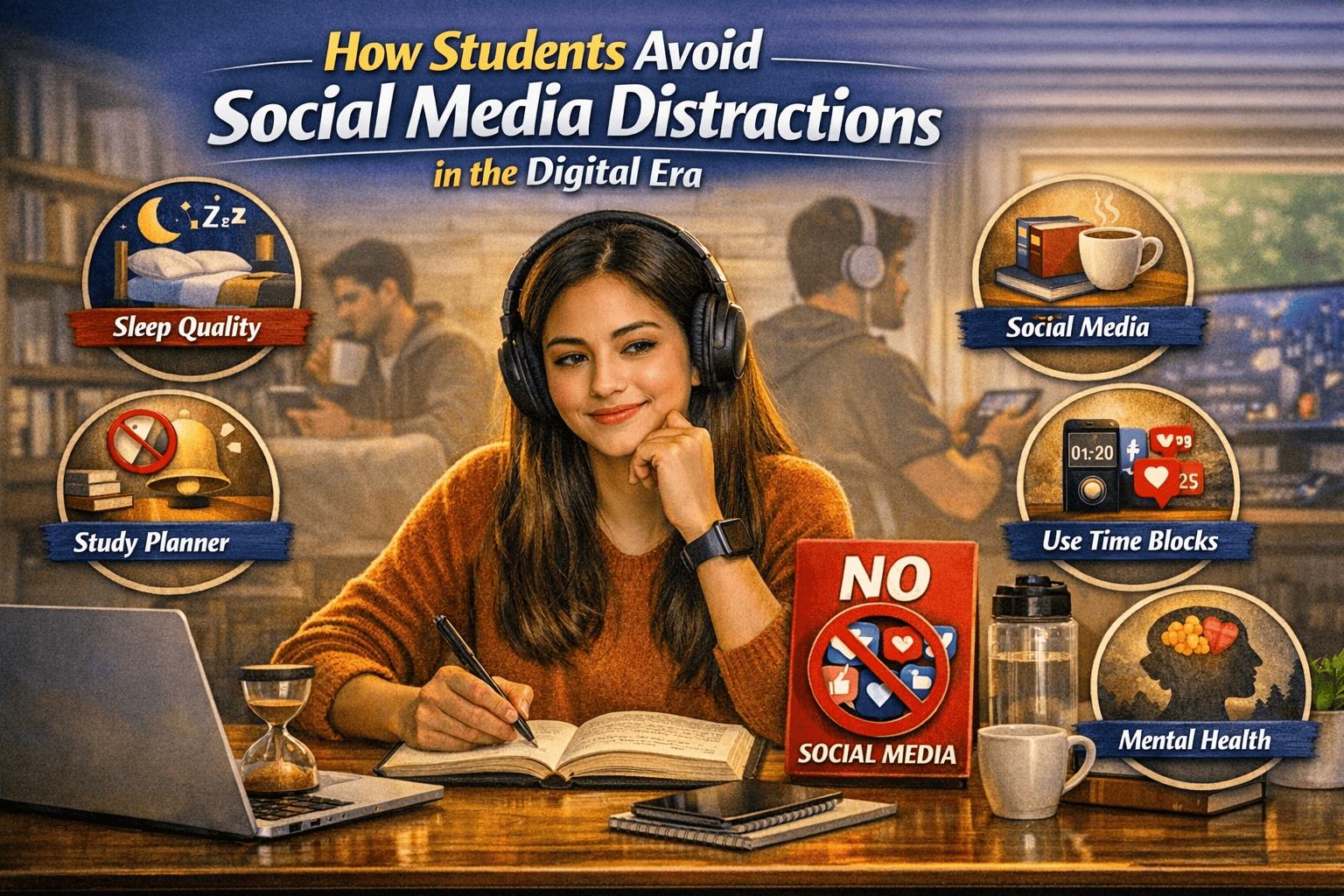
In the modern academic environment, social media has become an integral part of students’ daily lives. Platforms such as Instagram, Twitter, TikTok, and Facebook offer instant communication, entertainment, and news updates. While these platforms can serve as useful tools for networking and learning, they are also a major source of distraction for students. The constant notifications, scrolling feeds, and urge to stay connected can easily interrupt study sessions, reduce focus, and negatively impact academic performance. Therefore, understanding how to avoid social media distractions is crucial for students seeking to maintain productivity and achieve their educational goals.
UNDERSTANDING SOCIAL MEDIA DISTRACTIONS
The first step in avoiding social media distractions is understanding their nature and impact. Social media is designed to be engaging, using algorithms that prioritize content likely to capture attention. As a result, students may spend significant amounts of time browsing through posts, videos, and stories without realizing the extent of time lost.
Distractions can manifest in various ways: frequent phone checking, multitasking between study materials and social apps, or feeling mentally preoccupied with notifications. This constant interruption of attention reduces cognitive efficiency and the ability to retain information. Recognizing these patterns is the foundation for developing effective strategies to minimize distraction and enhance focus.
STRATEGIC TIME MANAGEMENT
Effective time management plays a vital role in controlling social media distractions. Students who schedule dedicated study periods with clearly defined start and end times are more likely to remain focused. Allocating specific blocks of time for both academic work and short breaks allows students to satisfy their social media engagement in a controlled manner without affecting overall productivity.
In addition, prioritizing tasks according to importance helps students maintain discipline. Completing high-priority assignments first ensures that critical work is not delayed due to time lost on social media. By combining structured schedules with clear goals, students can maintain balance between online engagement and academic responsibilities.
CREATING A DISTRACTION-FREE STUDY ENVIRONMENT
The study environment is another key factor in minimizing social media interruptions. Students should designate a specific, organized, and quiet space for studying where digital distractions are minimized.
Practical measures include keeping smartphones out of immediate reach, turning off non-essential notifications, and using website-blocking applications during study sessions. A clean, well-lit, and dedicated study environment signals the brain to focus, reducing the temptation to check social media.
Moreover, peer influence can also affect productivity. Studying in the presence of focused classmates or study groups can encourage students to stay on task and avoid distractions, creating a supportive and disciplined atmosphere.
DEVELOPING SELF-DISCIPLINE AND DIGITAL MINDFULNESS
Self-discipline is essential for students seeking to manage social media distractions effectively. It involves consciously controlling impulses and making intentional choices about when and how to use digital devices. Students with strong self-discipline are able to resist the urge to check social media during critical study periods.
Digital mindfulness complements self-discipline by fostering awareness of digital habits. Students can track their social media usage patterns, recognize triggers that lead to excessive scrolling, and adopt strategies to reduce unnecessary engagement. Techniques such as setting time limits, using apps to monitor usage, or scheduling “social media-free” study hours encourage mindful interaction with technology, promoting concentration and productivity.
CONCLUSION
Avoiding social media distractions while studying is a critical skill for students in the digital age. Distractions from social platforms can easily undermine academic productivity, but with deliberate strategies, students can maintain focus and achieve their goals. Key factors include understanding the nature of social media distractions, practicing strategic time management, creating a distraction-free study environment, developing self-discipline and digital mindfulness, using technology to regulate usage, and maintaining balanced breaks for overall well-being.
By adopting these practices, students can successfully navigate the challenges of digital distractions, enhance their learning efficiency, and achieve greater academic success in a connected world.
About the Author
Gusti Ayu Tita
Author — STEKOM University
An active author focused on academic issues, educational technology, and human resource development in the campus environment.



