The digital era has significantly transformed the way students learn, access information, and complete academic responsibilities. With the rapid growth of technology, students now rely heavily on digital devices such as smartphones, laptops, tablets, and internet platforms to support their studies. Online lectures, digital libraries, virtual discussions, and collaborative learning tools have made education more accessible and flexible than ever before. However, the same technology that supports learning can also create serious challenges for students, particularly in managing their study time effectively. Social media platforms, online entertainment, gaming, and constant notifications often compete for students’ attention. As a result, many students struggle to maintain focus and balance their academic responsibilities with the distractions of the digital world.
THE CHALLENGES OF STUDY TIME MANAGEMENT IN THE DIGITAL ERA
Managing study time has always been an important skill for students, but the digital era has introduced new challenges that make this task more complicated. Unlike previous generations, modern students live in an environment where digital content is constantly available and easily accessible.
Social media platforms, messaging applications, and online videos are designed to capture users’ attention for long periods of time. Students often begin checking their phones briefly but end up spending much longer than intended browsing through various digital platforms. This behavior can significantly reduce the amount of time dedicated to studying.
In addition, the habit of multitasking with digital devices can weaken concentration. Students who attempt to study while simultaneously engaging with social media or online entertainment often struggle to absorb information effectively. This divided attention reduces learning efficiency and makes studying more time-consuming.
Therefore, students must learn to recognize these challenges and develop strategies to maintain control over how they spend their time in the digital environment.
THE IMPORTANCE OF PRIORITIZING ACADEMIC TASKS
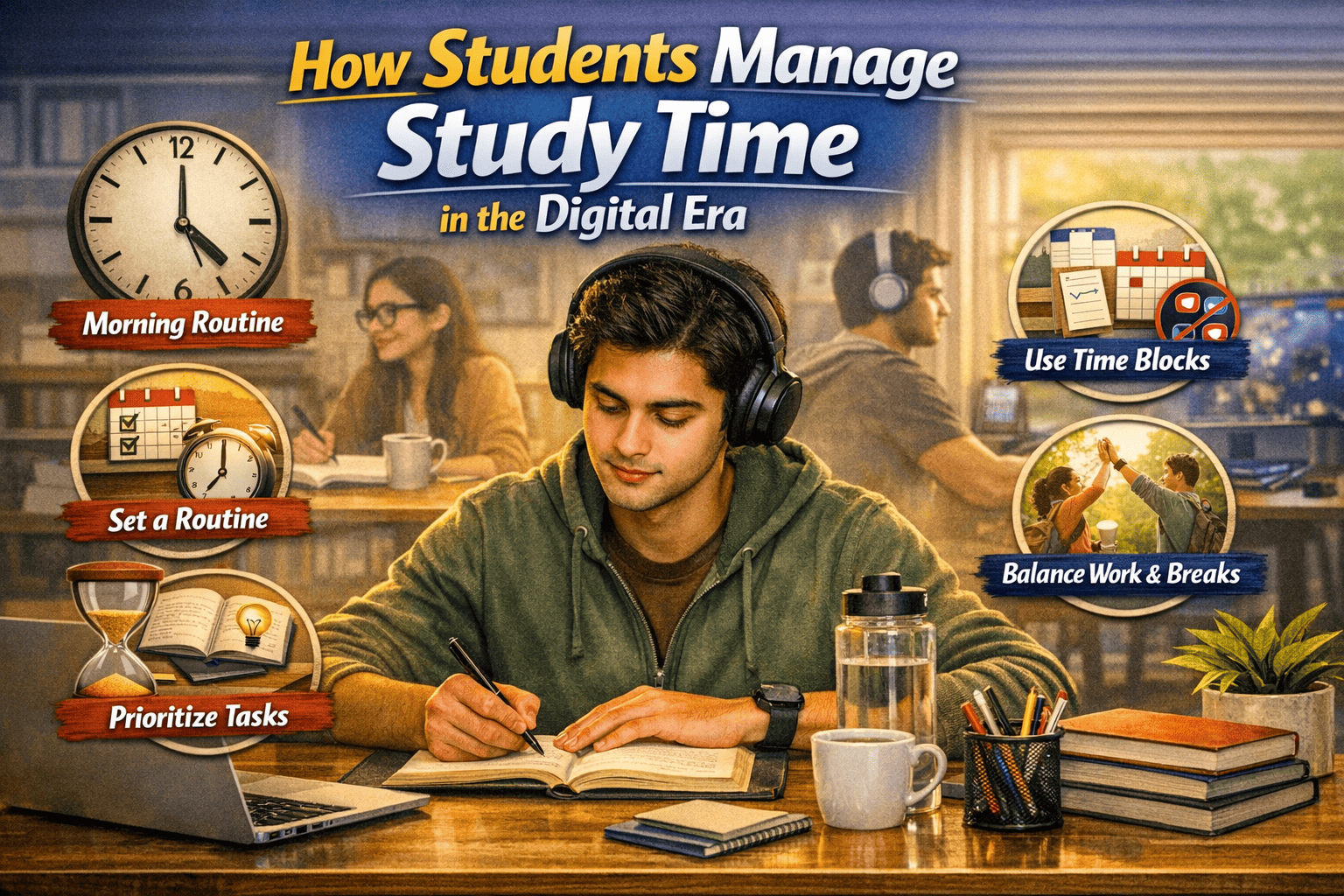
One of the most important aspects of effective study time management is the ability to prioritize academic responsibilities. Students typically face numerous tasks, including attending lectures, completing assignments, preparing presentations, studying for examinations, and participating in extracurricular activities.
Without clear priorities, students may become overwhelmed by their responsibilities and delay important tasks. In many cases, digital distractions further contribute to procrastination, making it difficult for students to begin their work.
By identifying which tasks are most important and urgent, students can focus their energy on completing academic responsibilities first. Prioritization helps students avoid last-minute stress and ensures that important assignments receive adequate attention.
Developing the habit of prioritizing tasks also encourages discipline and responsibility, both of which are essential for long-term academic success.
CREATING A STRUCTURED STUDY SCHEDULE
Another key strategy for managing study time effectively is creating a structured study schedule. A well-planned schedule helps students allocate time for different academic activities and maintain a balanced routine.
Students who follow a consistent schedule are less likely to waste time deciding when to study or what task to complete next. Instead, they can move directly from one planned activity to another, increasing overall productivity.
A structured schedule also helps students maintain balance between studying, rest, and personal activities. Without proper planning, students may either overwork themselves or spend too much time on non-academic activities.
By organizing their daily routines carefully, students can ensure that their study time remains productive and focused.
CONTROLLING DIGITAL DISTRACTIONS DURING STUDY TIME
In the digital era, controlling distractions from digital devices is essential for effective study time management. Even a brief notification can interrupt concentration and disrupt the learning process.
Students can improve their focus by minimizing digital interruptions during study sessions. This may involve silencing notifications, using applications that block distracting websites, or placing smartphones away from their immediate study space.
These simple actions can significantly improve students’ ability to concentrate on their academic tasks. Over time, reducing digital interruptions helps students develop stronger focus and greater discipline when studying.
Learning to control digital distractions also allows students to regain control over their study habits and make better use of their time.
CONCLUSION
The digital era has introduced both opportunities and challenges for students in managing their study time. While digital technology provides easy access to information and learning resources, it also presents numerous distractions that can reduce productivity and weaken concentration.
To succeed in this environment, students must develop effective strategies for managing their time. Prioritizing academic tasks, creating structured study schedules, controlling digital distractions, and using technology as a productivity tool are essential steps toward maintaining effective study habits.
Ultimately, students who learn to manage their study time wisely in the digital era will be better equipped to achieve academic success and adapt to the demands of an increasingly technology-driven world.
About the Author
Gusti Ayu Tita
Author — STEKOM University
An active author focused on academic issues, educational technology, and human resource development in the campus environment.