
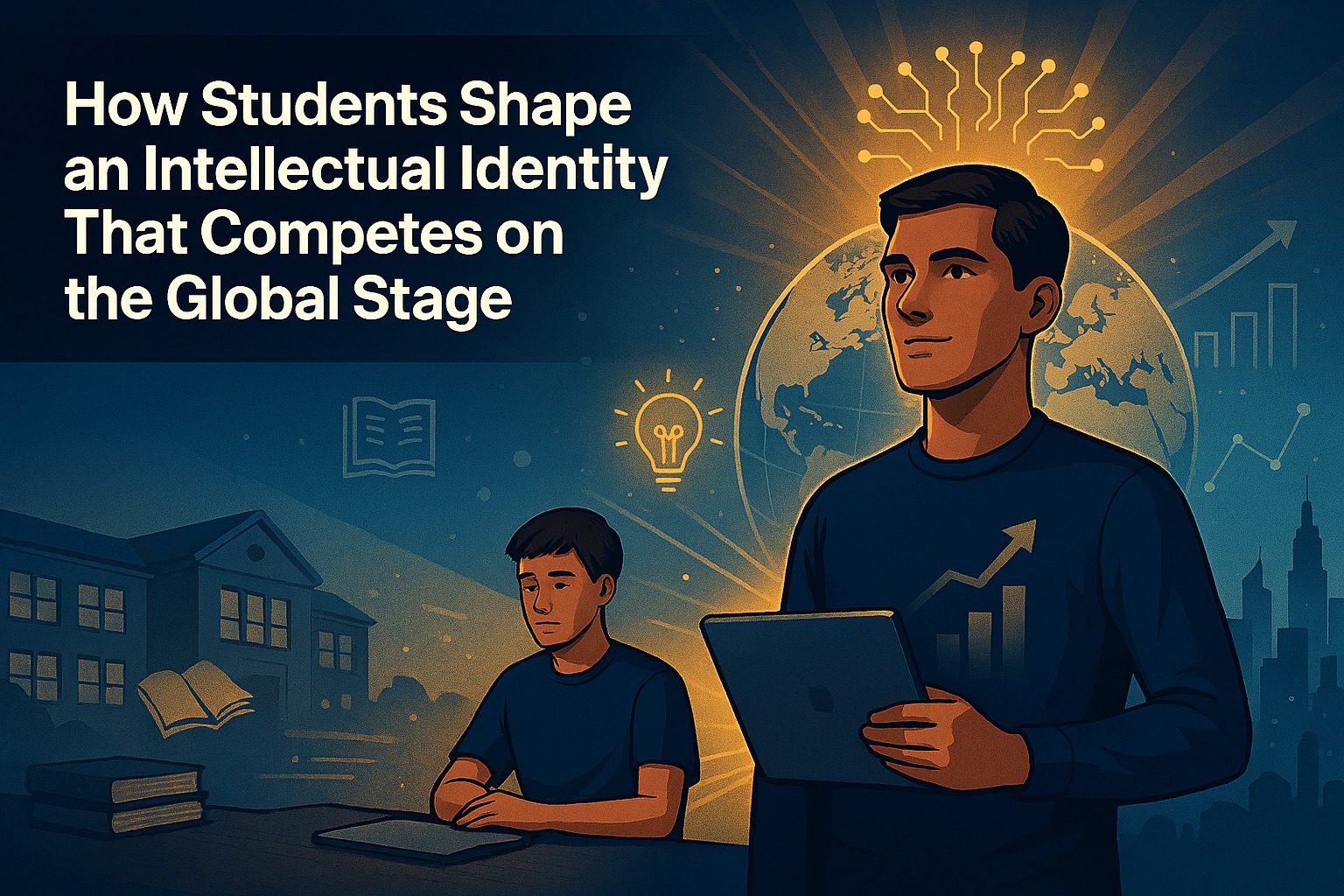
In a world defined by globalization, digital transformation, and cross-border collaboration, students must do more than earn degrees. They must shape a strong intellectual identity that allows them to compete confidently on the global stage. Academic credentials may open doors, but a clear intellectual profile determines how far those doors will lead.
An intellectual identity reflects how students think, what they stand for academically, and how they contribute to knowledge and innovation. It is built through focus, consistency, and meaningful engagement beyond classroom requirements.
UNDERSTANDING INTELLECTUAL IDENTITY
Intellectual identity is the combination of critical thinking ability, academic interests, values, and contributions that define a student’s scholarly character. It answers key questions: What problems do you care about? What expertise are you developing? How do you approach complex issues?
On the global stage, intellectual identity becomes a differentiator. Thousands of students may graduate with similar qualifications, but those who articulate a unique perspective and demonstrate consistent expertise stand out. A clear academic direction enhances credibility and long-term competitiveness.
DEFINING A CLEAR ACADEMIC FOCUS
To shape a competitive intellectual identity, students must identify their core interests and develop depth in a specific area. Specialization allows them to build expertise rather than remain generalists without distinction.
This does not mean limiting curiosity. Instead, it means creating a central theme that connects research, projects, internships, and extracurricular activities. Over time, this focus builds a recognizable academic narrative that strengthens global positioning.
DEVELOPING CRITICAL AND ANALYTICAL THINKING
Competing on the global stage requires more than knowledge accumulation. Students must cultivate strong critical thinking and analytical skills. This involves questioning assumptions, evaluating evidence, and synthesizing diverse viewpoints.
Engaging in research, academic debates, and interdisciplinary discussions helps sharpen intellectual maturity. The ability to construct well-reasoned arguments supported by data is highly valued in international academic and professional environments.
BUILDING A GLOBAL ACADEMIC PORTFOLIO
A strong intellectual identity must be visible. Students can build a global portfolio through research publications, conference participation, innovation projects, and cross-border collaborations. Digital platforms also allow them to share insights, articles, and thought leadership content.
Such visibility demonstrates initiative and expertise. It signals that a student is not merely absorbing knowledge but actively contributing to global conversations. A well-developed portfolio enhances both academic and professional opportunities worldwide.
MAINTAINING INTEGRITY AND CONTINUOUS GROWTH
Integrity is the foundation of a credible intellectual identity. Ethical research practices, originality, and academic honesty are essential for long-term reputation. In global environments, trust and professionalism are critical assets.
Additionally, students must embrace continuous growth. Global standards evolve, industries transform, and new knowledge emerges rapidly. A commitment to lifelong learning ensures that intellectual identity remains relevant and competitive.
Shaping an intellectual identity that competes globally is a deliberate process. It requires clarity of focus, disciplined development, and active contribution. When students combine expertise with integrity and global awareness, they position themselves not only as graduates—but as thinkers and innovators ready to influence the world.
About the Author
Gusti Ayu Tita
Author — STEKOM University
An active author focused on academic issues, educational technology, and human resource development in the campus environment.



