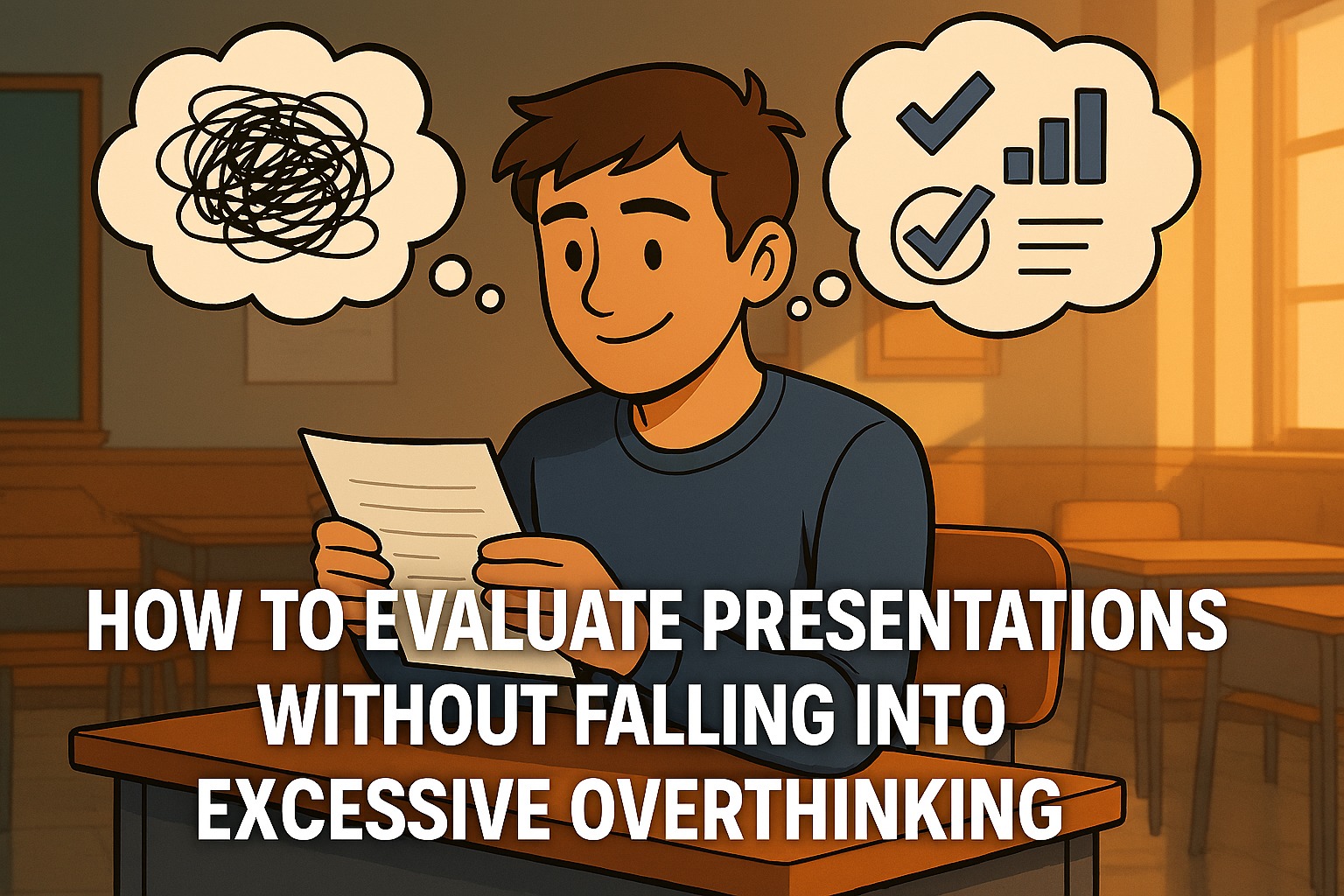
Evaluating your own presentation is an essential academic skill. Reflection helps students grow, refine communication abilities, and build confidence. However, many students fall into a trap: instead of reviewing their performance constructively, they spiral into excessive overthinking. This mental loop magnifies small mistakes, creates self-doubt, and turns a learning opportunity into emotional stress. The good news is that presentation evaluation does not have to lead to overthinking. With the right mindset and structure, students can analyze their performance in a healthy, productive way. This article explains how to evaluate presentations effectively while keeping your thoughts balanced and growth-focused.
WHY STUDENTS OVERTHINK AFTER PRESENTATIONS
After presenting, the brain naturally reviews what just happened. This is part of learning. Problems arise when reflection becomes repetitive and emotionally charged.
Students often:
- Replay minor mistakes repeatedly
- Assume others judged them harshly
- Ignore positive moments
This pattern is driven by self-consciousness and the desire to improve. Without structure, reflection turns into rumination — thinking that feels productive but leads nowhere.
THE DIFFERENCE BETWEEN EVALUATION AND RUMINATION
Understanding this distinction is key.
Healthy evaluation is objective, time-limited, and solution-focused. It asks:
- What worked well?
- What can be improved next time?
Rumination is emotional and open-ended. It sounds like:
- Why am I bad at this?
- Everyone noticed my mistake.
Evaluation builds skill. Rumination drains confidence. The goal is to shift your thinking toward actionable insights rather than self-criticism.
USE A STRUCTURED REVIEW METHOD
A clear framework prevents your mind from wandering into overthinking.
Try a simple three-part evaluation:
- Strengths – Identify what went well.
- Improvements – Note one or two realistic adjustments.
- Action steps – Decide how to practice for next time.
Limiting evaluation points keeps feedback focused and manageable.
SET A TIME LIMIT FOR REFLECTION
Endless reflection invites overthinking. Instead, allocate a short window — for example, 5 to 10 minutes — to review your presentation. When time is up, consciously shift attention to another task.
This teaches your brain that evaluation is purposeful, not an emotional spiral.
FOCUS ON BEHAVIOR, NOT PERSONALITY
Overthinking often turns performance feedback into identity criticism. Replace:
“I’m terrible at presenting.”
with:
“I spoke too quickly during the introduction.”
Behavior-based feedback is specific, fixable, and empowering.
BALANCE CRITIQUE WITH POSITIVE RECOGNITION
Students frequently overlook their strengths. Yet recognizing what worked is just as important as spotting improvement areas.
Balanced evaluation:
- Reinforces confidence
- Highlights effective strategies
- Encourages repetition of good habits
Growth happens faster when success is acknowledged.
CHALLENGE NEGATIVE ASSUMPTIONS
After presenting, the brain may exaggerate perceived mistakes. Ask:
- Is there real evidence others judged me harshly?
- Did anyone actually react negatively?
Most of the time, fears are assumptions rather than facts. This mental check prevents emotional escalation.
TURN FEEDBACK INTO A GROWTH PLAN
Evaluation becomes powerful when it leads to action. Choose one improvement focus for your next presentation, such as pacing or eye contact.
Small, intentional adjustments create visible progress without overwhelming your confidence.
BUILD A HEALTHY PRESENTATION MINDSET
Presentations are practice environments, not final judgments. A growth mindset reframes mistakes as data, not failure.
Students who adopt this perspective:
- Reflect more calmly
- Recover quickly from errors
- Maintain motivation
- Develop resilience
Evaluation becomes a tool for improvement, not a trigger for overthinking.
CONCLUSION
Evaluating presentations should strengthen skills, not fuel anxiety. The key lies in structured, balanced reflection that focuses on behavior, action, and growth. By setting limits, recognizing strengths, and challenging negative thoughts, students can transform post-presentation evaluation into a confident learning process.
When reflection becomes intentional rather than emotional, presentations shift from stressful events to stepping stones for progress.
About the Author
Gusti Ayu Tita P
Author — STEKOM University
An active author focused on academic issues, educational technology, and human resource development in the campus environment.