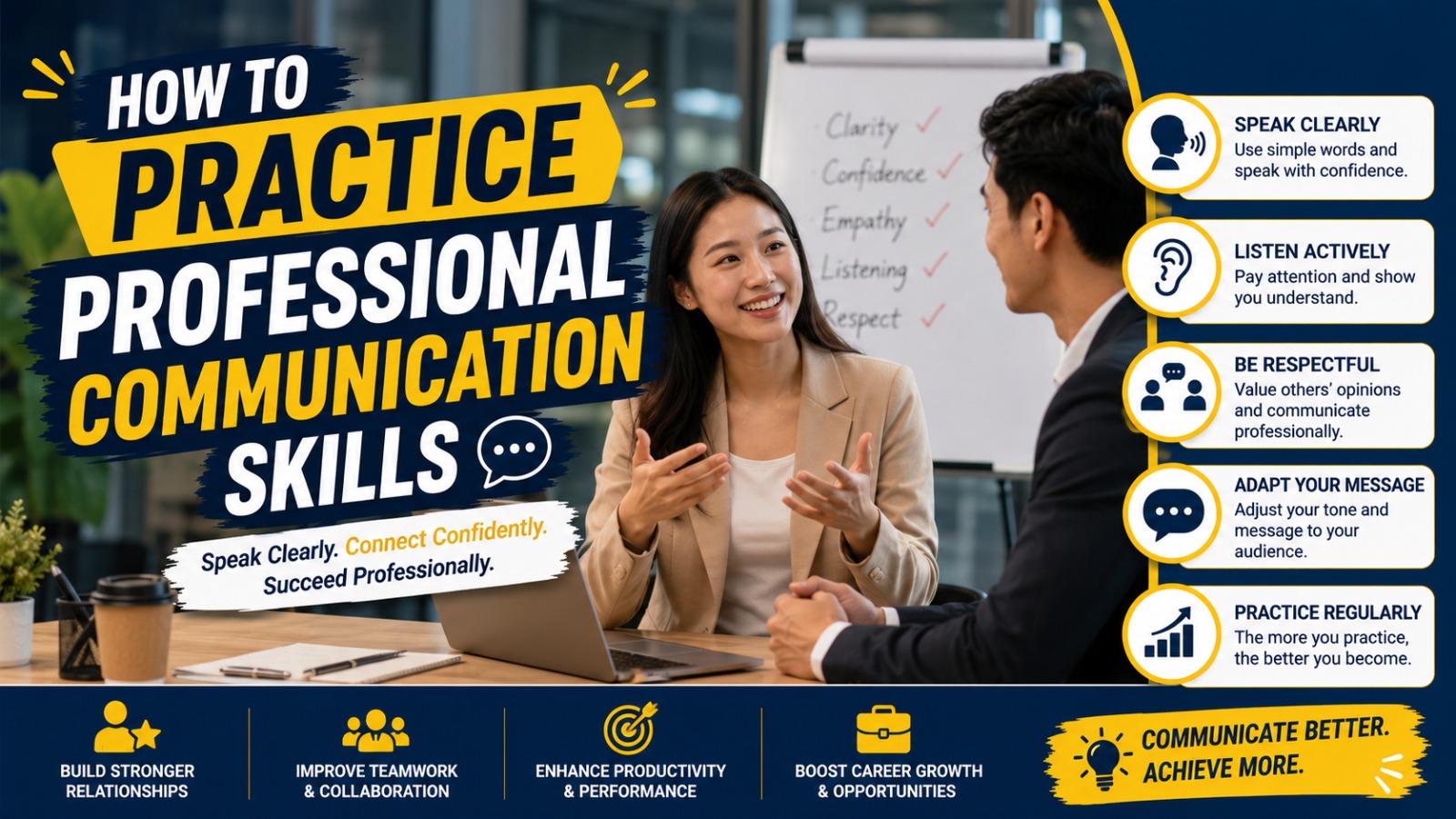
Professional communication skills are essential in today’s workplace. Strong communication helps individuals share ideas clearly, build positive relationships, and create a productive work environment. Whether communicating with coworkers, clients, managers, or business partners, professional communication reflects confidence, respect, and professionalism.
Many people believe communication skills develop naturally, but effective professional communication requires regular practice and continuous improvement. By learning proper communication techniques, individuals can improve workplace interactions and support long-term career growth.
UNDERSTANDING PROFESSIONAL COMMUNICATION
Professional communication refers to the ability to exchange information clearly, respectfully, and effectively in a work environment. It includes verbal communication, written communication, listening skills, and nonverbal communication such as body language and facial expressions.
Good professional communication focuses on delivering messages in a clear and organized way while maintaining professionalism and respect for others.
IMPROVE ACTIVE LISTENING SKILLS
Communication is not only about speaking. Listening carefully is equally important in professional interactions. Active listening helps individuals understand instructions, respond appropriately, and avoid misunderstandings.
To practice active listening, focus fully on the speaker, avoid interrupting conversations, and ask questions when clarification is needed. Showing attention through eye contact and positive body language can also improve communication quality.
PRACTICE CLEAR AND CONFIDENT SPEAKING
Speaking clearly and confidently is essential in professional settings. Try to organize thoughts before speaking and avoid using unclear or unnecessary words.
Practice speaking in meetings, presentations, or group discussions to build confidence. Maintaining a calm tone, proper pronunciation, and steady pace can help deliver messages more effectively.
DEVELOP STRONG WRITTEN COMMUNICATION
Professional communication often involves emails, reports, and messages. Writing clearly and professionally is important for avoiding confusion and maintaining credibility.
Use simple language, correct grammar, and organized sentence structure when writing professional documents. Always review messages before sending them to ensure accuracy and professionalism.
PAY ATTENTION TO BODY LANGUAGE
Nonverbal communication plays a major role in professional interactions. Body language, facial expressions, posture, and eye contact can influence how messages are received.
Positive body language helps create a professional impression and demonstrates confidence. Standing or sitting properly, maintaining eye contact, and using natural gestures can improve workplace communication.
LEARN TO COMMUNICATE WITH EMPATHY
Empathy is an important part of professional communication. Understanding the feelings and perspectives of others helps create respectful and supportive interactions.
Practice empathy by listening carefully, responding politely, and considering how your words may affect others. Empathetic communication strengthens teamwork and improves workplace relationships.
PARTICIPATE IN TEAM DISCUSSIONS
Joining discussions and collaborative activities is an effective way to practice professional communication. Team meetings, brainstorming sessions, and workplace projects provide opportunities to improve speaking and listening skills.
Engaging actively in conversations helps build confidence and teaches individuals how to communicate effectively in professional environments.
HANDLE FEEDBACK POSITIVELY
Feedback is valuable for improving communication skills. Accept constructive criticism with an open mind and use it as an opportunity for growth.
Asking for feedback from coworkers, supervisors, or mentors can help identify communication strengths and areas that need improvement. Continuous learning is important for professional development.
ADAPT COMMUNICATION TO DIFFERENT SITUATIONS
Different professional situations require different communication styles. Communicating with clients may differ from interacting with coworkers or managers.
Learning how to adjust tone, language, and communication methods based on the situation can improve professionalism and effectiveness in the workplace.
CONCLUSION
Practicing professional communication skills is essential for career growth and workplace success. Active listening, confident speaking, strong writing abilities, and positive body language all contribute to effective communication. By practicing consistently and learning from experience, individuals can become more professional, confident, and successful communicators in daily work environments.
About the Author
Gusti Ayu Tita
Author — STEKOM University
An active author focused on academic issues, educational technology, and human resource development in the campus environment.