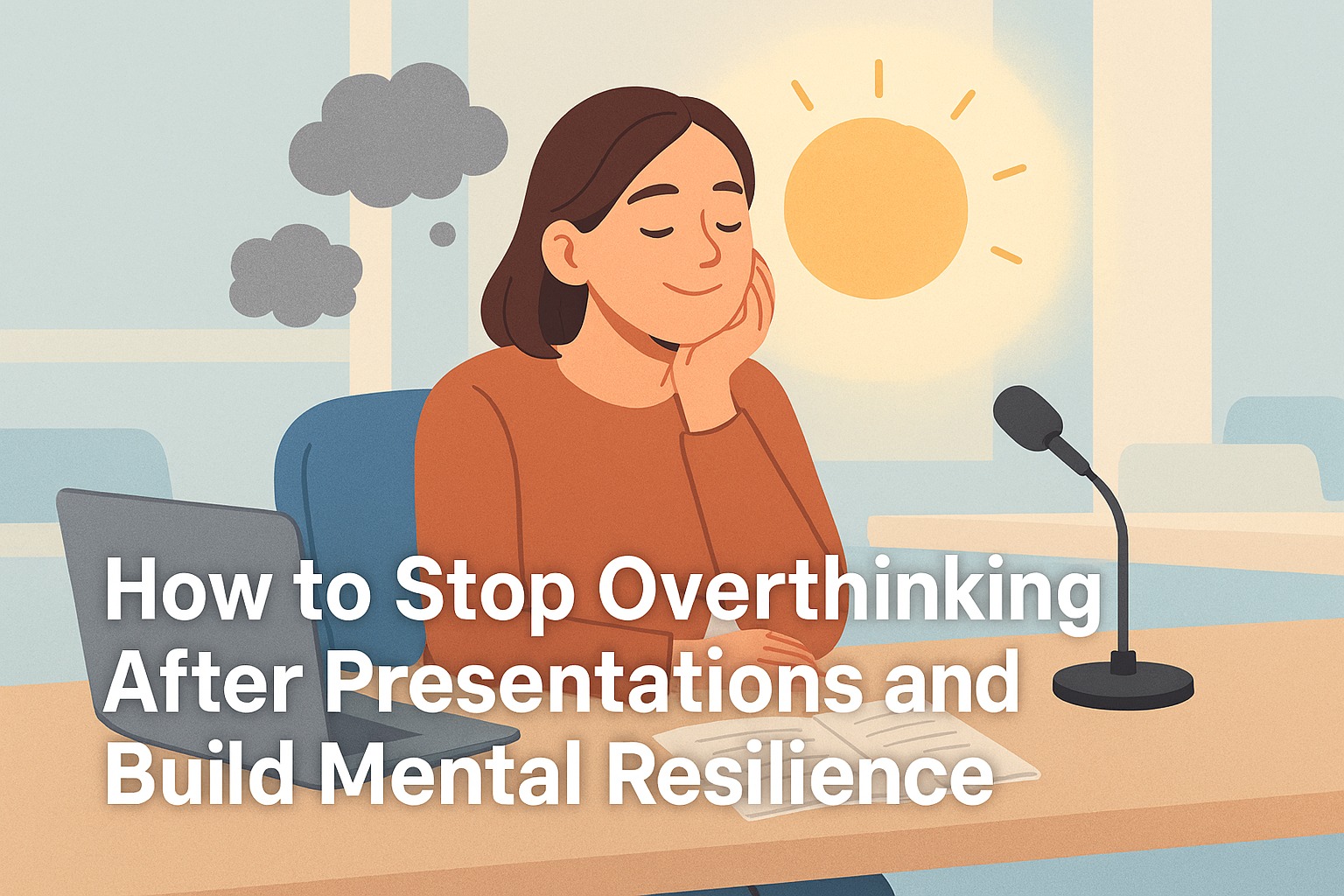
Presentations can be one of the most stressful experiences for students. While delivering a speech or project in front of peers and professors, it’s common to feel nervous or worried about making mistakes. However, after the presentation ends, many students fall into a cycle of overthinking. They replay every word, gesture, or slide, questioning their performance. This kind of persistent rumination can harm mental health and reduce self-confidence if left unchecked. Understanding how to manage overthinking and build mental resilience is key to thriving in academic life.
UNDERSTANDING OVERTHINKING AFTER PRESENTATIONS
Overthinking after a presentation is a mental habit where the mind keeps replaying events and imagining alternative outcomes. This behavior is often fueled by perfectionism, fear of judgment, and a desire to meet high expectations. Students might think about what they could have said better or how their gestures appeared to the audience. While occasional reflection can be helpful for improvement, chronic overthinking can cause stress, anxiety, and a negative self-image.
RECOGNIZING THE SIGNS OF MENTAL EXHAUSTION
It’s important to identify when overthinking crosses the line into mental exhaustion. Common signs include difficulty sleeping, constant self-criticism, and a feeling of being overwhelmed. Physical symptoms like headaches or tension in the body may also appear. Recognizing these signs early allows students to implement strategies to calm the mind and regain control over their thoughts.
PRACTICING MINDFUL REFLECTION
Mindful reflection is a powerful tool for stopping overthinking. Instead of replaying every mistake, students can focus on the facts of what happened and what can be learned. Journaling immediately after a presentation, meditating, or practicing deep breathing exercises can help clear mental clutter. This approach encourages a healthy perspective, allowing students to recognize achievements without being trapped by self-doubt.
BUILDING MENTAL RESILIENCE
Mental resilience is the ability to recover quickly from stress and setbacks. Students can strengthen this skill by setting realistic expectations, celebrating small wins, and cultivating supportive social connections. Seeking constructive feedback from mentors instead of imagining worst-case scenarios can also reinforce confidence. Over time, resilient students are less likely to dwell on minor errors and more likely to maintain a balanced mindset.
DEVELOPING HEALTHY HABITS FOR LONG-TERM GROWTH
In addition to mindfulness and resilience exercises, maintaining healthy lifestyle habits supports mental well-being. Regular physical activity, balanced nutrition, and adequate sleep all contribute to a clearer mind and stronger emotional control. Avoiding excessive social media comparisons and limiting rumination can also prevent the spiral of overthinking. By integrating these habits into daily life, students create a foundation for sustained academic and personal success.
CONCLUSION
Overthinking after presentations is a common challenge for students, but it doesn’t have to dominate academic life. By practicing mindful reflection, recognizing mental exhaustion, and building resilience, students can overcome negative thought patterns and enhance their confidence. Healthy habits and a supportive environment further reinforce the ability to bounce back from setbacks. Embracing these strategies transforms overthinking into an opportunity for growth rather than a source of stress.
About the Author
Gusti Ayu Tita P
Author — STEKOM University
An active author focused on academic issues, educational technology, and human resource development in the campus environment.