
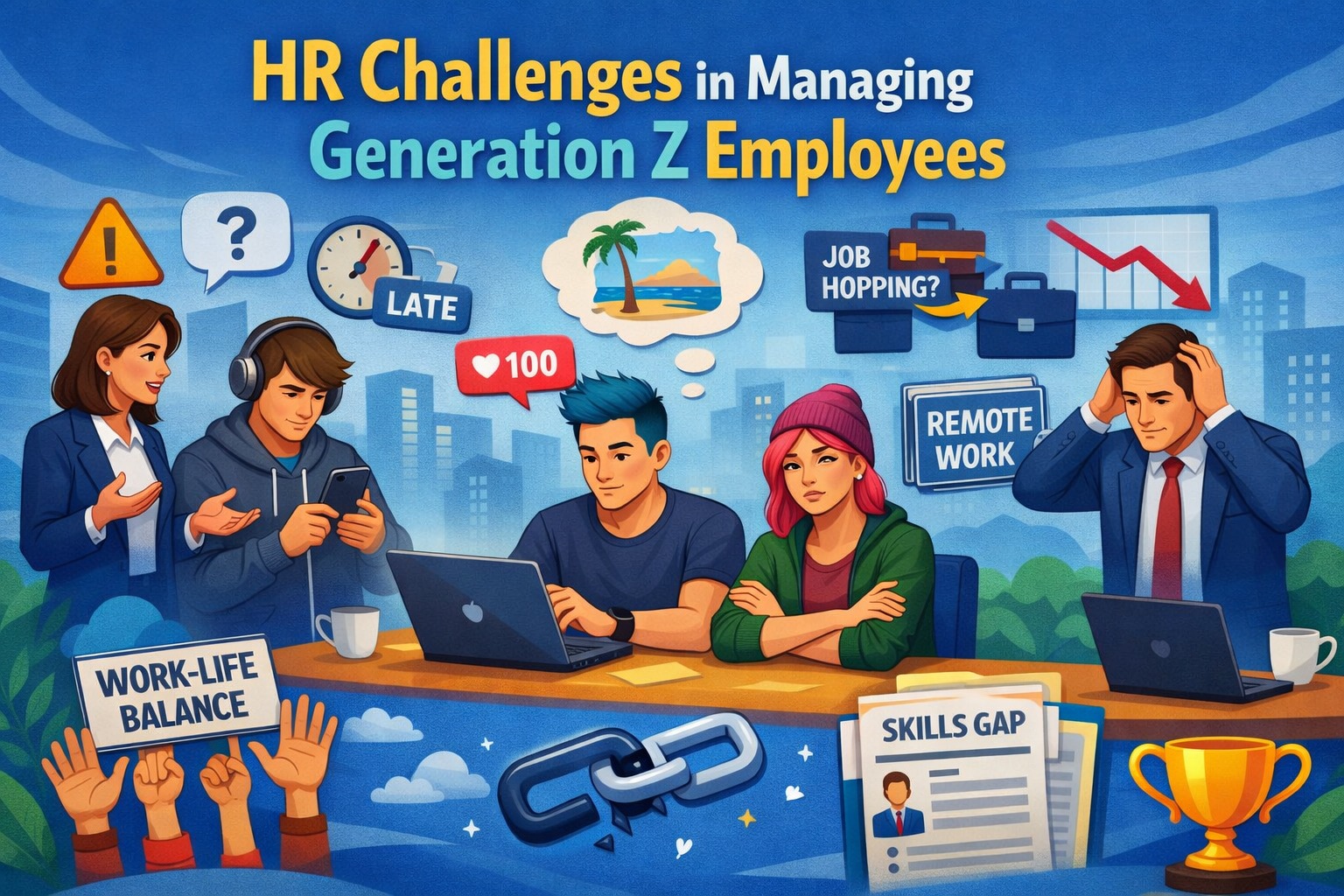
Generation Z—those born roughly between 1997 and 2012—has entered the workforce with a completely different mindset compared to previous generations. Raised in a digital-first environment, they bring fresh energy, strong technological fluency, and new expectations about work. However, for HR professionals, managing this generation comes with unique challenges that require adaptation, flexibility, and innovation.
Below is a deeper look at the key HR challenges in managing Generation Z employees and how organizations can respond effectively.
SHIFTING WORK EXPECTATIONS AND CAREER VALUES
One of the biggest challenges HR faces with Generation Z is their evolving view of work. Unlike older generations who often prioritized long-term job security, Gen Z tends to value purpose, flexibility, and rapid career growth.
Many Gen Z employees expect meaningful work from day one. They want to understand how their role contributes to a larger mission, and they are not afraid to leave if they feel unfulfilled. This creates pressure on HR teams to design roles that are engaging and aligned with personal values.
In addition, Gen Z is more open to non-traditional career paths such as freelancing, hybrid work, and remote-first jobs. Traditional corporate ladders are often seen as slow and rigid. As a result, HR departments must rethink career progression models, offering faster advancement opportunities and more personalized development plans.
To address this, companies are increasingly investing in mentorship programs, transparent promotion systems, and continuous feedback loops to keep Gen Z employees motivated and engaged.
DIGITAL-FIRST MINDSET AND TECHNOLOGY EXPECTATIONS
Generation Z is the first true digital-native workforce. They grew up with smartphones, social media, and instant access to information. Because of this, they expect workplaces to be equally advanced in technology.
One major HR challenge is ensuring that internal systems, communication tools, and workflows are modern and efficient. Outdated software or slow processes can quickly frustrate Gen Z employees and reduce productivity.
They also prefer fast communication methods such as chat apps and collaborative platforms over traditional email chains. This requires HR to support digital transformation across departments, not just in IT.
However, while Gen Z is highly tech-savvy, this also creates an expectation of instant responses and rapid decision-making. HR must balance speed with accuracy, ensuring that workflows remain efficient without sacrificing quality or employee well-being.
Organizations that fail to modernize their digital infrastructure risk losing top Gen Z talent to more agile competitors.
EMPLOYEE ENGAGEMENT, FEEDBACK, AND RETENTION CHALLENGES
Engaging and retaining Generation Z employees is another significant challenge for HR professionals. This generation values constant feedback and recognition. Annual performance reviews are often seen as outdated and insufficient.
Instead, Gen Z prefers real-time feedback that helps them improve continuously. HR departments must therefore implement more frequent check-ins, peer reviews, and performance coaching systems.
Another key issue is retention. Gen Z employees are more likely to switch jobs if they feel their growth is stagnating. Loyalty to a single company is less common, especially if better opportunities exist elsewhere.
To counter this, companies must focus on building a strong workplace culture that emphasizes learning, inclusion, and personal development. Offering upskilling programs, leadership training, and clear career pathways can significantly improve retention rates.
Work-life balance is also a major priority. Gen Z is more aware of mental health issues and expects employers to provide supportive environments, including flexible schedules, wellness programs, and a healthy work culture.
CONCLUSION
Managing Generation Z employees presents both challenges and opportunities for HR professionals. Their expectations for purpose-driven work, advanced technology, continuous feedback, and flexibility require organizations to rethink traditional HR strategies.
Companies that adapt quickly by modernizing systems, improving communication, and prioritizing employee well-being will not only attract Gen Z talent but also retain them in the long term. Ultimately, success lies in creating a workplace that evolves alongside its youngest generation of employees.
About the Author
Gusti Ayu Tita
Author — STEKOM University
An active author focused on academic issues, educational technology, and human resource development in the campus environment.



