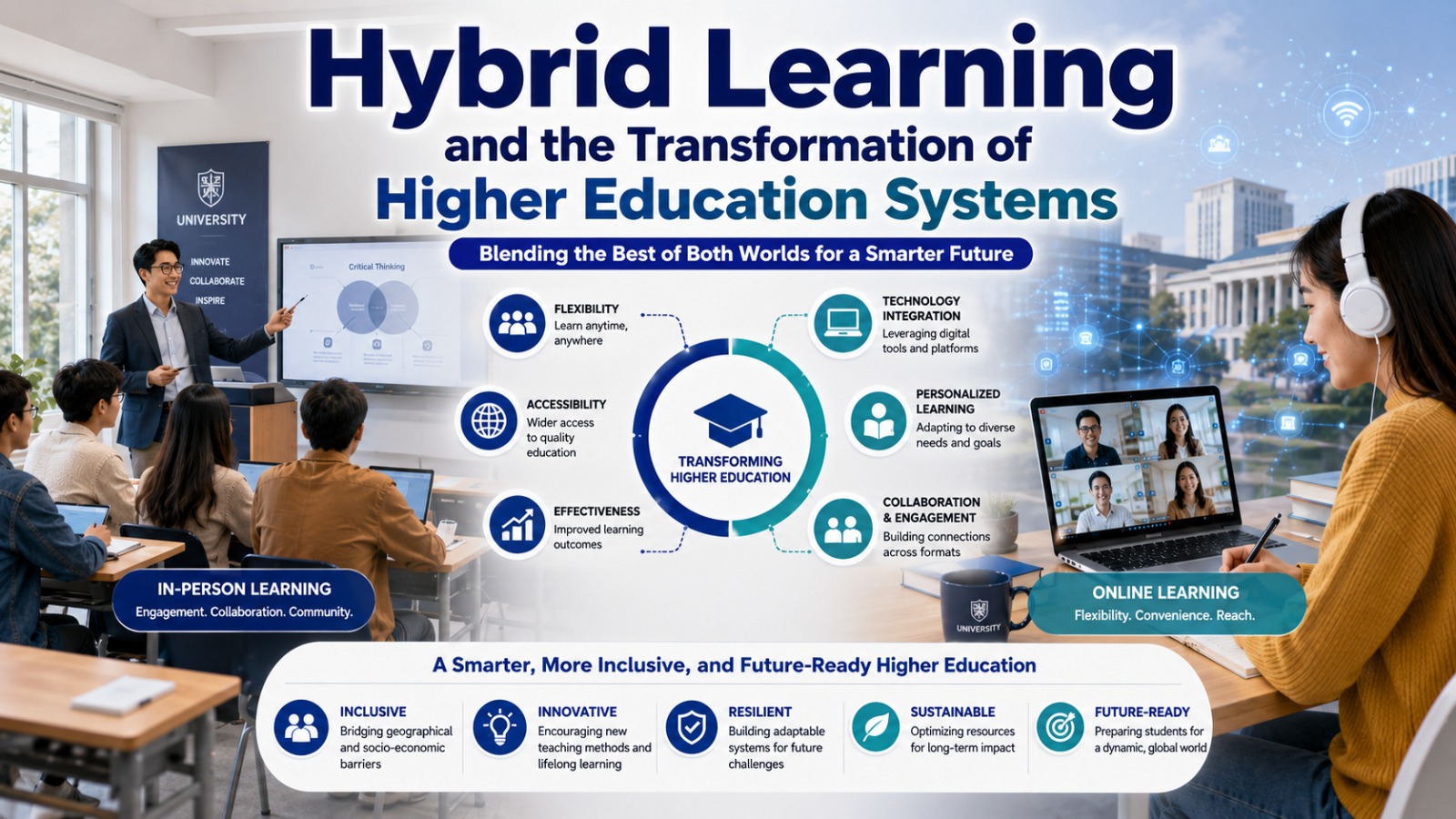
The rapid advancement of digital technology has significantly changed the global education landscape. Higher education institutions are now adopting innovative learning models to meet the demands of modern students and the evolving workforce. One of the most influential developments in recent years is hybrid learning. This educational approach combines traditional classroom instruction with online learning activities, creating a more flexible and adaptive learning environment.
Hybrid learning is not only changing teaching methods but also transforming the entire higher education system. Universities and colleges are redesigning their academic structures, improving digital infrastructure, and developing new strategies to enhance learning quality. As a result, hybrid learning has become an important part of educational transformation in the digital era.
UNDERSTANDING HYBRID LEARNING IN HIGHER EDUCATION
Hybrid learning is a teaching model that integrates face-to-face classroom interaction with online educational activities. In higher education, this approach allows students to attend some classes physically while completing other learning tasks through digital platforms.
Lecturers can provide recorded lectures, online assignments, discussion forums, and virtual collaboration sessions. This combination offers students greater flexibility and supports more personalized learning experiences.
Hybrid learning also enables universities to continue educational activities efficiently during unexpected situations, such as global health crises or mobility restrictions.
THE DIGITAL TRANSFORMATION OF UNIVERSITIES
One of the major impacts of hybrid learning is the acceleration of digital transformation in higher education institutions. Universities are increasingly investing in digital infrastructure, including learning management systems, video conferencing tools, cloud storage, and online assessment platforms.
These technologies support more efficient communication between lecturers and students. Administrative processes such as attendance tracking, assignment submission, and academic evaluation have also become more streamlined through digital systems.
As universities continue adopting digital technologies, higher education is becoming more connected, accessible, and efficient.
FLEXIBILITY FOR MODERN STUDENTS
Modern students often have diverse responsibilities beyond academic activities. Some students work part-time jobs, participate in internships, or manage personal obligations while pursuing higher education.
Hybrid learning offers flexibility that helps students balance their academic and personal responsibilities. Students can access learning materials anytime and from anywhere, making it easier to manage their schedules effectively.
This flexibility also benefits international students and learners who live far from campus because they can participate in educational activities without being physically present at all times.
IMPROVED ACCESS TO HIGHER EDUCATION
Hybrid learning has expanded access to higher education for many people. Students who previously faced geographical, financial, or physical limitations can now participate more easily in university programs through online learning systems.
Universities can reach broader audiences by offering flexible learning options and digital academic resources. This inclusivity helps create more equal educational opportunities for students from different backgrounds and regions.
As a result, hybrid learning contributes to the democratization of education by reducing barriers to academic access.
ENHANCING STUDENT ENGAGEMENT AND COLLABORATION
Traditional lecture-based learning sometimes limits student participation. Hybrid learning introduces more interactive teaching methods that encourage active engagement and collaboration.
Lecturers can use online quizzes, multimedia presentations, group discussions, and virtual teamwork projects to create more dynamic learning experiences. Students can communicate with classmates and lecturers through online forums and video meetings, improving academic interaction.
This combination of digital and in-person communication helps students develop teamwork, problem-solving, and communication skills that are highly valuable in professional environments.
SUPPORTING INDEPENDENT LEARNING
Hybrid learning encourages students to become more independent and responsible for their education. Since students often manage their own schedules and learning pace, they develop stronger self-discipline and time management skills.
Access to digital resources also motivates students to explore learning materials beyond classroom lectures. This independent learning culture promotes critical thinking, creativity, and lifelong learning habits.
In higher education, these skills are essential for academic achievement and career readiness.
THE ROLE OF LECTURERS IN HYBRID LEARNING
The transformation of higher education systems also changes the role of lecturers. In hybrid learning environments, lecturers are no longer only information providers but also facilitators and mentors.
Lecturers must develop digital teaching skills, create engaging online content, and manage both virtual and physical classrooms effectively. They also need to provide regular feedback and support students through multiple communication channels.
This evolving role requires continuous professional development and adaptation to modern educational technologies.
CHALLENGES IN IMPLEMENTING HYBRID LEARNING
Despite its many benefits, hybrid learning also presents challenges for higher education institutions. Reliable internet access, digital devices, and technological literacy are essential for successful implementation.
Some students may struggle with limited internet connectivity or difficulty adapting to online learning systems. Lecturers may also face challenges in designing effective hybrid courses and maintaining student engagement.
Universities must provide technical support, training programs, and adequate infrastructure to overcome these obstacles and ensure educational quality.
THE FUTURE OF HIGHER EDUCATION
Hybrid learning is expected to continue shaping the future of higher education. Many universities are likely to maintain flexible learning systems even after traditional classroom activities fully resume.
The integration of digital technology into education allows institutions to create more innovative and student-centered learning environments. Future higher education systems will likely combine physical campuses with advanced online learning experiences to meet the needs of a rapidly changing world.
As technology evolves, hybrid learning may become the standard model for higher education globally.
CONCLUSION
Hybrid learning has become a powerful force in transforming higher education systems. By combining traditional classroom teaching with digital learning technologies, universities can provide more flexible, accessible, and engaging educational experiences.
This learning model supports independent learning, improves technological competence, and expands access to higher education for students worldwide. Although challenges remain, the continued development of digital infrastructure and educational innovation will strengthen the role of hybrid learning in the future of higher education.
About the Author
Gusti Ayu Tita
Author — STEKOM University
An active author focused on academic issues, educational technology, and human resource development in the campus environment.