
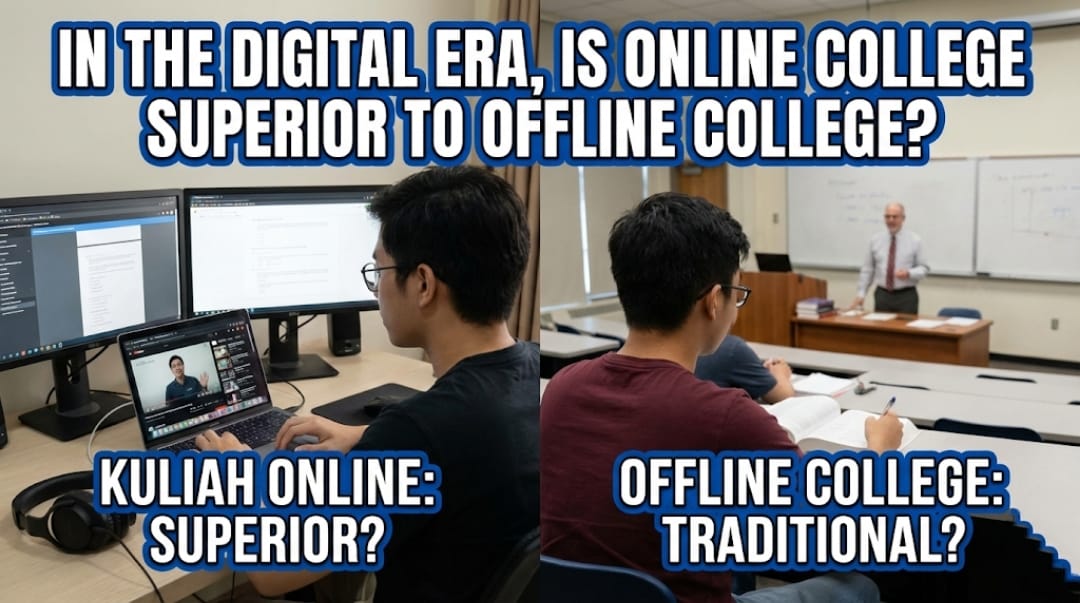
The digital era has reshaped nearly every aspect of modern life, including higher education. Advanced technology, high-speed internet, and digital platforms have made online college more accessible than ever before. This transformation leads to a critical question - in the digital era, is online college superior to offline college?
To evaluate this, we must examine academic quality, flexibility, student engagement, and long-term outcomes.
THE IMPACT OF THE DIGITAL ERA ON EDUCATION
Digital transformation has expanded learning beyond traditional classrooms. Universities now integrate cloud systems, virtual meeting platforms, and digital assessments into their programs.
Online college benefits directly from this infrastructure. Students can access lectures, submit assignments, and participate in discussions without geographical limitations.
However, offline college has also adapted by incorporating digital tools into face-to-face instruction. The digital era influences both formats, not just online education.
FLEXIBILITY AND ACCESSIBILITY ADVANTAGES
One of the strongest arguments for online college is flexibility. Students can manage their schedules more independently, allowing them to balance education with work or personal responsibilities.
Online programs also reduce commuting time and relocation costs. This accessibility opens opportunities for students in remote areas or those with limited mobility.
In contrast, offline college often requires physical attendance at scheduled times, which may limit flexibility but provides structure.
ACADEMIC QUALITY AND LEARNING EXPERIENCE
Academic quality depends largely on curriculum design, instructor competence, and student participation - not solely on delivery format.
Online college enables recorded lectures, digital resources, and interactive tools that support self-paced learning. Students can revisit complex materials multiple times.
Offline college offers real-time interaction, immediate feedback, and dynamic classroom discussions. Non-verbal communication and spontaneous collaboration may enhance comprehension for many learners.
Each format presents distinct strengths rather than absolute superiority.
SOCIAL AND PROFESSIONAL DEVELOPMENT
Offline college often provides stronger opportunities for direct networking, campus activities, and collaborative projects. Face-to-face interaction can foster deeper relationships and leadership development.
Online college, however, allows broader networking across regions and even internationally. Virtual collaboration prepares students for remote work environments that are increasingly common in the digital economy.
Professional readiness depends on how effectively students engage with the opportunities available in either system.
LIMITATIONS OF BOTH MODELS
Online college requires strong self-discipline and reliable technology. Technical disruptions and reduced physical interaction can affect motivation.
Offline college may involve higher living expenses and less scheduling flexibility. Not all students thrive in rigid classroom structures.
Therefore, superiority cannot be determined solely by technological advancement.
CONCLUSION
In the digital era, online college offers flexibility, accessibility, and technological integration that align with modern lifestyles. However, offline college continues to provide structured environments and direct interpersonal engagement.
Rather than declaring one format superior, it is more accurate to recognize that effectiveness depends on individual learning styles, career goals, and institutional quality.
The digital era enhances educational possibilities - but true academic success remains shaped by commitment, engagement, and thoughtful program design.
About the Author
Gusti Ayu Tita
Author — STEKOM University
An active author focused on academic issues, educational technology, and human resource development in the campus environment.



