
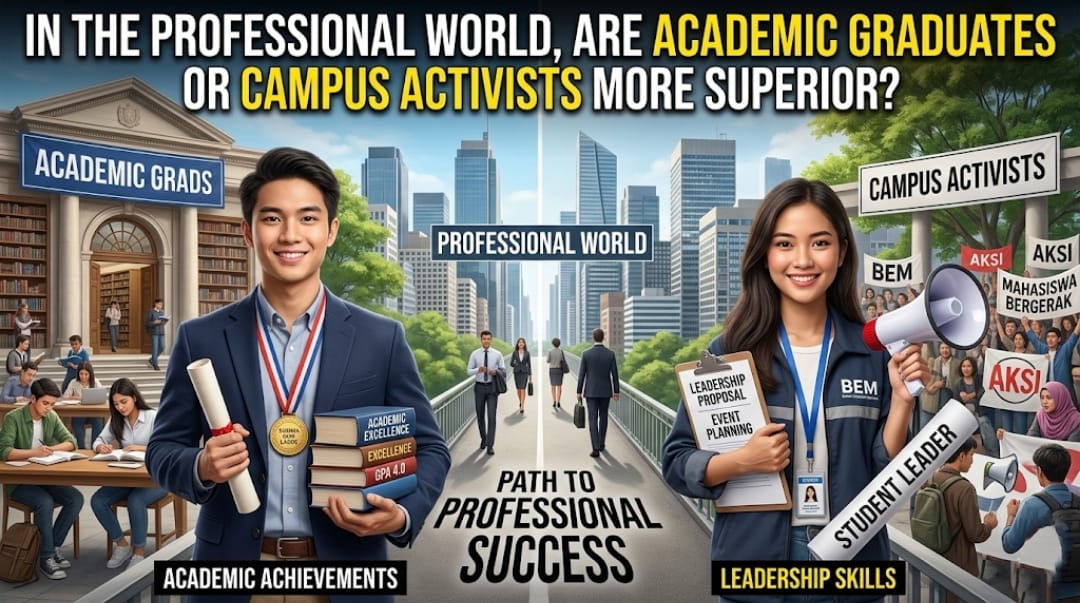
As students transition from university to the professional world, a common debate emerges. Are academic graduates with outstanding grades more superior, or do campus activists with strong organizational backgrounds have the edge?
This question reflects a broader concern about career readiness. Employers today look beyond transcripts, yet academic excellence still holds weight. Understanding the strengths of both profiles can help students prepare more strategically for long-term success.
THE STRENGTHS OF ACADEMIC GRADUATES
Academic graduates are typically recognized for their strong GPA, research experience, and mastery of theoretical knowledge. Their academic journey often reflects discipline, consistency, and intellectual focus.
Key advantages of academic graduates include:
- Strong analytical and critical thinking skills
- Deep understanding of subject matter
- Ability to work independently on structured tasks
- Consistent performance under academic evaluation
In fields such as engineering, finance, medicine, and technology, academic competence is essential. Employers in these sectors rely on candidates who can apply complex theories and technical knowledge accurately.
However, professional environments require more than technical expertise alone.
THE ADVANTAGES OF CAMPUS ACTIVISTS
Campus activists are students actively involved in organizations, committees, and leadership roles. Through these activities, they gain hands-on experience in teamwork and coordination.
Some notable strengths of campus activists include:
- Effective communication skills
- Leadership and team management experience
- Conflict resolution abilities
- Adaptability in dynamic situations
These competencies are closely aligned with workplace expectations. Modern companies operate in collaborative settings where employees must coordinate across departments and respond to changing demands.
Organizational experience often becomes a central discussion point during interviews, as recruiters assess real-world behavior and interpersonal competence.
WHAT THE PROFESSIONAL WORLD VALUES MOST
In reality, the professional world does not strictly rank academic graduates above campus activists, or vice versa. Employers generally seek a combination of hard skills and soft skills.
In many hiring processes:
- Academic performance helps candidates pass initial screening
- Organizational involvement strengthens interview outcomes
- Internship experience connects knowledge with practice
Companies prefer candidates who can think critically, communicate effectively, and adapt to workplace challenges. Superiority is rarely determined by a single factor.
BUILDING A BALANCED PROFESSIONAL PROFILE
Instead of choosing one path exclusively, students can strengthen both academic and organizational competencies. Practical strategies include:
1. Maintaining a competitive GPA
2. Participating in organizations aligned with career interests
3. Gaining internship experience for practical exposure
4. Continuously improving communication and problem-solving skills
This balanced approach enhances overall employability and long-term career growth.
CONCLUSION
In the professional world, academic graduates and campus activists each bring valuable strengths. Academic excellence demonstrates intellectual capability, while organizational involvement highlights leadership and adaptability.
Rather than asking who is more superior, it is more productive to focus on integration. Graduates who combine strong academic foundations with practical organizational experience are often better prepared to thrive in today’s competitive workplace
About the Author
Gusti Ayu Tita
Author — STEKOM University
An active author focused on academic issues, educational technology, and human resource development in the campus environment.



