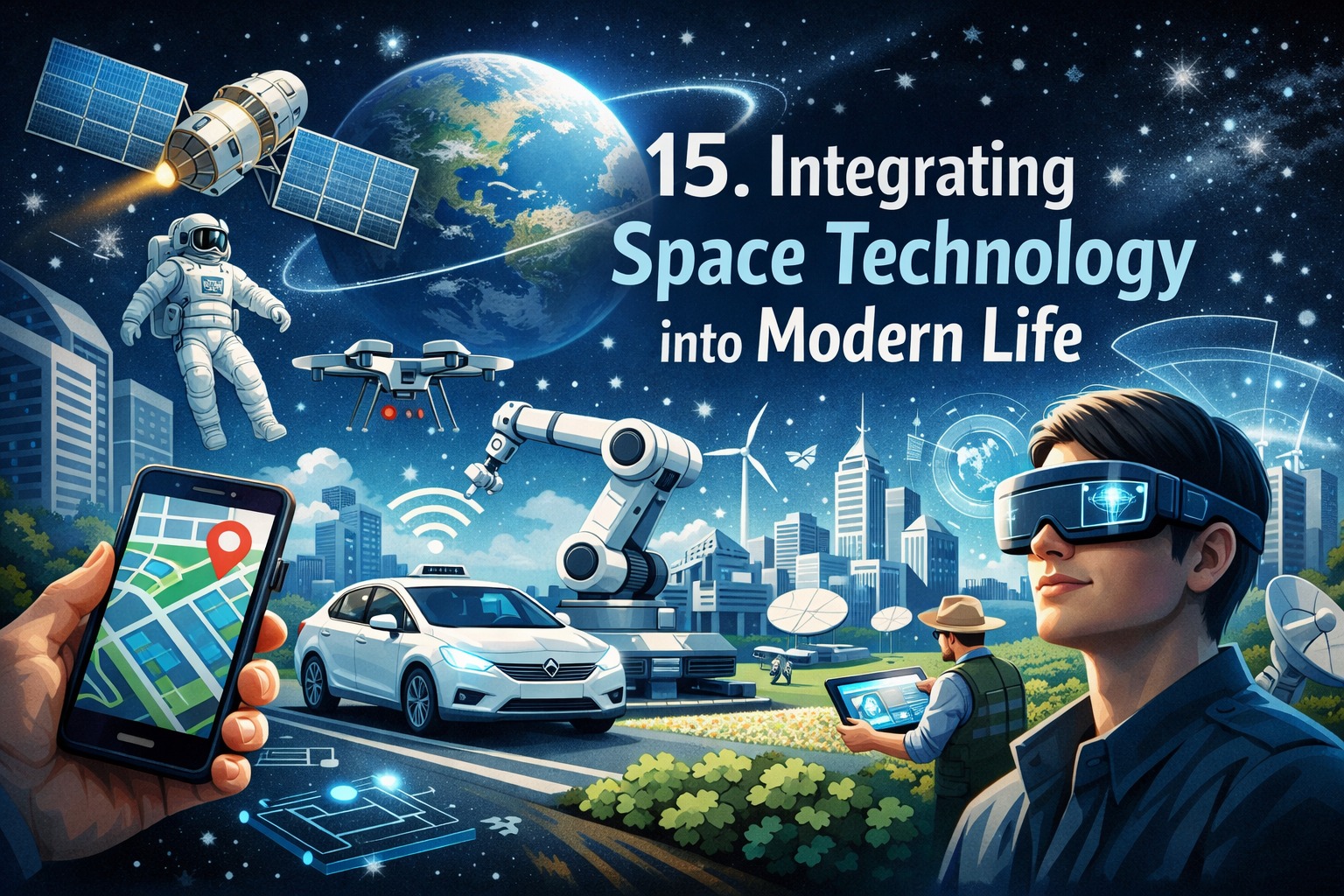
Space technology is no longer confined to rockets and distant planets. Today, it plays a vital role in shaping everyday life on Earth. From communication systems to environmental monitoring, the integration of space technology has transformed how humans live, work, and interact. This article explores how space innovations are seamlessly embedded into modern society and why they matter more than ever.
THE EVOLUTION OF SPACE TECHNOLOGY
Space technology has evolved rapidly since the first satellite launch in the mid-20th century. Initially developed for exploration and defense, these technologies have gradually found practical applications in civilian life. Advances in satellite systems, data processing, and communication networks have made space-based tools accessible and essential for global development.
Modern satellites are smaller, more efficient, and capable of delivering real-time data. This evolution has allowed industries such as agriculture, transportation, and disaster management to benefit from accurate and timely information.
APPLICATIONS IN DAILY LIFE
Space technology influences many aspects of daily routines, often without people realizing it. One of the most prominent examples is GPS navigation, which relies on satellite systems to provide precise location data. This technology is widely used in smartphones, vehicles, and logistics services.
Communication is another area deeply impacted. Satellite-based networks enable global internet coverage, television broadcasting, and international calls. In remote areas, space technology bridges connectivity gaps, improving access to education and healthcare.
Weather forecasting also depends heavily on satellite data. Accurate predictions help communities prepare for natural disasters, reducing risks and saving lives.
IMPACT ON INDUSTRIES
Various industries have embraced space technology to improve efficiency and productivity. In agriculture, satellite imagery helps farmers monitor crop health, soil conditions, and irrigation needs. This leads to better yields and sustainable farming practices.
In transportation, space-based tracking systems enhance route optimization, fuel efficiency, and safety. Aviation and maritime sectors rely on satellite communication for navigation and coordination.
Environmental management has also benefited significantly. Satellites monitor deforestation, ocean pollution, and climate change, providing critical data for policymakers and researchers.
CHALLENGES AND LIMITATIONS
Despite its advantages, integrating space technology into modern life comes with challenges. High development and maintenance costs remain a significant barrier. Not all countries have equal access to these technologies, leading to a digital divide.
There are also concerns about space debris and the sustainability of satellite launches. As more satellites are deployed, the risk of collisions increases, which could disrupt essential services on Earth.
Data security and privacy are additional concerns. With increased reliance on satellite systems, protecting sensitive information becomes crucial.
THE FUTURE OF SPACE TECHNOLOGY IN SOCIETY
The future of space technology looks promising, with continuous innovations shaping new possibilities. Emerging technologies such as reusable rockets, miniaturized satellites, and space-based solar power are expected to further integrate into everyday life.
Artificial intelligence combined with satellite data will enhance decision-making across industries. Smart cities, autonomous vehicles, and advanced disaster response systems will rely heavily on space-based infrastructure.
As technology becomes more accessible, developing countries may also benefit from improved connectivity and resources, narrowing the global technology gap.
CONCLUSION
Integrating space technology into modern life has revolutionized how society functions. It enhances communication, supports industries, and provides solutions to global challenges. While obstacles remain, continued innovation and responsible use will ensure that space technology continues to improve life on Earth. Its role will only become more significant as humanity advances into the future.
About the Author
Gusti Ayu Tita
Author — STEKOM University
An active author focused on academic issues, educational technology, and human resource development in the campus environment.