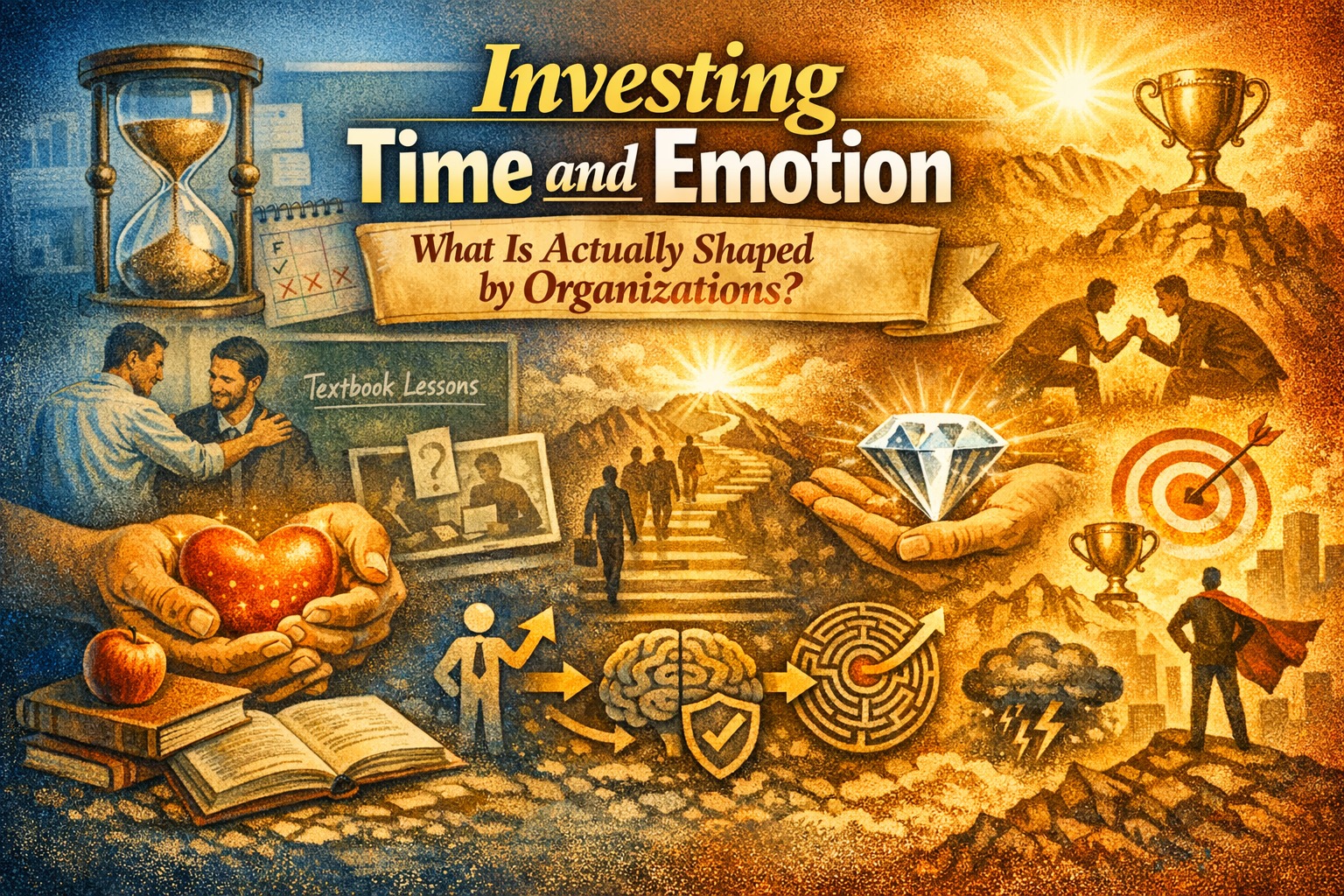
Joining an organization is more than a commitment of schedules and attendance. It is an investment of time, energy, and emotion. Many people enter organizations seeking experience or recognition, but often leave with something deeper and more valuable. Beyond visible achievements, organizations quietly shape attitudes, values, and personal resilience.
This article explores what is truly formed when individuals invest their time and emotions in organizational life.
TIME AS A TOOL FOR DISCIPLINE
Time is one of the first resources individuals give to an organization. Meetings, projects, and coordination demand consistency and planning. Over time, this routine builds discipline and strong time-management habits.
Learning to balance organizational responsibilities with personal and academic life strengthens self-control. These habits remain useful long after organizational involvement ends.
EMOTIONAL INVESTMENT AND SELF-AWARENESS
Organizations are emotional environments. Success brings excitement, while conflict and failure bring frustration. By experiencing these emotional cycles, individuals develop self-awareness and emotional regulation.
Managing emotions during teamwork, disagreements, or leadership roles helps individuals respond thoughtfully rather than react impulsively. This emotional maturity becomes a key foundation for personal growth.
SHAPING VALUES THROUGH DAILY PRACTICE
Values are not formed through lectures alone. In organizations, values are practiced daily. Honesty, commitment, empathy, and responsibility are tested in real situations.
Repeated exposure to ethical choices gradually shapes a strong value system. Individuals learn what they stand for and how to act when faced with pressure or uncertainty.
BUILDING RESILIENCE THROUGH CHALLENGES
Organizational life is filled with challenges, from tight deadlines to internal conflicts. Facing these obstacles requires patience and persistence.
Through repeated challenges, individuals build resilience. They learn how to recover from setbacks, adapt strategies, and continue moving forward despite difficulties. This resilience becomes a lifelong asset.
RELATIONSHIPS AND SOCIAL GROWTH
Organizations bring people together from different backgrounds and perspectives. Building relationships in such environments strengthens communication and social skills.
Learning to collaborate, trust others, and resolve misunderstandings enhances social intelligence. These skills play a significant role in both professional success and personal well-being.
LONG-TERM IMPACT BEYOND ACHIEVEMENTS
While organizational achievements may fade over time, the internal changes remain. Discipline, emotional intelligence, resilience, and values continue to influence decisions and behavior.
These outcomes often become more valuable than any formal recognition, shaping how individuals approach work, leadership, and life challenges.
CONCLUSION
Investing time and emotion in organizations shapes far more than resumes or titles. It forms discipline, emotional maturity, resilience, values, and social awareness.
Although the process may feel demanding, the personal growth gained through organizational involvement is a long-term investment that continues to deliver value throughout life.
About the Author
Gusti Ayu Tita
Author — STEKOM University
An active author focused on academic issues, educational technology, and human resource development in the campus environment.