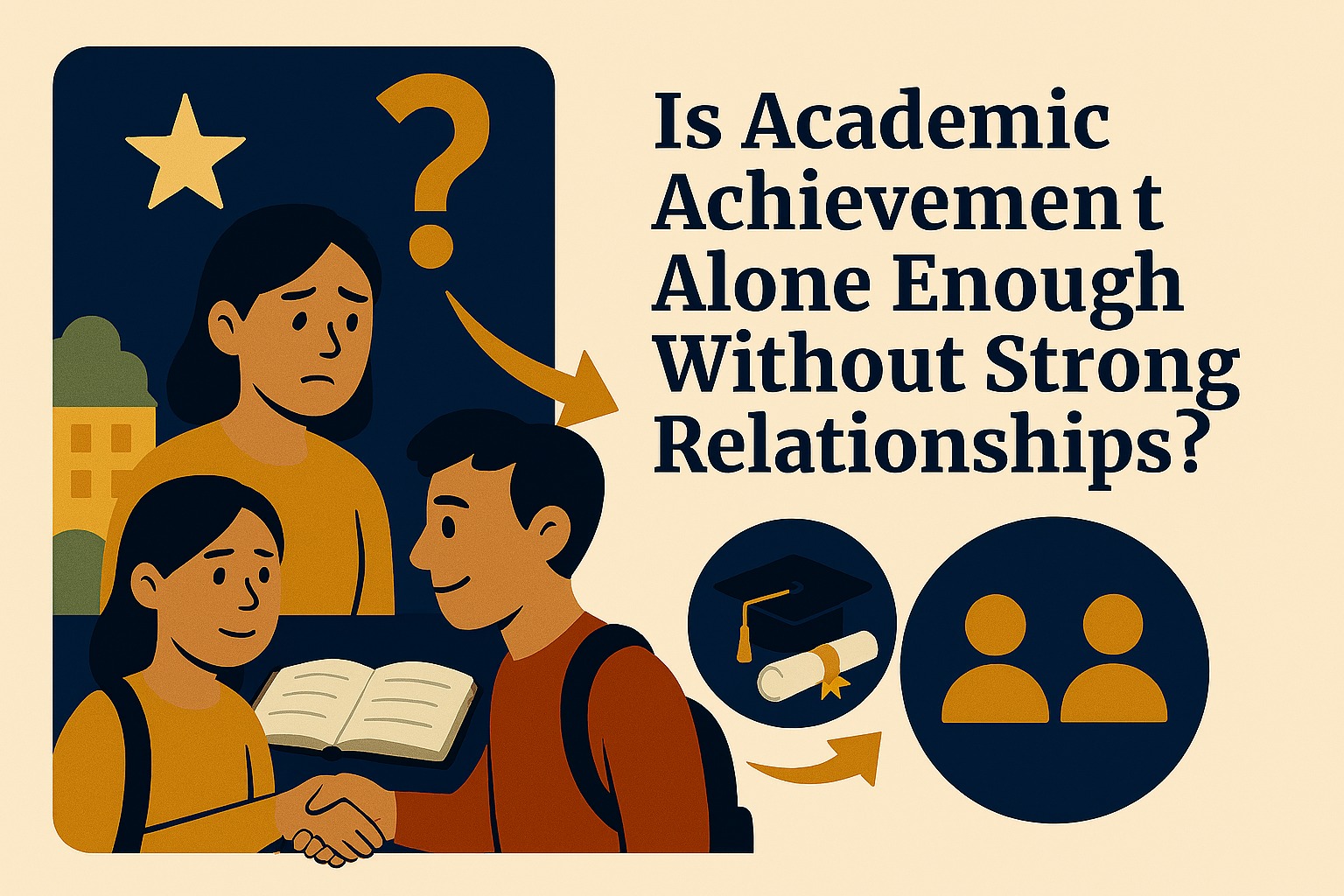
Many students believe that academic achievement is the main key to career success. High grades, a strong GPA, and various awards are often seen as the most important assets to compete in the job market. However, an important question arises: is academic achievement alone enough without strong connections?
In today’s increasingly dynamic competition, companies do not only look at the numbers on a transcript. Other factors also play a major role in determining someone’s chances of reaching their dream career.
THE ROLE OF ACADEMIC ACHIEVEMENT IN THE WORKPLACE
Academic achievement still plays an important role. Good grades reflect discipline, the ability to understand material, and consistency in learning. Many companies use GPA as an initial requirement during the screening process.
In addition, academic performance can open opportunities such as scholarships, student exchange programs, and prestigious internships. All of these become valuable advantages when entering the professional world.
However, academic achievement is more often an entry ticket, not the only factor that determines long-term success.
THE IMPORTANCE OF STRONG CONNECTIONS
Strong connections provide access to information and opportunities that are not always openly available. Good networking allows someone to get recommendations, referrals, or job vacancy information faster.
In many situations, candidates with similar abilities compete closely. In such cases, professional connections can become the deciding factor. Recommendations from lecturers, alumni, or professional colleagues often increase an applicant’s credibility.
Connections also help broaden perspectives and speed up adaptation in the workplace.
THE COMBINATION OF COMPETENCE AND NETWORK
Academic achievement without connections may be enough to meet administrative requirements, but it may not be enough to win the competition. On the other hand, connections without competence will not last long either.
A combination of academic ability and professional networking is a more effective strategy. Academic achievement shows individual quality, while connections open the path to opportunities.
Students who can balance both have a stronger competitive advantage.
SOFT SKILLS AS A SUPPORTING FACTOR
Besides achievement and connections, soft skills also play a major role. Communication, teamwork, and leadership are highly valued by companies. These skills often develop through social interaction and organizational experience.
Connections built during college also help students train these skills. As a result, they are not only academically strong, but also ready to face professional challenges.
STRATEGIES TO DEVELOP BOTH ACHIEVEMENT AND CONNECTIONS
To maximize career opportunities, students can take the following steps:
1. Maintain consistent academic performance.
2. Be active in campus organizations or communities.
3. Join seminars and self-development activities.
4. Build positive communication with lecturers and alumni.
5. Use professional platforms to expand networks.
This approach helps create a balance between competence and connections.
CONCLUSION
Academic achievement alone may not be enough without strong connections. High grades are important, but professional networks and interpersonal skills also play a major role in opening career opportunities.
Success in the workplace often comes from a combination of competence, connections, and soft skills. Therefore, students should not only focus on grades but also actively build networks that will benefit their future.
About the Author
Gusti Ayu Tita P
Author — STEKOM University
An active author focused on academic issues, educational technology, and human resource development in the campus environment.