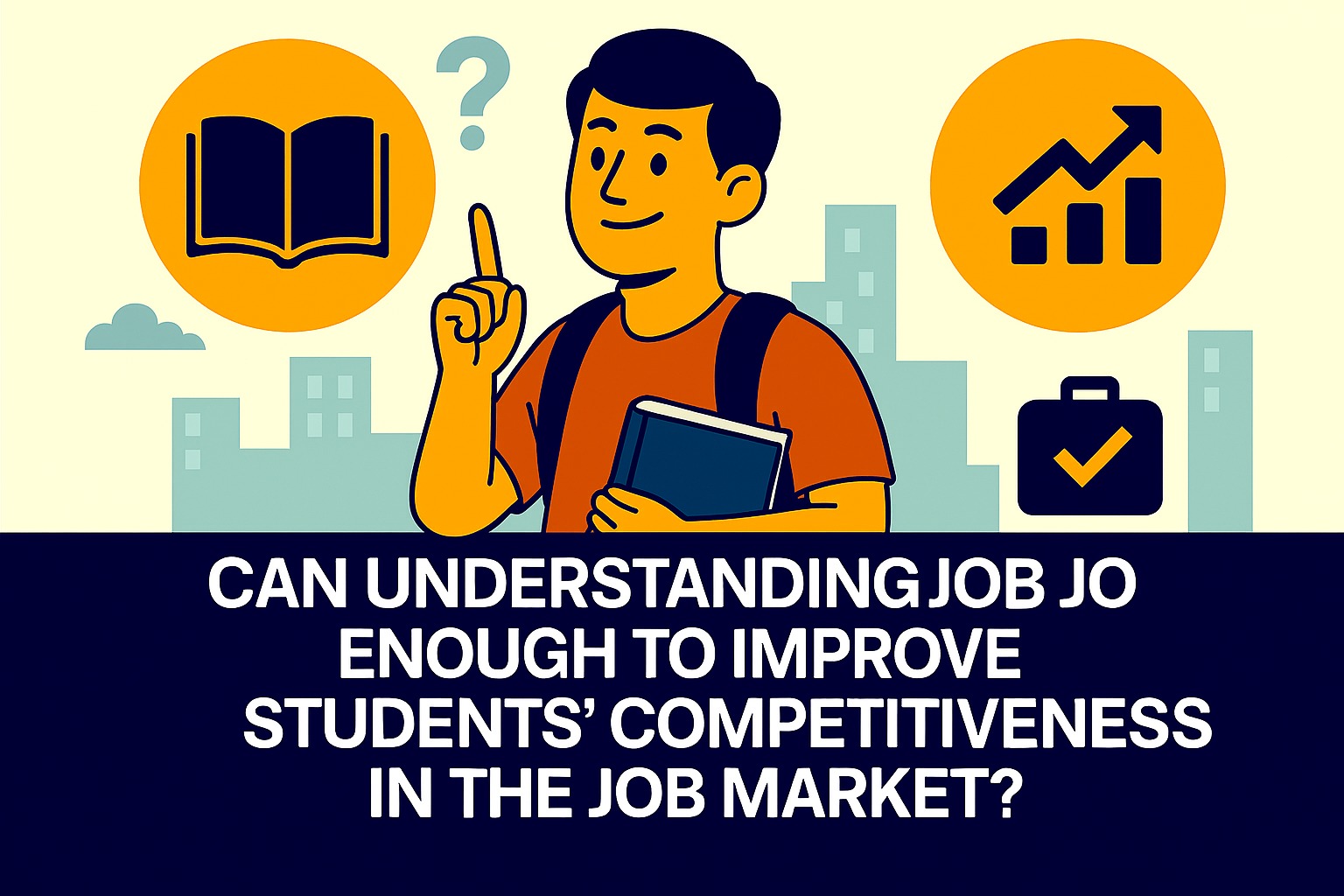
Formal education haslong been regarded as the main route to securing a job and advancing a career. However, with the rapid developments in the workforce and its increasing dynamics, many students are beginning to question whether formal education alone is sufficient to compete in today’s highly competitive job market. This article will discuss the importance of formal education, as well as other factors that students need to develop to enhance their competitiveness in the job market.
FORMAL EDUCATION: THE FOUNDATION
Formal education, whether a bachelor’s degree, diploma, or postgraduate program, remains a solid foundation for students to enter the workforce. A degree shows that an individual has acquired the essential knowledge required in a particular field. Many companies still consider formal education as one of the primary requirements for recruitment.
However, while formal education provides critical foundational knowledge, the workforce today demands more than just an academic background. The intense competition forces students to seek other ways to stand out in the eyes of recruiters.
SOFT SKILLS: ESSENTIAL ABILITIES
In addition to the knowledge gained from formal education, the ability to communicate effectively, work in teams, and possess leadership skills, or soft skills , is now highly valued by many companies. These soft skills are critical because they often serve as the differentiator between one candidate and another.
In the job market, the ability to adapt, communicate, and work effectively within teams is more highly regarded than just academic grades. For example, involvement in campus organizations, internships, or group projects can help students refine these skills and prepare them for the challenges of the professional world.
WORK EXPERIENCE: THE VALUE OF INTERNSHIPS AND PRACTICUM PROJECTS
In addition to formal education and soft skills, work experience is a decisive factor in improving students’ competitiveness. Internships, part-time jobs, or practicum projects relevant to their chosen field can provide valuable experience not gained in the classroom.
Through internships, students can learn how the theories they study in class are applied in real-world situations. This experience offers clearer insight into job demands and helps them build a professional network that will be valuable later on.
TECHNICAL SKILLS: HAVING RELEVANT ABILITIES
Along with soft skills, technical skills relevant to a particular job field are also extremely important. For example, students who want to work in information technology (IT) need to master specific programming languages or software tools. Similarly, students aiming for careers in graphic design need skills in design software such as Adobe Photoshop or Illustrator.
Therefore, students should not rely solely on formal education but should also actively develop the technical skills that support the profession they aspire to. Mastery of relevant technical skills will give students an edge in the eyes of recruiters.
PERSONAL DEVELOPMENT: CONTINUOUS LEARNING AND GROWTH
The workforce is constantly evolving, especially with the rapid development of new technologies. Therefore, the ability to continuously learn and grow is critical. Students who depend only on formal education without striving to update their skills after graduation will fall behind.
Participating in training, online courses, or seminars related to their desired job field can help students continuously update their knowledge and skills. The concept of lifelong learning has become increasingly important in today’s job market, where learning doesn’t stop after earning a degree.
CONCLUSION
Formal education remains a strong foundation for launching a career, but it is not enough on its own to enhance students’ competitiveness in an increasingly competitive job market. In addition to formal education, students need to develop soft skills, technical abilities, and gain relevant work experience.
Furthermore, the ability to continuously learn and adapt to changes in the workforce will help students stay relevant and prepared for future challenges. Therefore, it is essential for students to make the most of their college years by focusing not only on academics but also on practical skills and professional networking.
About the Author
Gusti Ayu Tita
Author — STEKOM University
An active author focused on academic issues, educational technology, and human resource development in the campus environment.