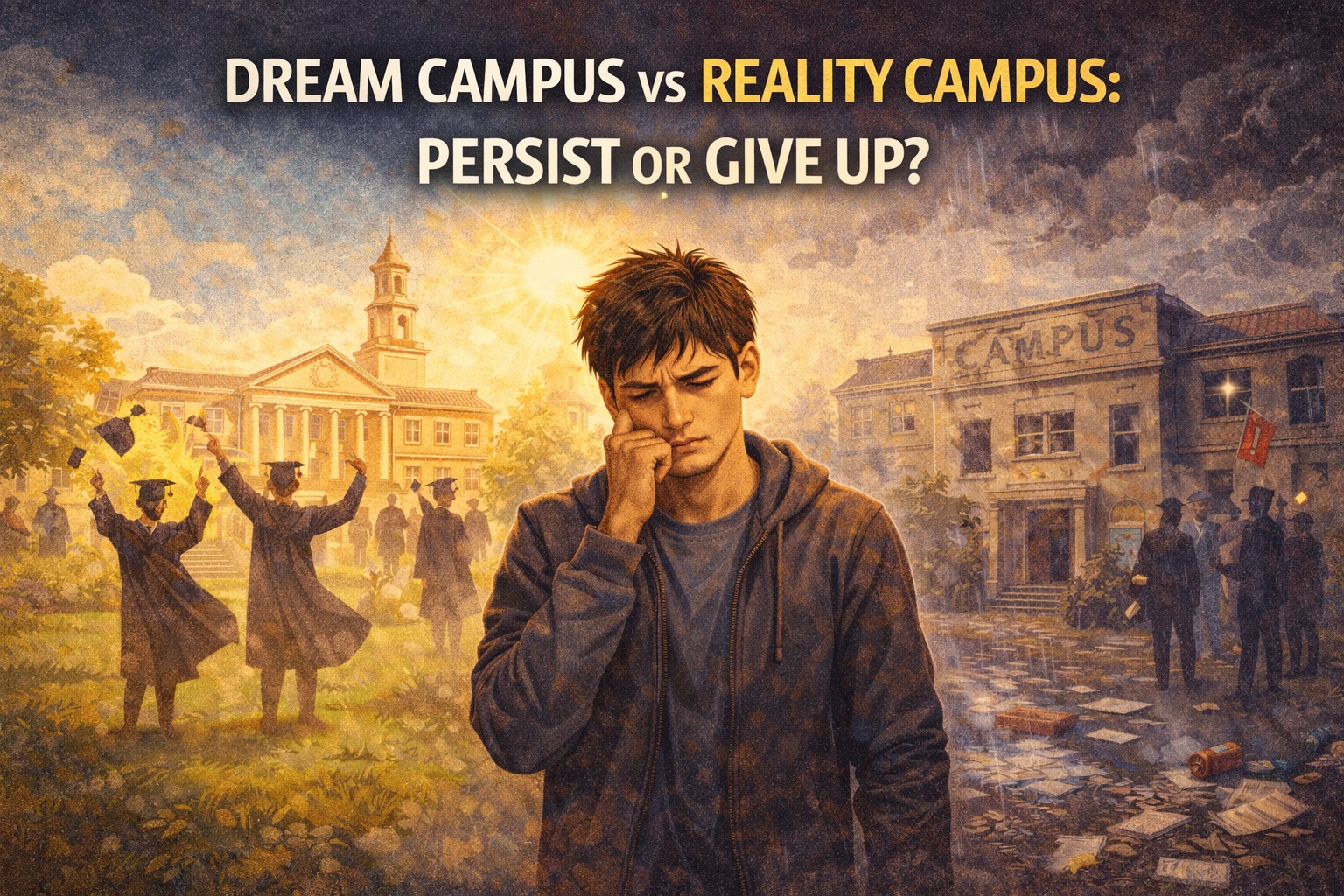
Many prospective students imagine campus life as an ideal place to grow, pursue dreams, and discover identity. This image is shaped by social media, seniors’ stories, and institutional promotions that showcase only the best sides. Dream campuses are associated with complete facilities, inspiring lecturers, supportive environments, and vibrant student life. However, once officially becoming a student, campus reality often fails to match expectations. This is where the big question arises: persist or give up?
BETWEEN CAMPUS EXPECTATIONS AND REALITY
The gap between dream campuses and reality often becomes a source of disappointment for new students. Overly high expectations collide with rigid academic systems, overwhelming assignments, and complex social dynamics. Many students are shocked by the fast pace of lectures and the high level of independence required.
At this stage, students must realize that campus is not just a place for academic learning, but also a space for life lessons. Campus reality teaches time management, mental resilience, and adaptability. Without adjusting expectations, frustration can grow into thoughts of giving up.
UNEXPECTED ACADEMIC REALITIES
Before deciding whether to persist or give up, it is important to understand academic challenges that often arise unexpectedly:
1. Heavy assignment loads
2. Independent learning systems
3. Strict assessment criteria
4. Academic competition
These realities are not meant to intimidate but to be understood. They shape character and prepare students for professional life.
SOCIAL AND PSYCHOLOGICAL PRESSURE ON CAMPUS
Beyond academics, social and psychological pressures heavily influence students’ decisions. New environments, unstable friendships, and adaptation demands can trigger loneliness and anxiety. This is often intensified by family expectations and financial pressure.
WHY PERSISTING IS WORTH CONSIDERING
Persisting does not mean suffering without solutions. It means giving oneself time to grow.
Reasons to consider persisting include:
Adaptation takes time
Opportunities for self-development
Mental resilience building
Long-term investment
Available support systems
WHEN GIVING UP CAN BE A RATIONAL CHOICE
Giving up does not always mean failure. In certain cases, changing majors or campuses is a rational decision—especially when mental health deteriorates or interests clearly misalign.
STRATEGIES FOR FACING CAMPUS REALITY
Lower unrealistic expectations
Manage time effectively
Build supportive social networks
Seek help when needed
CONCLUSION
The contrast between dream campuses and reality campuses creates a dilemma between persisting and giving up. Persisting offers growth and resilience, while giving up can be a rational redirection. The best decision is the one that aligns with personal well-being and life goals.
About the Author
Gusti Ayu Tita
Author — STEKOM University
An active author focused on academic issues, educational technology, and human resource development in the campus environment.