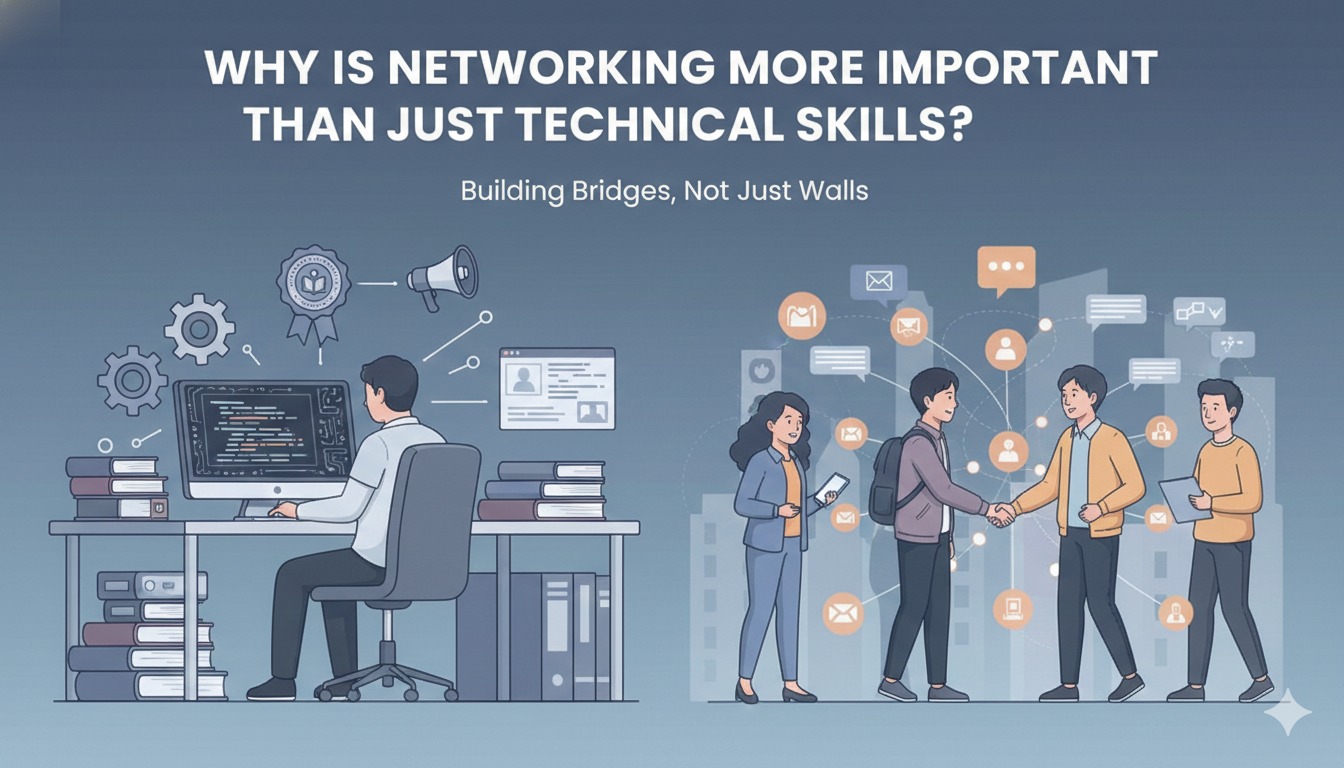
In the modern professional world, many people focus on developing technical skills (hard skills) such as coding, design, data analysis, or other specialized abilities. While technical skills are important, networking—or the ability to build professional connections—often becomes the key differentiator between those who are “good” and those who are truly “successful.”
Many experienced professionals say, “It’s not just what you know, but who you know.” This means that who you know and how you nurture those relationships can open doors that technical skills alone cannot.
Networking vs Technical Skills: Two Pillars of Success
Technical skills are the foundation—without them, entering the professional world is difficult. However, networking acts as a bridge connecting that foundation to real opportunities.
A highly skilled professional without a strong network may struggle to access major opportunities. Conversely, someone with a broad network can grow faster because they have access to information, mentors, and job openings that not everyone knows about.
In many cases, networking amplifies the impact of your technical skills by making them more visible and recognized.
Why Networking Can Be More Valuable Than Technical Skills
1. Networking Provides Access to Hidden Opportunities
Not all opportunities are publicly posted. Many projects, collaborations, or strategic positions are offered through internal networks. A strong network can give you direct access to “exclusive” opportunities that aren’t easily found through standard searches.
2. Networking Strengthens Reputation and Credibility
Technical skills can be showcased through a portfolio, but professional reputation is built through relationships. When someone in your network recommends you, it carries far more weight than certificates or written achievements alone.
3. Networking Offers Emotional and Professional Support
Career journeys aren’t always smooth. A supportive network can provide inspiration, feedback, and motivation during challenges. Colleagues, mentors, or professional communities help you grow not just in skills, but also mentally and strategically.
4. Networking Enables Collaboration and Growth
Many great innovations come from collaboration. Through a wide network, you can meet people with diverse ideas, skills, and visions—creating mutually beneficial opportunities. Networking expands horizons and accelerates professional growth.
Limitations of Technical Skills Without Networking
Imagine being an expert in a field, but no one knows your abilities. Without networking, it’s difficult for others to recognize, acknowledge, or recommend you.
Moreover, technical skills evolve quickly. What’s relevant today may become outdated in a few years. Strong professional relationships, however, can last long and provide continuous value even as technologies change.
Focusing on networking not only adds career value but also keeps you relevant amid industry changes.
How to Build Valuable Networking
1. Be Active in Professional Communities
Attend events, seminars, or discussion groups in your field. Meet like-minded people and start building connections naturally.
2. Leverage Digital Platforms
Use LinkedIn, professional Instagram accounts, or online communities like Slack and X (Twitter) to expand your network. Sharing insights and engaging with other professionals increases visibility and credibility.
3. Build Genuine Relationships
Networking isn’t about taking advantage; it’s about creating trust. Start by offering help, sharing ideas, or supporting others’ achievements before expecting anything in return.
4. Maintain Relationships Consistently
Don’t reach out only when you need something. Take time to greet, congratulate, or have casual discussions. Relationships nurtured sincerely will last longer and be more beneficial in the future.
Case Study: When Networking Changes Career Paths
A young developer may land a major project not because they are the best coder, but because they actively share tips in tech communities and maintain good relationships with peers.
Similarly, a graphic designer might gain a large client through a recommendation from a former collaborator. These examples show how networking can accelerate a career far beyond technical skills alone.
Conclusion
Networking and technical skills are two sides of the same coin. In today’s competitive and collaborative work environment, networking often becomes the decisive factor in success.
By building a strong, genuine, and sustainable professional network, you not only expand opportunities but also strengthen your position within your industry.
So, don’t just focus on improving technical skills. Invest time in meaningful networking because the right connections can transform your career future.
About the Author
Gusti Ayu Tita
Author — STEKOM University
An active author focused on academic issues, educational technology, and human resource development in the campus environment.