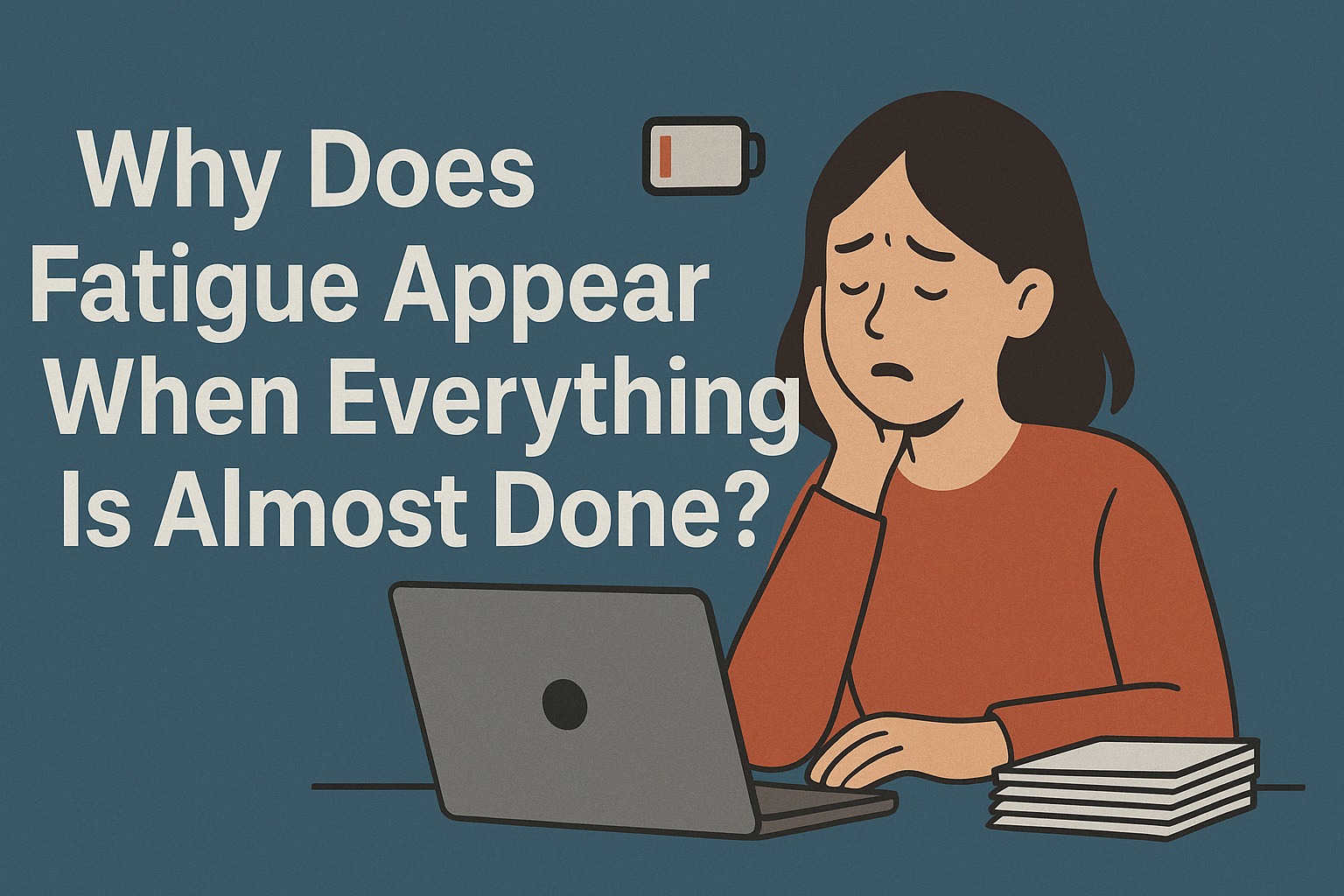
Have you ever felt extremely tired just when a task or project was almost finished?
While others assume you should feel relieved and happy because you're just one step away, you instead feel like stopping. Even though everything is almost done—just one last step left.
This phenomenon isn't simply laziness or lack of motivation. You might be experiencing *end-stage burnout*—a condition where your body and mind are too exhausted to continue, right when the finish line is in sight.
WHAT IS BURNOUT?
Burnout is a state of extreme physical, emotional, and mental exhaustion caused by prolonged stress. It usually happens due to continuous pressure without enough recovery time.
Common symptoms of burnout include:
* Loss of motivation even when the goal is near
* Difficulty focusing and finishing small tasks
* Feeling empty, unsatisfied, or hopeless
* Irritability or excessive anxiety
* A drastic drop in productivity
WHY DOES EXHAUSTION HIT WHEN EVERYTHING IS ALMOST DONE?
End-stage fatigue often feels heavier than the tiredness we feel at the beginning or middle of a journey. Here’s why:
1. Accumulated Exhaustion
Throughout the process, you may have ignored rest to meet targets. By the final stage, all the fatigue you’ve been suppressing finally hits at once.
2. Psychological Pressure
“I must succeed.”
“I can’t fail now.”
This mental pressure intensifies as the deadline approaches, draining your emotional energy even more.
3. Excessive Perfectionism
Approaching the finish line often raises expectations of perfection. Many people feel they must produce flawless results, forgetting to give themselves space to rest.
4. No New Challenges Left
Motivation is often strongest at the beginning when everything feels new and exciting. Near the end, when only the remaining small parts are left, boredom and mental fatigue can take over.
WHO IS MOST LIKELY TO EXPERIENCE THIS?
This end-stage exhaustion can affect anyone, especially:
* Students finishing a thesis or final project
* Office workers chasing end-of-year targets
* Freelancers wrapping up major projects
* Entrepreneurs preparing for product launches
* Homemakers managing workloads before big events or holidays
THE IMPACT IF LEFT UNADDRESSED
If ignored, this final-stage exhaustion can lead to:
* Delayed completion of tasks
* Lower quality of work
* Personal disappointment from unmet expectations
* Mental health risks, from mild to severe depression
HOW TO OVERCOME EXHAUSTION AT THE FINISH LINE
1. Take Breaks, Even Short Ones
Don’t wait until everything is done to rest. Give your body and mind brief pauses to recover energy.
2. Separate Your Worth from the Outcome
Remember, your value isn’t defined by a single result. Release the pressure to be “perfect” in everything.
3. Celebrate Small Progress
Acknowledge every small milestone. This helps rebuild motivation until you reach the end.
4. Talk to Someone
Sharing your feelings with a friend, mentor, or professional can lighten your emotional burden and help you find solutions.
CONCLUSION
Feeling exhausted when you're almost done doesn’t mean you’re failing.
In fact, it’s a sign that you’ve worked hard and come a long way.
What you need is simply to give yourself space to breathe.
Don’t quit just because you’re tired.
Finish slowly if you must—because you’ve come too far to turn back, and you’re too close to stop now.
About the Author
Gusti Ayu Tita
Author — STEKOM University
An active author focused on academic issues, educational technology, and human resource development in the campus environment.