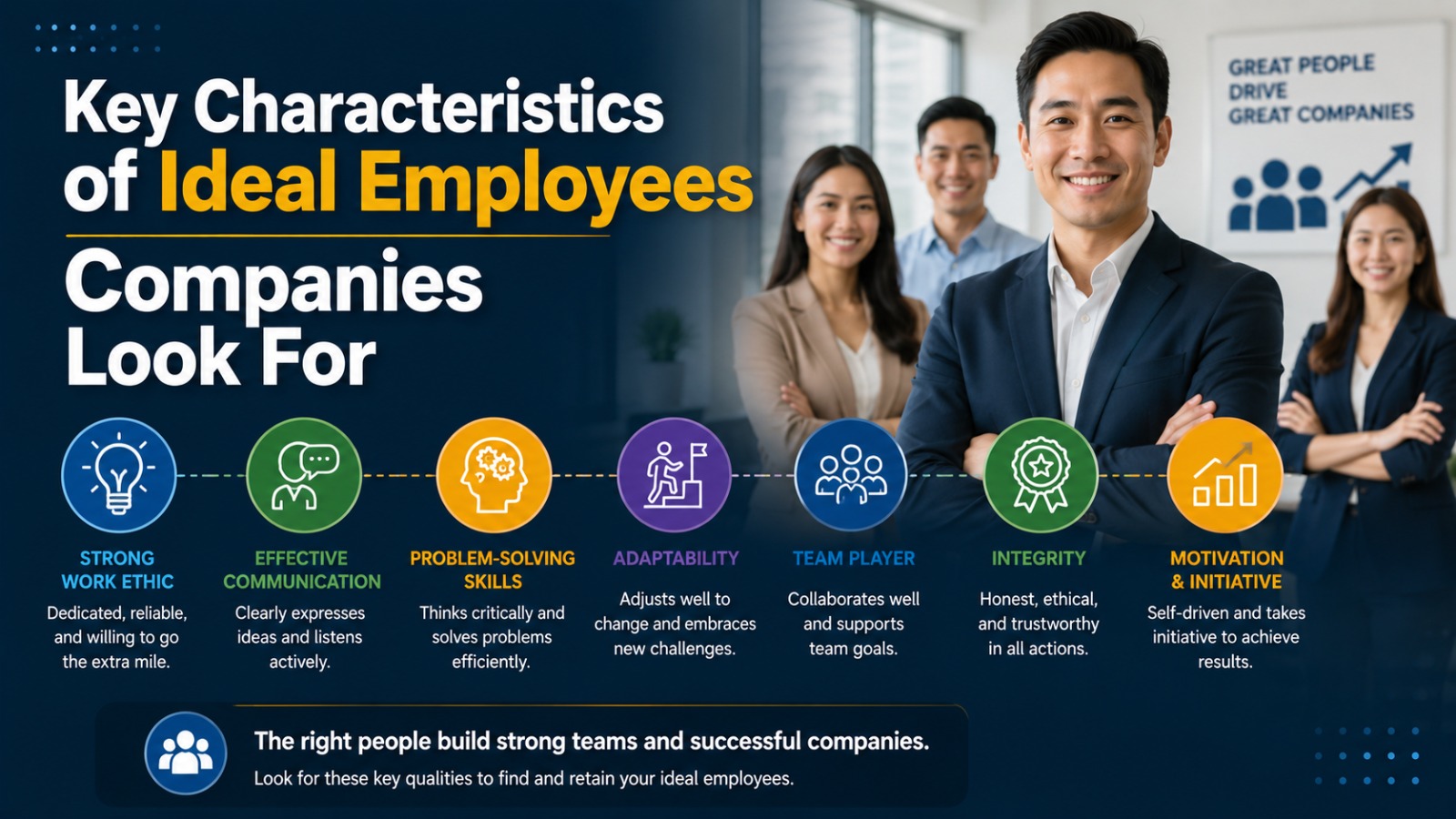
Every company wants employees who can contribute positively to organizational success. Ideal employees not only complete their tasks effectively but also support teamwork, maintain professionalism, and help create a productive work environment. In today’s competitive business world, employers are searching for individuals who possess both technical abilities and strong personal qualities.
Understanding the key characteristics companies look for can help job seekers improve their professional value and increase their chances of career success.
STRONG WORK ETHIC
One of the most important qualities employers seek is a strong work ethic. Employees with this characteristic are reliable, responsible, and committed to completing their work efficiently.
Workers with a strong work ethic usually:
- Arrive on time
- Meet deadlines
- Take responsibility seriously
- Stay focused on tasks
- Show dedication to company goals
Companies value employees who consistently perform their duties without constant supervision.
GOOD COMMUNICATION SKILLS
Effective communication is essential in every workplace. Employees must be able to express ideas clearly, listen actively, and collaborate with others professionally.
Good communication helps prevent misunderstandings, improves teamwork, and strengthens workplace relationships. Employers highly appreciate employees who can communicate effectively with managers, coworkers, and clients.
IMPORTANT COMMUNICATION ABILITIES
- Active listening
- Professional speaking
- Clear writing
- Positive body language
- Constructive feedback
Strong communication skills contribute to smoother business operations and better teamwork.
ADAPTABILITY AND FLEXIBILITY
Modern workplaces continue to change due to technology, market trends, and business demands. Companies prefer employees who can adapt quickly to new situations and challenges.
Adaptable employees are open to learning new skills, accepting feedback, and handling unexpected changes professionally. Flexibility allows businesses to remain competitive and efficient in dynamic environments.
POSITIVE ATTITUDE
A positive attitude can significantly influence workplace culture. Employees who remain optimistic, respectful, and cooperative often help create a healthier and more motivating environment.
Positive employees are usually better at handling pressure, solving problems, and supporting their teammates during challenges.
Employers value individuals who contribute energy and encouragement to the workplace.
TEAMWORK AND COLLABORATION
Most organizations rely heavily on teamwork to achieve business goals. Employees who can cooperate effectively with others are highly valuable.
Good team players:
- Respect coworkers
- Share ideas openly
- Support group objectives
- Help solve conflicts
- Contribute fairly to projects
Strong collaboration improves productivity and creates stronger workplace relationships.
PROBLEM-SOLVING SKILLS
Employers appreciate employees who can identify problems and find effective solutions independently. Problem-solving abilities demonstrate critical thinking, creativity, and initiative.
Employees who can make smart decisions and handle challenges calmly often become valuable assets to the company.
PROFESSIONALISM
Professional behavior reflects an employee’s attitude toward work and responsibilities. Professional employees maintain respectful communication, follow company policies, and demonstrate integrity in the workplace.
Professionalism includes:
- Proper workplace behavior
- Ethical decision-making
- Respect for others
- Accountability
- Dependability
Companies trust employees who consistently act professionally in different situations.
WILLINGNESS TO LEARN
The best employees never stop learning. Companies value individuals who actively improve their knowledge and skills to stay competitive.
Employees who are willing to learn can adapt more easily to industry changes and contribute more effectively to organizational growth.
Continuous learning may include:
- Attending training programs
- Learning new technologies
- Improving soft skills
- Seeking feedback for improvement
A growth mindset benefits both employees and employers.
LEADERSHIP POTENTIAL
Even for non-management positions, companies often look for employees who show leadership qualities. Leadership does not always mean managing a team; it can also involve taking initiative, motivating others, and solving problems responsibly.
Employees with leadership potential can help companies build stronger future management teams.
TIME MANAGEMENT SKILLS
Effective time management helps employees complete tasks efficiently and maintain productivity. Employers prefer workers who can organize priorities, manage deadlines, and avoid unnecessary delays.
Good time management reduces workplace stress and improves overall performance.
CONCLUSION
Ideal employees possess a combination of technical skills, professionalism, communication abilities, adaptability, and positive attitudes. Companies seek individuals who can work effectively both independently and as part of a team while contributing to organizational success.
By developing these important characteristics, employees can improve their career opportunities and become valuable assets in any workplace. Strong personal qualities not only support professional growth but also help create a more productive and successful work environment.
About the Author
Gusti Ayu Tita P
Author — STEKOM University
An active author focused on academic issues, educational technology, and human resource development in the campus environment.