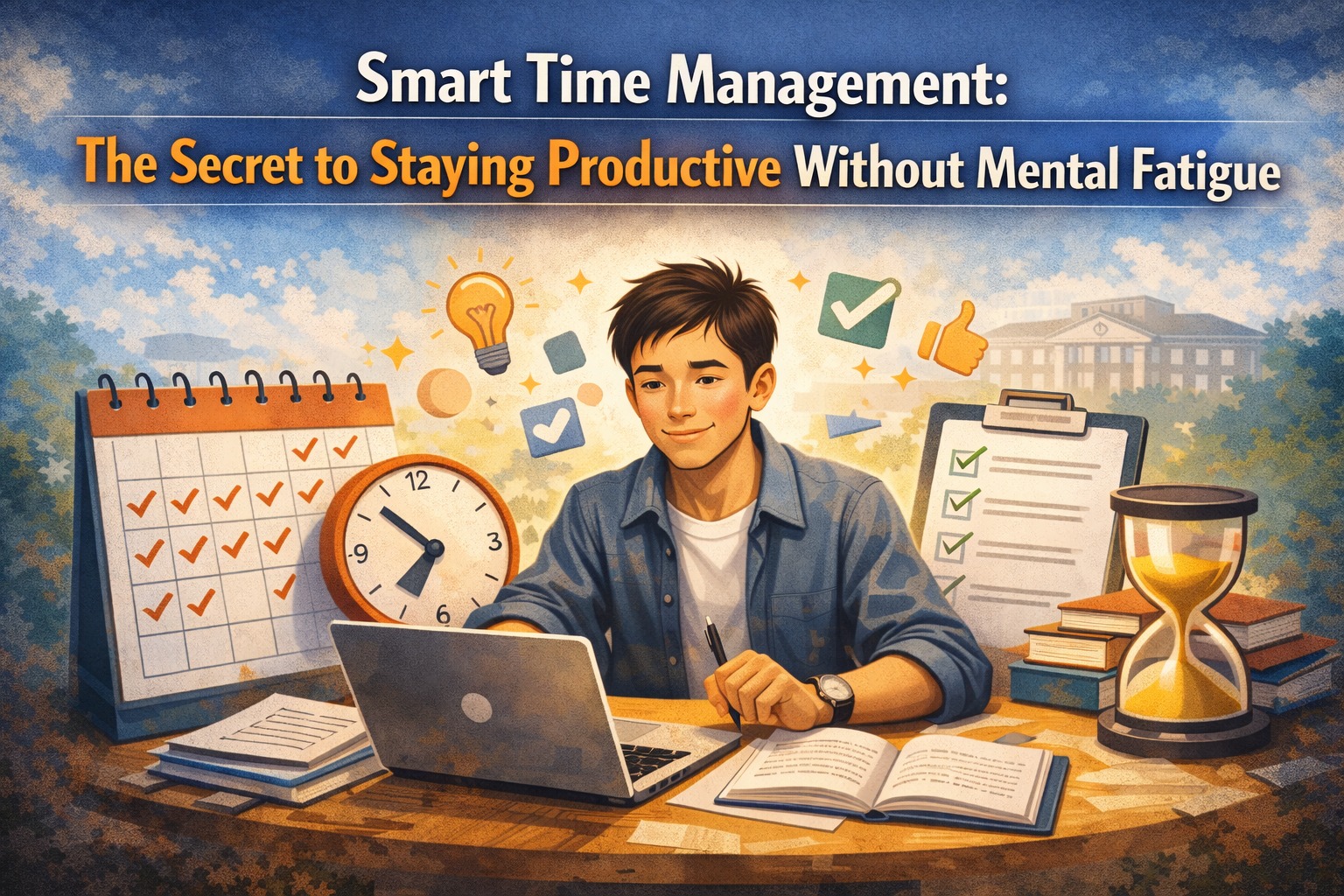
Student life is often filled with demanding schedules, ranging from lectures and academic assignments to organizational involvement and personal activities. If not managed properly, these demands can lead to mental fatigue that negatively affects productivity. Therefore, smart time management becomes an essential skill for students to stay effective without feeling overwhelmed.
The Importance of Time Management for Students
Time management is not merely about organizing schedules, but also about managing energy and focus. Students who can manage their time well tend to feel calmer when facing responsibilities and have better control over their daily activities.
Without clear time management, students are more likely to fall into procrastination, rush through tasks, and experience prolonged stress. This condition often marks the beginning of mental exhaustion.
Identifying the Sources of Mental Fatigue
Mental fatigue among students is not always caused by the number of assignments. Lack of rest, constant pressure to stay productive, and unbalanced schedules are also major contributing factors.
Common signs of mental fatigue include difficulty concentrating, persistent tiredness, loss of motivation, and decreased learning quality. By identifying these sources early, students can take appropriate preventive steps.
Setting Priorities Strategically
One of the keys to smart time management is the ability to set priorities. Not all tasks need to be completed at the same time or with the same level of urgency. Students need to distinguish between urgent tasks and those that can be rescheduled.
Creating daily or weekly to-do lists helps visualize workloads more clearly. With proper prioritization, students can complete important tasks without feeling overwhelmed.
Creating Flexible and Realistic Schedules
Overly packed schedules are often a primary cause of mental fatigue. Therefore, students should design realistic schedules that match their personal capacity. It is important to allocate specific time for rest and personal activities.
Using planners or time management apps can help organize schedules more efficiently. Flexible schedules also allow students to adapt when unexpected changes or sudden activities arise.
Applying Efficient Work Techniques
Working longer hours does not always result in higher productivity. Students can apply efficient work techniques, such as breaking study time into shorter but focused sessions. This method helps maintain concentration and reduces mental fatigue.
Additionally, completing tasks gradually often feels lighter than finishing everything at the last minute. Consistency is far more important than overworking in a single period.
Maintaining Balance Between Productivity and Rest
Sustainable productivity can only be achieved when balanced with adequate rest. Quality sleep, light exercise, and relaxation time play a significant role in maintaining students’ mental health.
Ignoring the need for rest can actually reduce cognitive performance and concentration. With a refreshed body and mind, students can complete tasks more effectively.
Conclusion
Smart time management is a key factor in helping students remain productive without experiencing mental fatigue. By recognizing stress sources, setting priorities, creating realistic schedules, and maintaining life balance, students can navigate college life in a healthier and more structured way.
Being productive does not mean being constantly busy, but managing time and energy wisely. With the right strategies, students can achieve academic success while protecting their mental well-being.
About the Author
Gusti Ayu Tita
Author — STEKOM University
An active author focused on academic issues, educational technology, and human resource development in the campus environment.