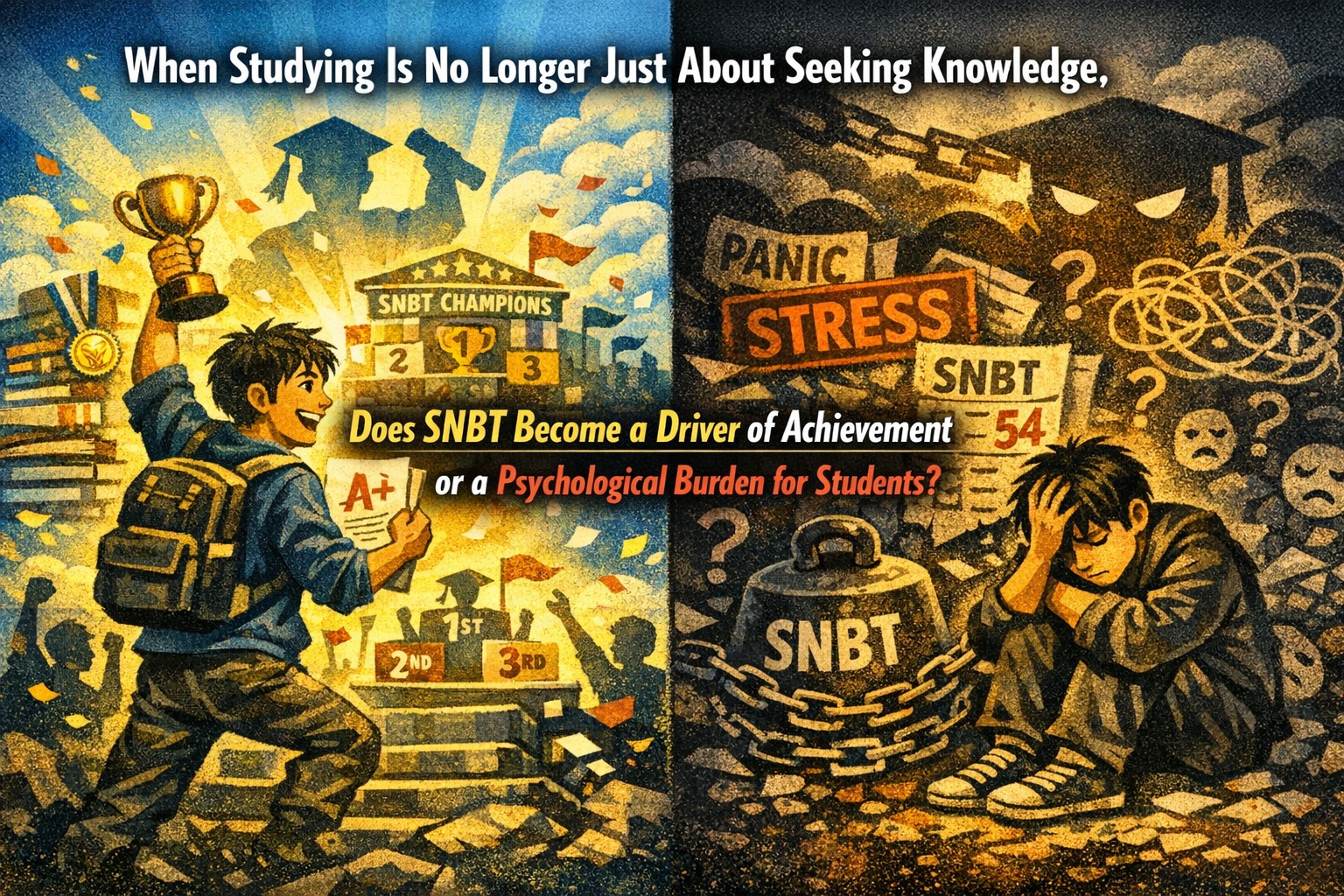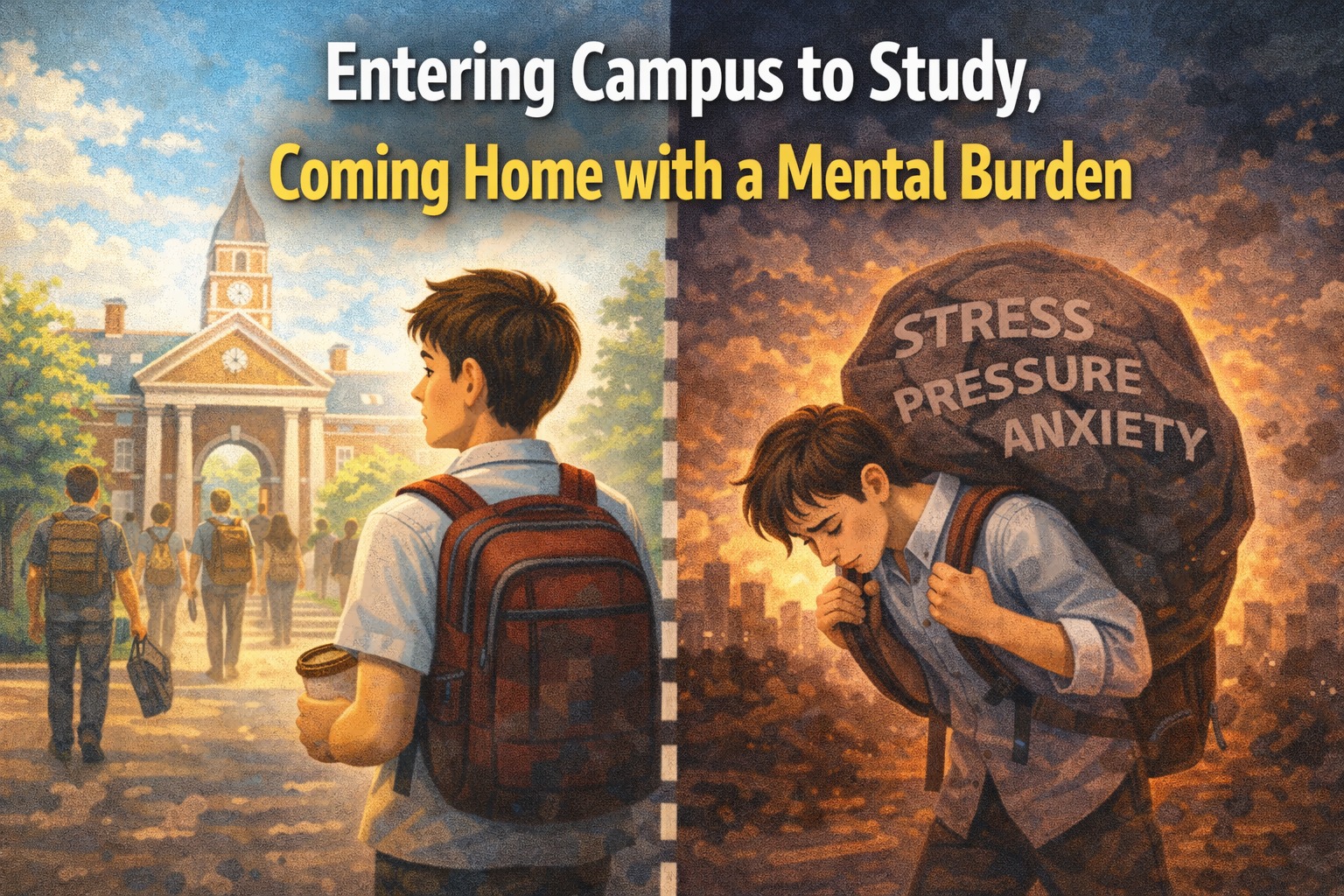
For many people, university is often portrayed as a place to grow, discover one’s identity, and build a better future. However, the reality experienced by some students is not always as ideal as it seems. Instead of returning home with new knowledge and enthusiasm, many students carry an increasingly heavy mental burden day by day. Academic pressure, social demands, and invisible inner conflicts often become part of campus life that is rarely discussed openly.
This phenomenon shows that higher education is not only about grades, degrees, and achievements. There is another side that deserves attention: students’ mental well-being, which is often overlooked. This is why discussions about mental burden in the university environment are important to understand collectively.
ENDLESS ACADEMIC PRESSURE
One of the main sources of students’ mental burden comes from intense academic demands. Piled-up assignments, tight deadlines, consecutive exams, and constant pressure to perform often place students in prolonged stress. Many feel compelled to appear perfect in order to maintain GPA scores, scholarships, or their parents’ trust.
At the same time, learning systems that are not mental-health-friendly can worsen the situation. Students are frequently expected to be strong and independent, with little room to complain or rest. As a result, mental exhaustion is seen as normal, even though its impact can be serious if it continues unchecked.
SOCIAL DEMANDS AND CAMPUS ENVIRONMENT PRESSURE
Beyond academics, the campus social environment also contributes to mental pressure. Students often feel the need to meet various expectations—from peers, organizations, and lecturers. The culture of comparison, especially in the era of social media, makes many students feel left behind or not good enough.
Some common sources of social pressure include:
* Increasing competition for academic achievement
* Expectations to be active in organizations alongside academic responsibilities
* Fear of being seen as a failure or unproductive
These conditions gradually create anxiety and low self-esteem. Students who struggle to cope are at risk of emotional exhaustion, which affects learning motivation and overall mental health.
INNER CONFLICT AND IDENTITY CRISIS AMONG STUDENTS
The university period is often a phase of identity exploration. Students begin questioning their life goals, chosen majors, and future paths. Inner conflicts frequently arise between personal desires and family expectations. When the chosen path feels misaligned with personal values, mental pressure intensifies.
This situation worsens when students feel alone in dealing with their struggles. Many choose to suppress their feelings out of fear of being seen as weak or ungrateful. Yet, unresolved inner conflicts can develop into more serious psychological issues.
THE IMPACT OF MENTAL BURDEN ON STUDENT LIFE
Unmanaged mental burdens can affect various aspects of student life—from decreased concentration and sleep disturbances to changes in social behavior. In the long term, these conditions may lead to academic burnout, excessive anxiety, or even depression.
Not only academic performance suffers, but social relationships and overall quality of life also decline. Students experiencing mental pressure often withdraw, lose motivation, and feel empty, even when they appear academically successful.
THE ROLE OF UNIVERSITIES AND ENVIRONMENTS IN MAINTAINING MENTAL HEALTH
In response to this reality, universities play a crucial role in creating a mentally healthier learning environment. Providing counseling services, implementing more humane academic policies, and fostering a culture of care can be initial steps in reducing students’ mental burden.
At the same time, support from peers and family is equally important. A safe environment for sharing thoughts and feelings helps students feel accepted and less alone in facing pressure.
CONCLUSION
Entering university should be a journey of learning and growth, not merely surviving overwhelming mental pressure. Students’ mental burden is a real issue that deserves serious attention from all parties—educational institutions, families, and society. By creating a campus environment that genuinely cares about mental health, students can graduate not only with knowledge, but also with the emotional balance needed to face life beyond university.
About the Author
Gusti Ayu Tita
Author — STEKOM University
An active author focused on academic issues, educational technology, and human resource development in the campus environment.