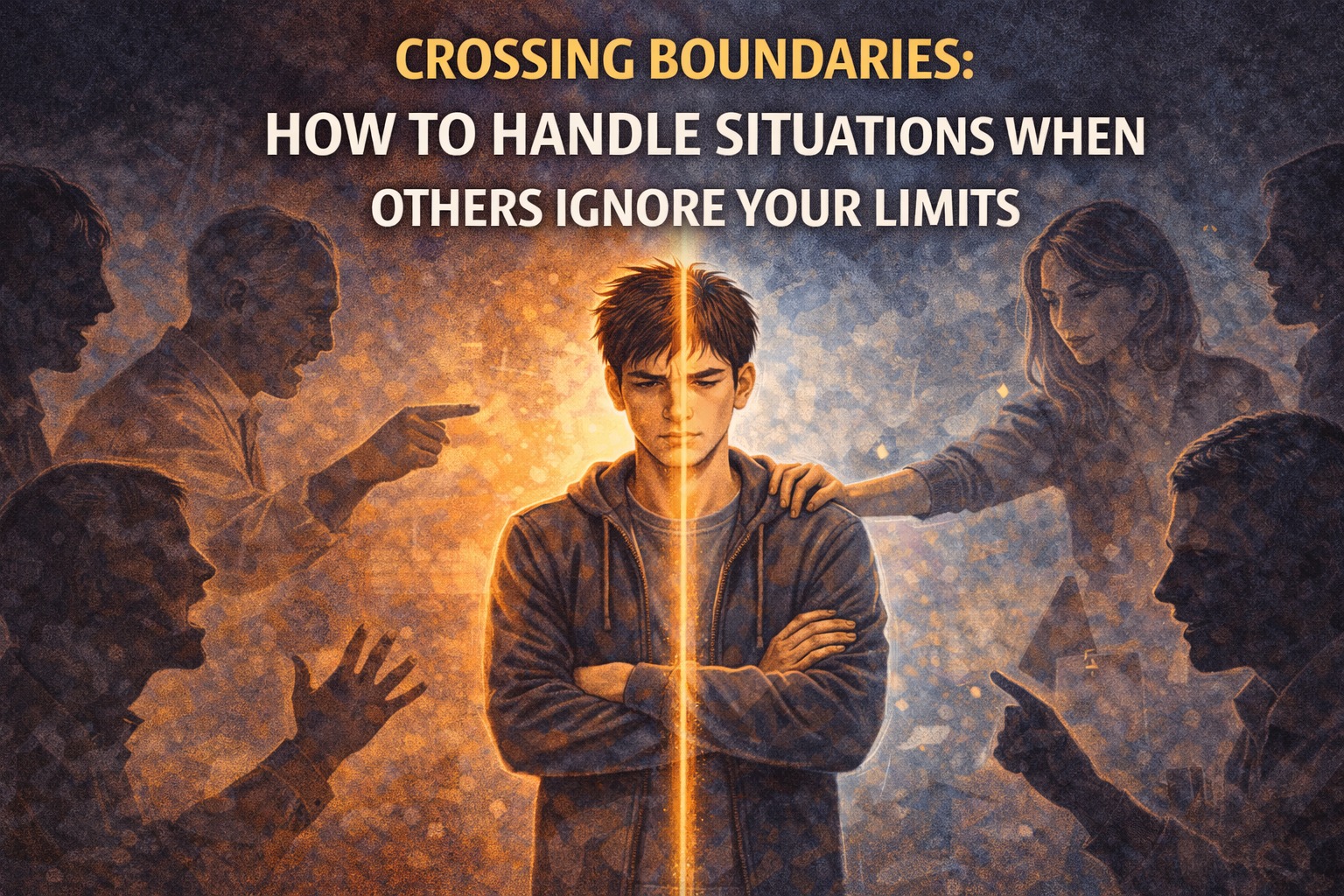
In daily life—within family, friendships, campus, or work environments—personal boundaries play a vital role in maintaining mental health and relationship quality. Unfortunately, not everyone understands or respects these boundaries. When boundaries are ignored, individuals may feel uncomfortable, emotionally drained, or lose control over themselves.
WHAT ARE PERSONAL BOUNDARIES AND WHY THEY MATTER
Personal boundaries are invisible rules we set to protect our values, time, energy, and emotions. They define what others may or may not do to us—physically, emotionally, or digitally.
Without clear boundaries, individuals are vulnerable to exploitation and stress. Healthy boundaries create safety, respect, and honest communication.
SIGNS YOUR BOUNDARIES ARE BEING IGNORED
Feeling guilty when saying “no”
Feeling exhausted after certain interactions
Your opinions are dismissed
Privacy violations
Pressure to constantly comply
WHY PEOPLE IGNORE BOUNDARIES
Lack of awareness
Long-standing habits
Dominant behavior
Fear of conflict
HOW TO RESPOND WHEN BOUNDARIES ARE CROSSED
1. Communicate clearly and assertively
2. Be consistent
3. Stay calm and respectful
4. Set consequences
5. Prioritize well-being
BUILDING HEALTHY BOUNDARIES GOING FORWARD
Boundary-setting is an ongoing process that requires self-awareness, practice, and relationship evaluation.
CONCLUSION
Handling boundary violations is challenging but essential. Clear communication, consistency, and self-prioritization help create healthier, more respectful relationships. Setting boundaries is not selfish—it is self-care.
Keywords:
About the Author
Gusti Ayu Tita
Author — STEKOM University
An active author focused on academic issues, educational technology, and human resource development in the campus environment.