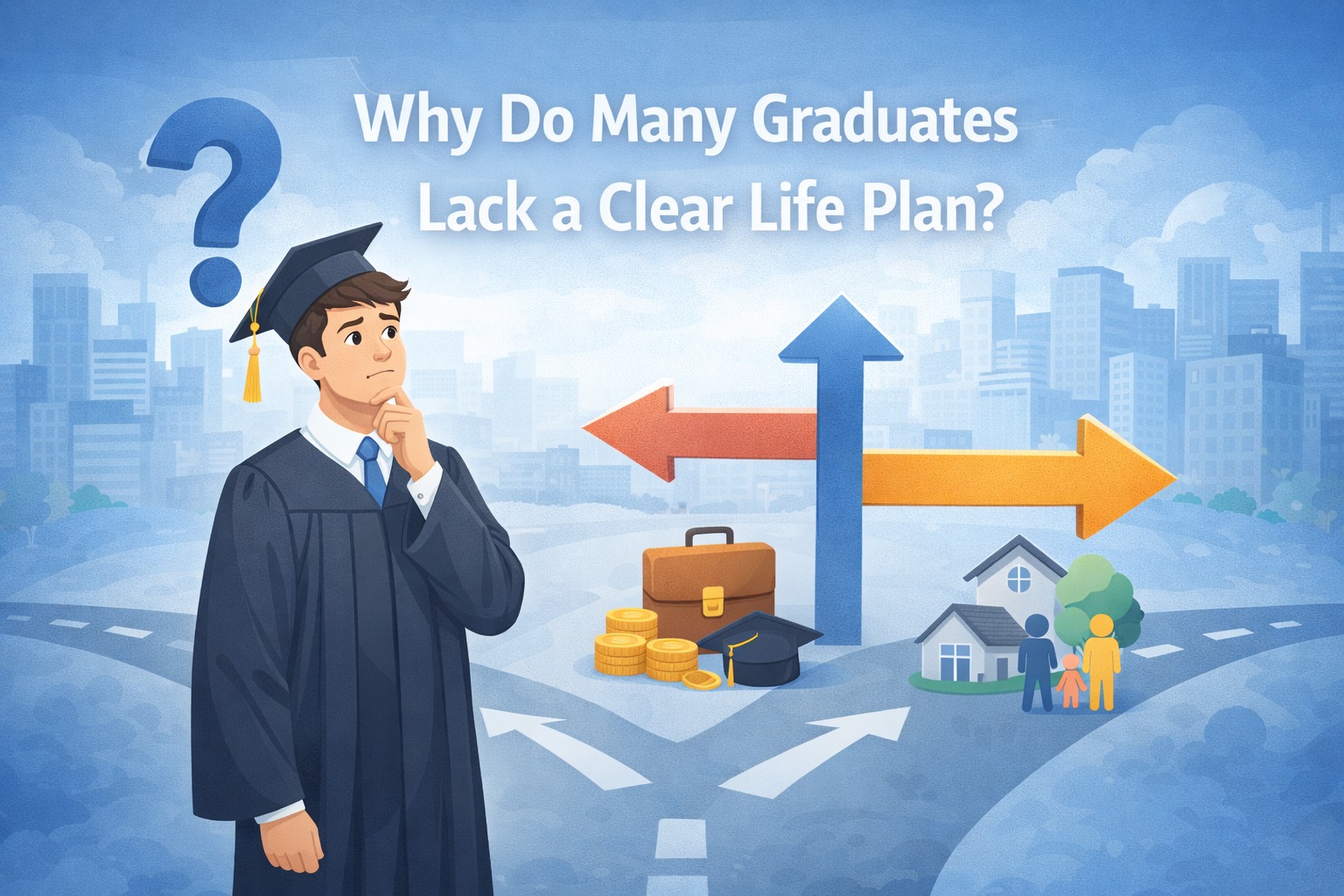
A bachelor’s degree is often viewed as a symbol of intellectual maturity and readiness for the future. Yet in reality, many university graduates are confused about their life direction after graduation. They have spent years in education but remain uncertain about their careers, life goals, and even their personal identity.
This phenomenon raises an important question: if higher education is meant to prepare students for the future, why do so many graduates lack a clear life plan?
GRADUATE CONFUSION AS A PATTERN, NOT A COINCIDENCE
Confusion about life direction is no longer an isolated case. It appears repeatedly across different majors and institutions. Many graduates feel that they have “graduated without a map,” unsure of what steps to take once the academic structure ends.
When this pattern occurs widely, it cannot be explained solely by laziness or lack of effort.
HIGHER EDUCATION THAT IS TOO ACADEMIC-ORIENTED
The higher education system remains heavily focused on academic achievements: grades, timely graduation, and degrees. Students are trained to complete curricula, not to design their lives afterward.
As a result, many graduates excel academically but lack opportunities for reflection on life goals and long-term choices.
THE FALSE ASSUMPTION THAT A LIFE PLAN WILL ‘COME ON ITS OWN’
There is an implicit assumption that life plans will naturally form after graduation. This assumption is rarely questioned. In reality, without exploration and guidance, life plans do not emerge automatically.
When reality fails to meet expectations, confusion is often seen as a personal failure rather than a flawed assumption.
LIMITED SPACE FOR EXPLORATION AND HIDDEN WRONG MAJOR CHOICES
Many students choose their majors due to social pressure, trends, or limited information. However, educational systems rarely provide safe spaces to reassess these choices. As a result, mismatched interests are often realized only near graduation.
Graduates then leave university with degrees they do not fully understand or believe in.
UNPREPARED TRANSITION FROM CAMPUS TO REAL LIFE
During college, students’ lives are highly structured. After graduation, this structure disappears abruptly. Without preparation for this transition, many graduates lose rhythm and direction.
Confusion about life planning is often not about incapability, but about never being trained to handle full autonomy.
SOCIAL PRESSURE AND NARROW DEFINITIONS OF SUCCESS
Society often expects graduates to achieve success immediately. Permanent employment, stable income, and independence become the single standard of success. This pressure makes the process of searching for direction feel like failure.
Under these conditions, many graduates choose silence and delay rather than pursuing paths considered uncertain.
SHOULD GRADUATES BE FULLY BLAMED?
Demanding graduates to have well-defined life plans without providing supportive systems is unrealistic. Individuals are responsible for their choices, but those choices are shaped by the educational and social environments they experience.
Blaming individuals alone only closes opportunities for structural improvement.
TOWARD AN EDUCATION THAT HELPS FIND DIRECTION
If higher education aims to remain relevant, it must go beyond academic functions. Universities should become spaces for exploration, reflection, and dialogue about the future. Life planning is not instant—it is the result of intentional processes.
Without this shift in perspective, bachelor’s degrees will continue to be produced without clear direction.
**Keywords:**
About the Author
Gusti Ayu Tita P
Author — STEKOM University
An active author focused on academic issues, educational technology, and human resource development in the campus environment.