
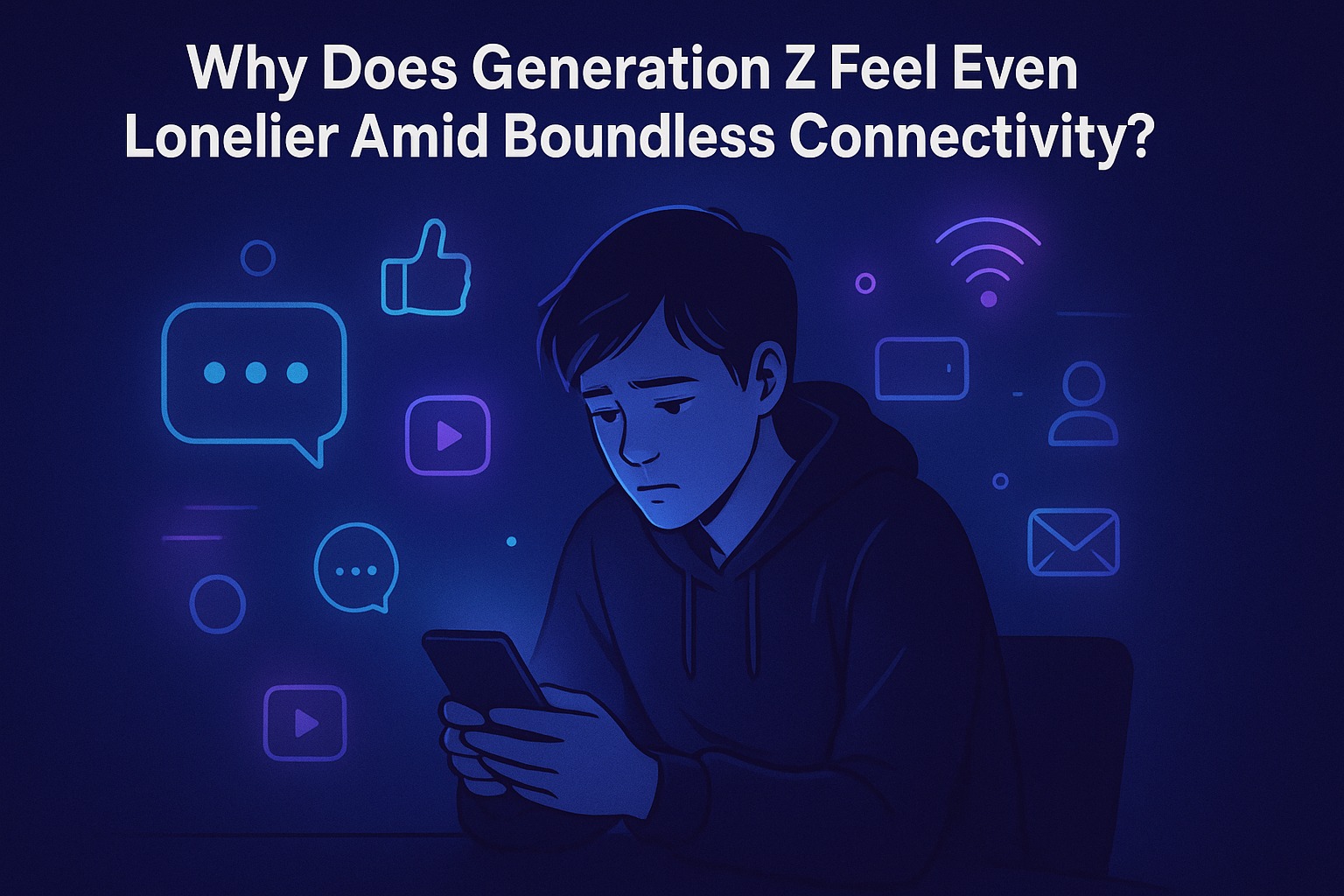
In an era where the internet allows everyone to stay connected at any time, an emerging irony becomes increasingly clear: Generation Z—the group that grew up with technology—has become the generation most vulnerable to loneliness. Despite being surrounded by notifications, instant messages, and social media, many of them admit that it is difficult to find truly meaningful connections.
This article explores why this condition occurs and how young people can build healthier relationships.
THE PHENOMENON OF BOUNDLESS CONNECTIVITY
Generation Z lives in a daily reality inseparable from technology. Almost every activity, from studying to entertainment, involves the internet. While this convenience enables fast communication, it has also made interpersonal relationships more superficial.
Many interactions happen on the surface level: short comments, emojis, or quick messages. As a result, emotional closeness becomes difficult to develop because digital relationships often do not reflect deeper social realities.
SOCIAL MEDIA AND THE EFFECTS OF SELF-COMPARISON
Intensive use of social media makes Generation Z easily trapped in a culture of comparison. Seeing others’ seemingly perfect lives often leads to feelings of inadequacy, rejection, or not being good enough.
This sense of inferiority indirectly drives social isolation. When someone feels their life doesn’t measure up, they tend to withdraw and keep those feelings to themselves, increasing their sense of loneliness.
VIRTUAL RELATIONSHIPS THAT DON’T ALWAYS FULFILL
Although virtual connections offer convenience and instant access, they cannot always replace physical interactions. Eye contact, body language, and in-person presence are often necessary to build empathy and mutual understanding.
Many members of Generation Z admit they have plenty of online friends, yet very few they can emotionally rely on. This creates a gap between being “digitally crowded” but “emotionally alone.”
MENTAL PRESSURE IN THE DIGITAL ERA
Academic pressure, career demands, and information overload also play significant roles. Generation Z faces expectations to always be productive, creative, and relevant—conditions that often drain mental energy.
Combined with the lack of safe spaces to openly discuss problems, many end up suppressing stress, which leads to a growing sense of detachment from their surroundings.
STEPS TO OVERCOME LONELINESS IN GENERATION Z
To reduce the rising sense of loneliness, several steps can be taken:
1. Reduce excessive digital consumption, especially social media that triggers self-comparison.
2. Prioritize deep conversations rather than short, surface-level interactions.
3. Engage in offline activities such as hobby communities or sports that create opportunities to meet new people.
4. Seek professional help if loneliness begins to affect mental health.
5. Focus on the quality of relationships, not the number of contacts on social media.
With awareness and changes in communication patterns, Generation Z can rediscover the meaning of more authentic connections.
CONCLUSION
Boundless connectivity does not always guarantee emotional attachment. Even though Generation Z lives in an ultra-digital world, they still need real interactions and more personal relationships. By improving communication habits and managing digital consumption, they can build healthier connections and reduce feelings of loneliness.
About the Author
Gusti Ayu Tita
Author — STEKOM University
An active author focused on academic issues, educational technology, and human resource development in the campus environment.



