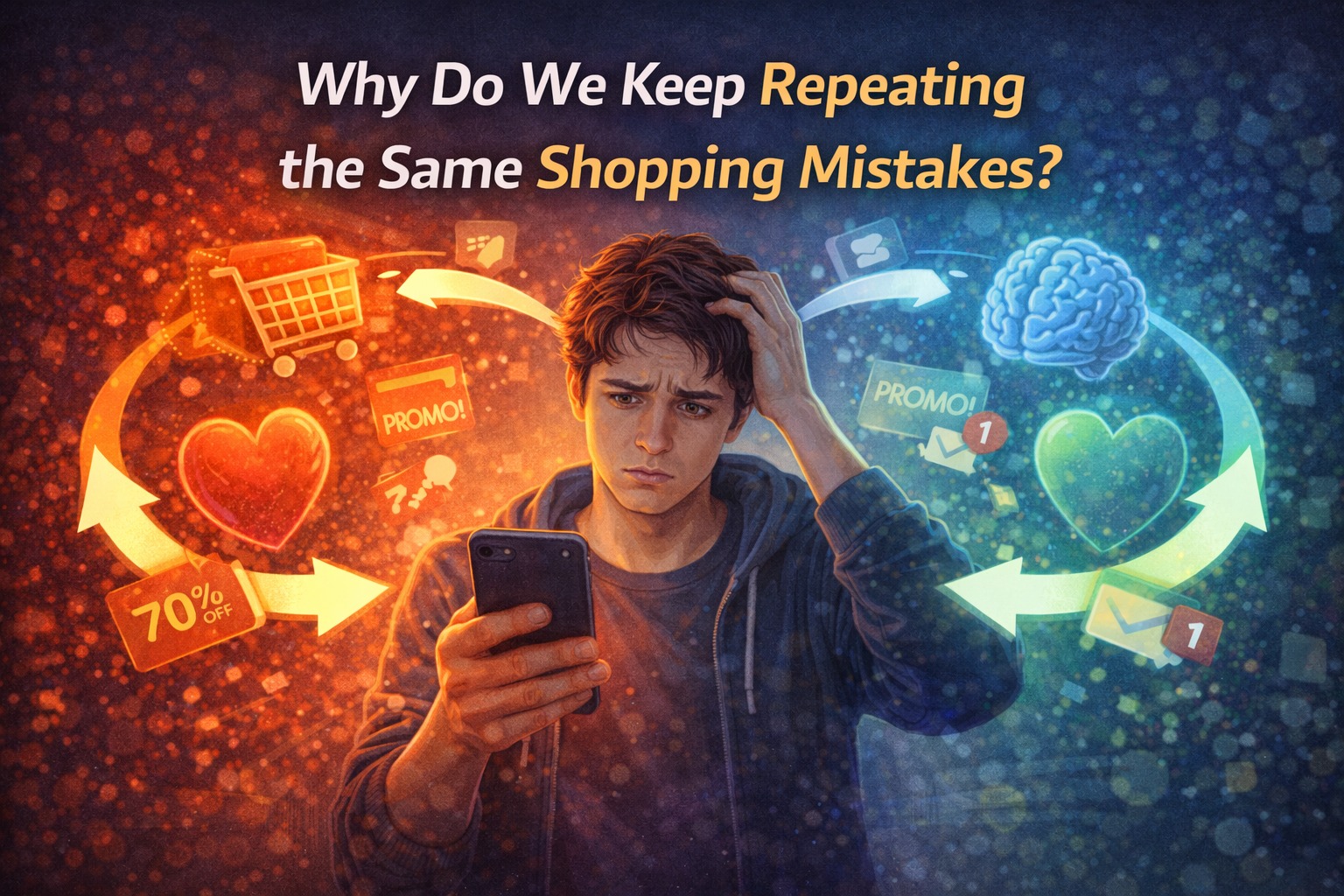
Many people feel that they have learned from past shopping experiences, yet they continue to repeat the same mistakes. Whether it is buying items without proper consideration, being tempted by big discounts, or following trends that are actually unnecessary, this phenomenon is not merely about habits—it is closely related to how the brain and emotions work when faced with shopping temptations.
To understand the reasons behind this pattern, let us explore more deeply what makes shopping mistakes so easy to repeat.
Unconsciously Formed Shopping Habits
Habits are created through routines that are repeated over time. When shopping becomes a way to relieve stress or simply fill spare time, this pattern gradually becomes automatic. Without realizing it, we create habitual pathways that encourage impulsive shopping behavior.
Some examples of unconscious shopping habits include:
- Opening e-commerce apps whenever feeling bored
- Adding items to the cart “just to browse” and ending up checking out
- Using discounts as a justification for shopping, even when the items are not important
These habits are difficult to break if they are not recognized early on.
The Role of Emotions in Driving Shopping Behavior
Emotions have a strong influence on financial decisions. Many people shop not because they need to, but because they are:
- Feeling stressed and seeking relief
- Feeling happy and wanting to celebrate
- Attracted by product visuals or other people’s reviews
Emotions work faster than logic, which is why shopping decisions are often made impulsively. This explains why shopping mistakes are frequently repeated, even when we are aware of the consequences.
The Influence of Algorithms and Persuasive Promotions
Shopping platforms use algorithms that learn users’ habits. Products we have viewed before often reappear on the homepage, accompanied by tempting promotions. Notifications about flash sales or limited-time discounts trigger fear of missing out (FOMO).
With constant exposure, it becomes harder to distinguish between real needs and momentary desires.
Lack of Strong Financial Planning
Many shopping mistakes occur because people:
- Do not create a monthly budget
- Shop without a clear needs list
- Fail to monitor whether spending has exceeded limits
Without financial planning, every offer seems attractive and reasonable. Clear boundaries make it easier to resist temptation.
Failing to Analyze Past Shopping Impacts
Often, we realize that previous purchases were not very useful, yet we do not reflect on them deeply. Without evaluation, the same mistakes will continue.
Examples include:
- Items used only once
- Impulsive purchases that pile up unused
* Small but frequent expenses that gradually drain the budget
Analyzing spending patterns helps identify unhealthy habits that need to be stopped.
Steps to Break the Cycle of Shopping Mistakes
Some simple steps can help improve shopping behavior:
1. Set Clear Budget Limits – Define spending categories and maximum limits.
2. Apply the 24-Hour Rule Before Buying – This prevents impulsive decisions.
3. Stop Using Discounts as Justification – Discounts do not equal necessity.
4. Track Monthly Expenses – Recording expenses helps identify recurring mistakes.
Conclusion: Awareness Is the First Step to Change
Why do we keep repeating shopping mistakes? The answer lies in a combination of habits, emotions, and external influences such as advertising and algorithms. By increasing self-awareness, creating financial plans, and controlling impulses, we can build healthier and wiser shopping patterns.
**Keywords:**
About the Author
Gusti Ayu Tita P
Author — STEKOM University
An active author focused on academic issues, educational technology, and human resource development in the campus environment.