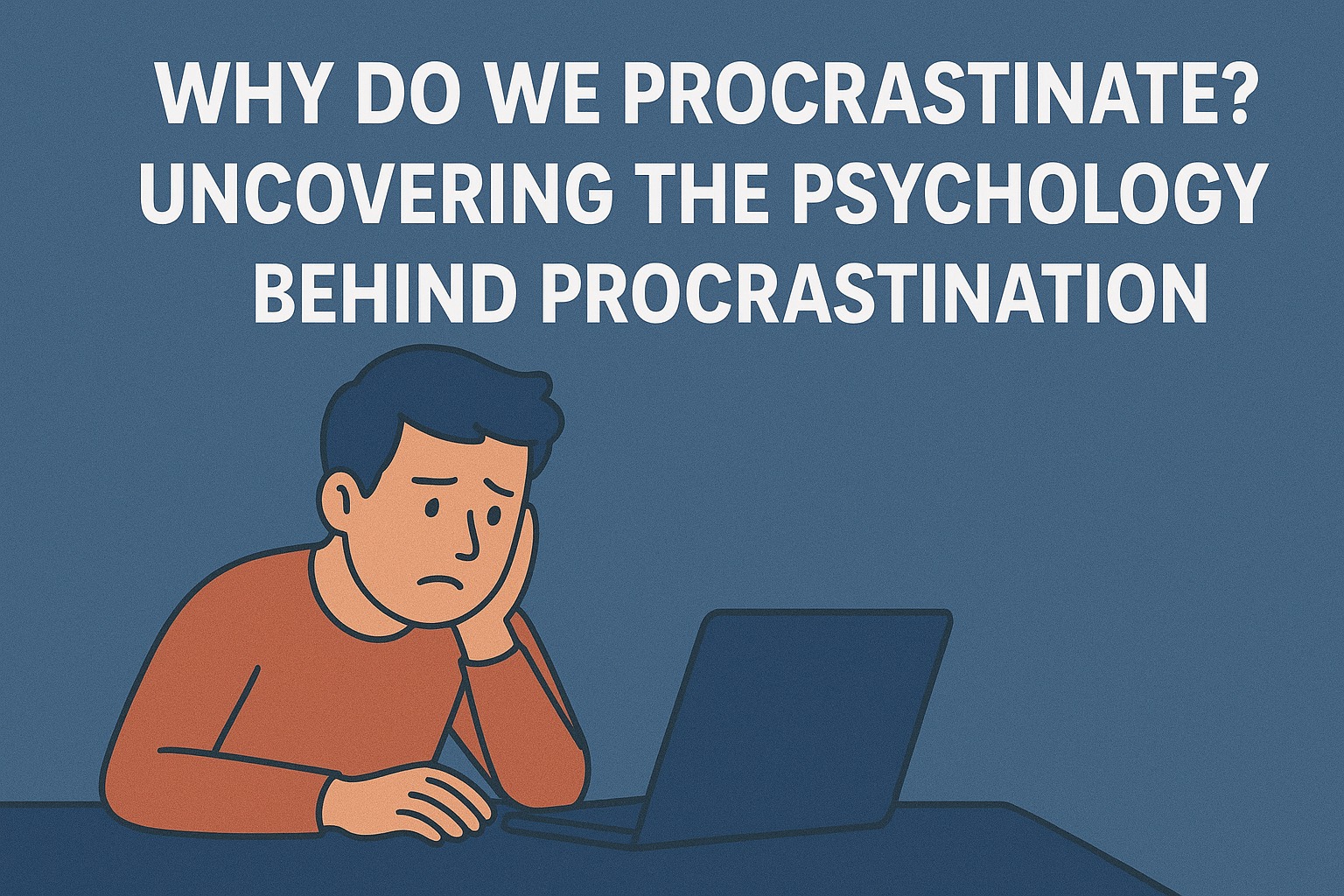
Procrastination is often seen as something trivial, yet this habit actually has deep psychological roots. Many people do it unconsciously, even though it can hinder productivity and increase stress.
What is Procrastination?
Procrastination is the habit of delaying tasks even when we know they need to be completed soon. People who procrastinate often choose activities that are more enjoyable or less important.
Emotional Factors That Influence Procrastination
Emotions play a significant role in procrastination. Difficult tasks can trigger feelings of fear, self-doubt, or insecurity. As a result, we tend to avoid the task rather than face it directly.
The Conflict Between Instant Gratification and Long-Term Goals
The human brain is naturally drawn to short-term pleasure. When a task feels exhausting or demanding, the brain prefers activities that provide immediate comfort instead.
How to Reduce Procrastination Habits
Breaking tasks into smaller parts, creating schedules, and minimizing distractions such as smartphones can help reduce the habit of delaying work. Discipline and consistency are the key to long-term progress.
About the Author
Gusti Ayu Tita
Author — STEKOM University
An active author focused on academic issues, educational technology, and human resource development in the campus environment.