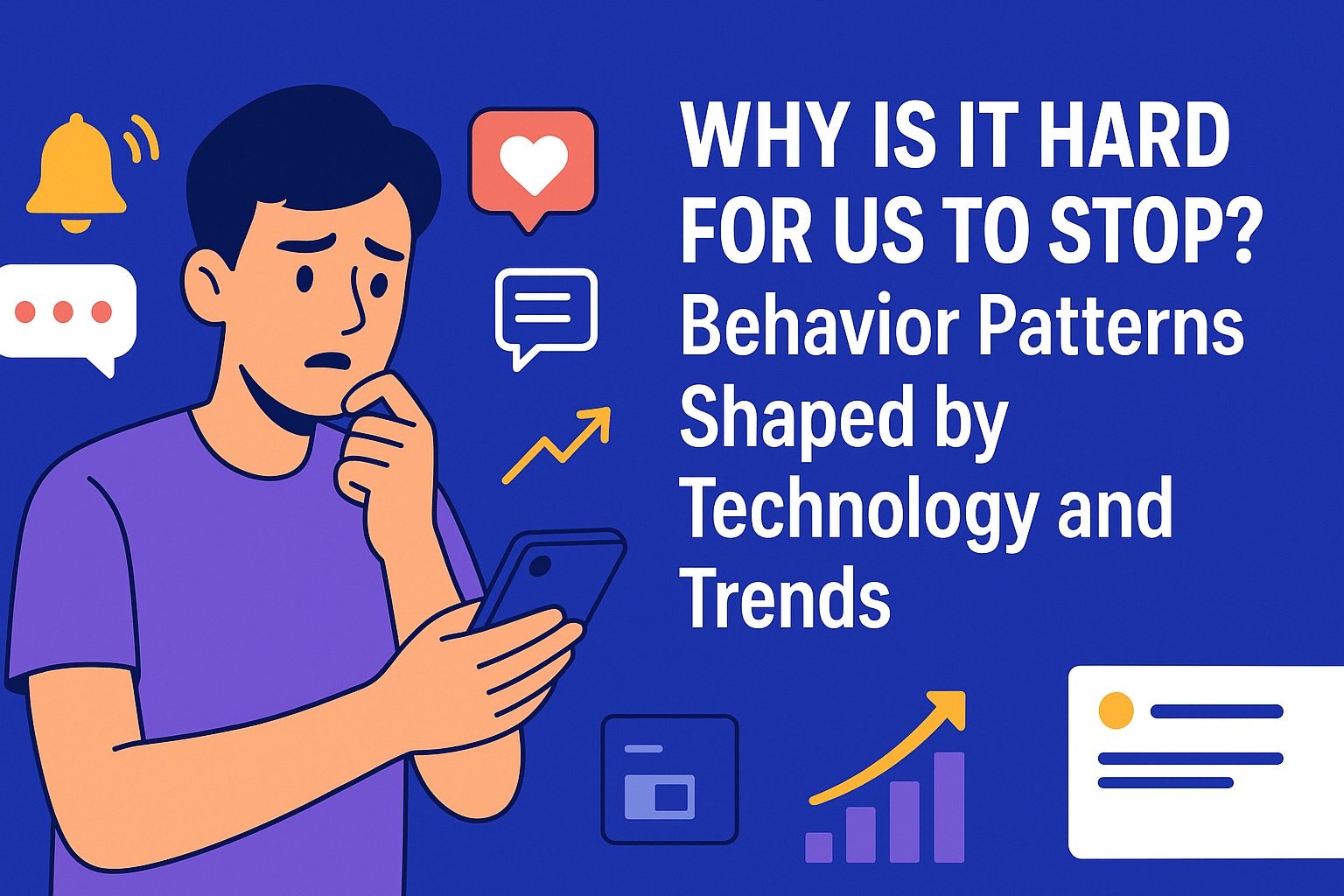
Have you ever felt like you were “losing control” while scrolling through social media, watching one episode that automatically leads to the next, or opening a shopping app without any intention to buy? Time passes quickly, your hands keep moving, and your mind struggles to say “enough.” This is when we start to realize that our daily habits are no longer purely personal choices—they are shaped by digital systems and ever-changing trends.
Modern technology isn’t just a tool; it’s a behavior architect. It designs experiences that keep us engaged, entertained, and unwilling to disconnect. To understand why it’s so hard to stop, we need to look at how technology and trends work behind the scenes—and how they influence the way we think, feel, and act.
TECHNOLOGY IS NOT NEUTRAL IN SHAPING HABITS
Apps and platforms are designed with one goal: to keep your attention for as long as possible. Every element of the interface—the color of a button, the placement of notifications, even the animations—is crafted to trigger specific responses in the brain.
The more we interact with these systems, the more new habit pathways form in our brains. From checking our phones right after waking up to reflexively opening social media when bored, these patterns build up through repeated actions we barely notice.
WHY OUR BRAINS GET TRAPPED SO EASILY
1.Instant Reward System
Technology taps into a basic brain mechanism: the desire for rewards.
Likes, comments, discounts, and video recommendations become “tiny rewards” we subconsciously chase. Each reward triggers dopamine, reinforcing the urge to repeat the behavior.
2. Fear of Missing Out (FOMO)
Trends move fast. What’s trending today might disappear tomorrow. The fear of missing out pushes us to stay constantly connected—even when we’re exhausted.
We feel the need to always know, always stay updated, and always be present—even though not all information is necessary.
TRENDS AS BEHAVIOR DRIVERS
Trends aren’t just styles—they are subtle social pressures. When many people do or follow something, we feel the urge to fit in.
Whether it’s viral challenges, certain lifestyles, or new standards of “success,” trends create a sense of “must follow” to avoid feeling left behind. Over time, our personal choices may fade as we follow the crowd more often than we realize.
THE ENDLESS CYCLE: FROM BOREDOM TO TEMPORARY SATISFACTION
1.Escaping Emptiness
When the mind is tired or bored, technology offers instant escape. Scroll, watch, buy—everything is just one tap away.
The problem is that satisfaction is short-lived. After it ends, the emptiness often returns, pushing us back into the same cycle.
2.Habits Becoming Dependence
What starts as simple entertainment eventually becomes a need. Technology stops being just a tool and begins taking control over our lifestyles.
Signs appear: difficulty focusing, feeling restless without your phone, or sensing something is missing when you’re offline.
REGAINING CONTROL
Quitting entirely isn’t the solution. What we need is awareness and healthy boundaries.
Setting screen limits, choosing content mindfully, and giving yourself gadget-free time are small steps with big impact. Engaging in offline hobbies, exercising, or simply sitting in silence helps the brain reconnect with its natural rhythm.
More importantly, ask yourself: Is this a need or merely a habit? That simple question often becomes the starting point for meaningful change.
CONCLUSION
Struggling to stop doesn’t mean you’re weak—it means you’re facing systems designed to keep you hooked. Technology and trends shape behavior through instant rewards, social pressure, and endless entertainment loops.
By understanding how they work, we can start taking back control. Not by rejecting technology, but by using it consciously. True freedom begins not when we’re always connected, but when we can choose when to pause.
About the Author
Gusti Ayu Tita
Author — STEKOM University
An active author focused on academic issues, educational technology, and human resource development in the campus environment.