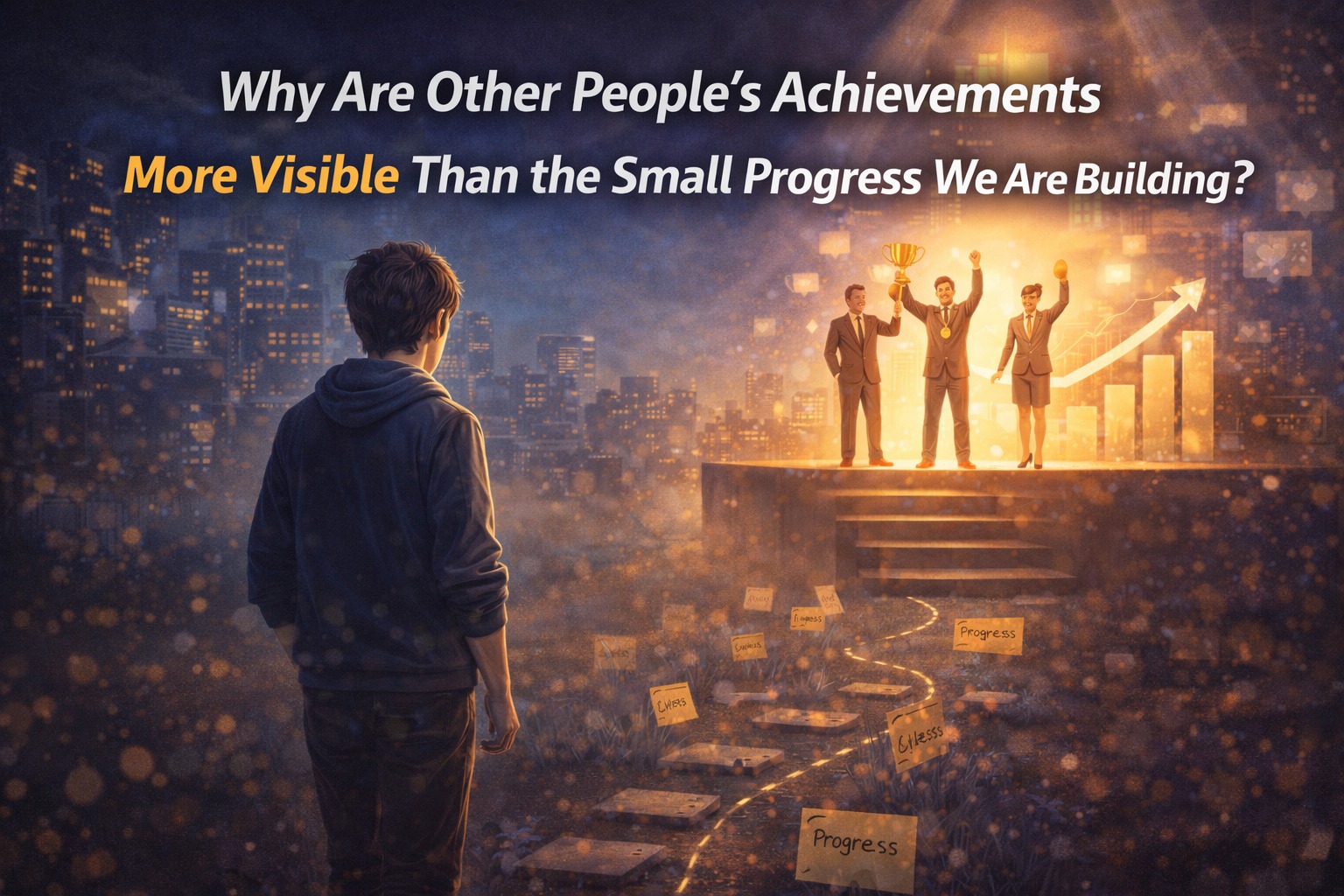
In today’s highly transparent world, other people’s achievements often appear more prominent than our own personal development. Social media, work environments, and everyday conversations frequently highlight major results, while the long processes behind them remain unseen. This condition makes many people feel that the progress they are building is slow, small, or even insignificant.
THE BRAIN IS MORE SENSITIVE TO RESULTS THAN TO PROCESS
Naturally, humans are more responsive to concrete and instant outcomes. Final results such as degrees, job titles, or financial achievements are clear and easily recognizable. In contrast, gradual and ongoing processes often go unnoticed—even by ourselves.
This is why small progress rarely feels significant, even though it forms the essential foundation for major change.
THE CULTURE OF SHOWCASING RESULTS IN THE DIGITAL ERA
Social media reinforces the illusion that major achievements are common and quickly attained. Many people share only the best moments of their lives, without revealing the failures, doubts, or long processes behind the scenes.
As a result, standards of success become biased. The small progress we are building feels less impressive compared to the selectively displayed achievements of others.
SMALL PROGRESS MAY BE INVISIBLE, BUT IT IS REAL
Personal growth often occurs internally: more mature thinking, improved emotional regulation, or healthier habits. Unfortunately, such developments are not always visible from the outside and rarely receive social recognition.
Yet, it is precisely this kind of progress that determines long-term personal growth and sustainability.
THE PSYCHOLOGICAL IMPACT WHEN PROGRESS FEELS INSUFFICIENT
When other people’s achievements become constant benchmarks, feelings of inadequacy and being left behind easily emerge. A person may feel stagnant, even when genuine growth is taking place.
If left unchecked, this condition can reduce motivation, undermine self-confidence, and make what should be a meaningful process feel exhausting.
LEARNING TO VALUE YOUR OWN JOURNEY
To prevent small progress from being overlooked, it is important to shift perspective. Some steps that can help include:
- Recognizing that everyone has a different timeline
- Recording and appreciating small achievements
- Reducing excessive self-comparison
- Evaluating growth based on your past self
Through this approach, small progress no longer feels trivial but becomes an essential part of the journey being built.
CONCLUSION
Other people’s achievements are more visible because they are presented as instant and striking results. Meanwhile, the small progress we are building is often quiet and unseen. However, it is through these small steps that real change takes shape. By learning to appreciate our own process and journey, we can find meaning in growth without constantly feeling left behind.
**Keywords:**
About the Author
Gusti Ayu Tita
Author — STEKOM University
An active author focused on academic issues, educational technology, and human resource development in the campus environment.