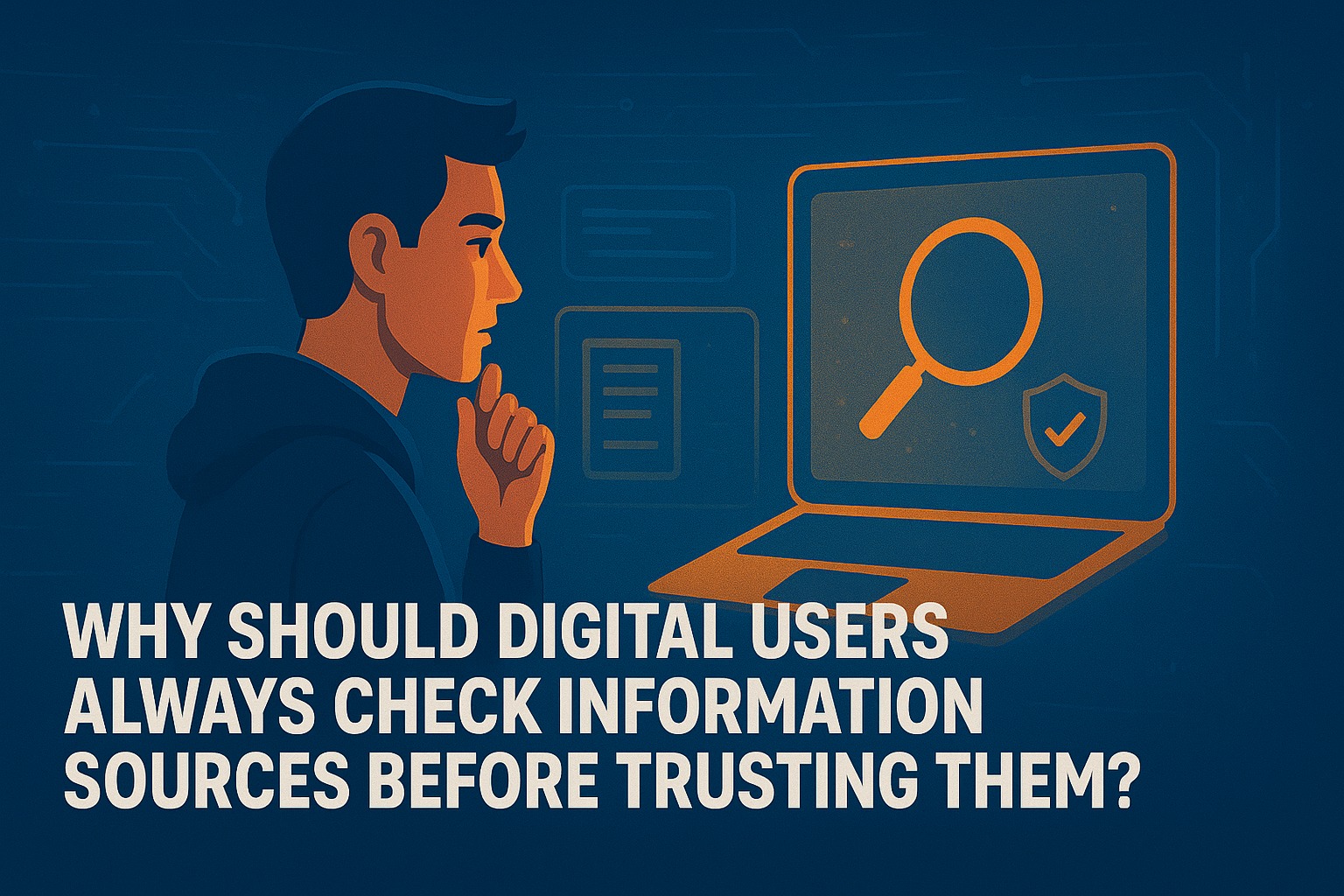
In the midst of the overwhelming flow of information in the digital era, anyone can easily access news, opinions, and even entertainment content within seconds. However, this convenience also comes with risks in the form of false, manipulative, or inaccurate information. Therefore, checking information sources becomes an essential step to ensure digital users do not fall into misunderstandings.
INFORMATION OVERLOAD IN THE DIGITAL ERA
The internet provides an enormous amount of information in various forms. Unfortunately, not all content has the same level of quality or credibility. Some information is created merely for sensationalism, while others are deliberately spread to mislead. This is why the process of verifying sources is increasingly important.
RISKS OF SPREADING FALSE INFORMATION
When someone believes information without checking the source, they risk spreading hoaxes. The impact can be harmful, ranging from public misunderstanding and financial losses to social instability. Digital users must understand that a single click on “share” carries significant consequences for the environment and society.
THE ROLE OF TRUSTED SOURCES IN DECISION-MAKING
Credible information sources help users make better decisions. Whether in matters of health, finance, education, or daily consumption, valid information is a crucial foundation. By examining where content originates—such as who the author is, the reputation of the website, and the supporting data—users can improve the quality of their judgment.
SIMPLE WAYS TO CHECK INFORMATION SOURCES
Digital users can apply small but effective steps, such as:
* Checking whether the website has a good reputation
* Comparing information with other media
* Identifying the sources cited
* Checking the publication date to avoid misinterpretation
* Looking for supporting evidence or data
These habits help protect individuals from unreliable information.
CONCLUSION
Verifying information sources is an important skill every digital user must have. In addition to protecting oneself from false information, this habit also helps maintain a healthy digital space that remains safe, positive, and trustworthy.
About the Author
Gusti Ayu Tita
Author — STEKOM University
An active author focused on academic issues, educational technology, and human resource development in the campus environment.