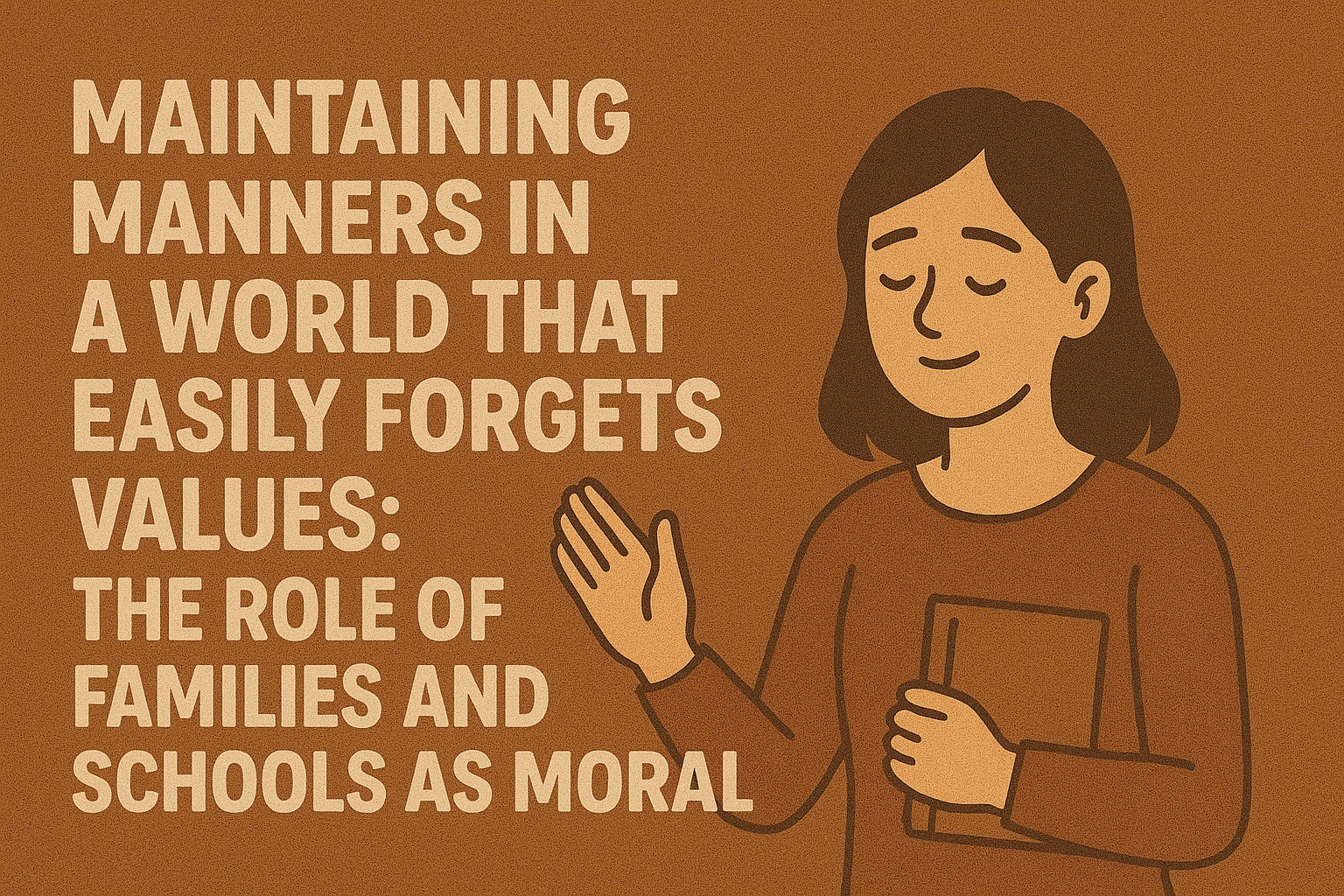
In a world that is rapidly changing, moral values often become the easiest aspect to forget. The digital era, unrestricted access to information, and modern lifestyles push society—especially the younger generation—to focus more on speed and convenience rather than ethics and courtesy. In this situation, families and schools become the two main pillars capable of preserving, instilling, and strengthening manners so they are not lost amid the fast pace of modern life.
Their roles are crucial because manners are not only about behavior, but also about how individuals view themselves, respect others, and maintain harmonious social relationships.
MANNERS THAT ARE SLOWLY FADING IN A HIGH-TECH ERA
Technological advancement has shifted human interactions from face-to-face communication to digital exchanges. This change often makes individuals act more impulsively without considering norms. The politeness once highly valued is now often deemed irrelevant for modern needs.
Children easily imitate impulsive behaviors they see online. Even respect and courtesy are increasingly considered outdated by some teenagers. This phenomenon shows that manners do not disappear instantly—they fade gradually due to a lack of guidance and daily practice within the closest environment.
THE IMPORTANT ROLE OF FAMILY IN DEVELOPING MANNERS
The family environment is the first and most influential learning place for children. Every behavior, speech pattern, and habit they witness at home becomes a real-life example that shapes their character.
Some of the family’s essential roles include:
Providing Real Examples
Children imitate behavior more easily than they understand theory. Parents who demonstrate respectful conduct give direct lessons about manners.
Instilling Values from an Early Age
Teaching polite communication, table manners, and respect for elders builds a strong moral foundation.
Building Warm Communication
Regular dialogue teaches children to appreciate opinions and express themselves courteously.
In families, manners are planted through everyday habits, not merely through occasional advice.
SCHOOL AS A CHARACTER-BUILDING SPACE
Apart from families, schools play a major role in preserving moral values. Students’ interactions with teachers and peers enrich their social experiences and shape their worldview.
Schools cultivate manners through:
Discipline and Rules
School regulations help children understand limits, value time, and take responsibility for their actions.
Character Education Activities
Programs such as moral literacy, social activities, and greeting habits train students to behave respectfully.
Teachers as Role Models
Teachers who show patience, firmness, and empathy become real examples students imitate.
Schools provide a practical environment for applying the manners taught at home.
FAMILY–SCHOOL SYNERGY: THE KEY TO STRONG CHARACTER FORMATION
It is not enough for either families or schools to work alone. To build strong character, both must support one another and reinforce the same moral messages. Consistent values between home and school make it easier for children to understand how manners should be practiced in various situations.
If families teach courtesy but schools do not enforce it, moral messages become blurred. Conversely, if schools discipline students but parents allow inappropriate behavior, children become confused about the correct standards. This synergy is vital for balanced character development.
THE BIGGEST CHALLENGES IN MAINTAINING MANNERS IN MODERN TIMES
Preserving manners in a fast-paced world is not easy. The challenges are complex and increase with technological progress.
Some of the challenges include:
- Unlimited influence of social media, exposing children to negative content and rude behavior.
- Diverse social environments, where differences in values influence children’s behavior.
- Lack of quality family time, reducing opportunities for parents to give examples and moral guidance.
Despite these challenges, solutions exist. Families and schools can collaborate to provide supervision, guidance, and consistent habit-building.
Maintaining manners is not only about restricting behavior but also explaining the moral reasons behind each rule. Children must understand why they should respect others, why politeness matters, and how manners sustain social harmony.
A generation capable of combining technological advancement with refined character will become strong, wise, and able to bring positive change to society.
CONCLUSION
Preserving manners in a world that easily forgets values requires collective effort from families and schools. They are moral guardians that plant character, encourage daily practice, and provide direct role models for the younger generation. Though modern challenges continue to grow, strong synergy ensures that manners remain alive, relevant, and practiced in everyday life. Ultimately, manners are not mere complements—they are the foundation that upholds human dignity and enriches social relationships.
About the Author
Gusti Ayu Tita
Author — STEKOM University
An active author focused on academic issues, educational technology, and human resource development in the campus environment.