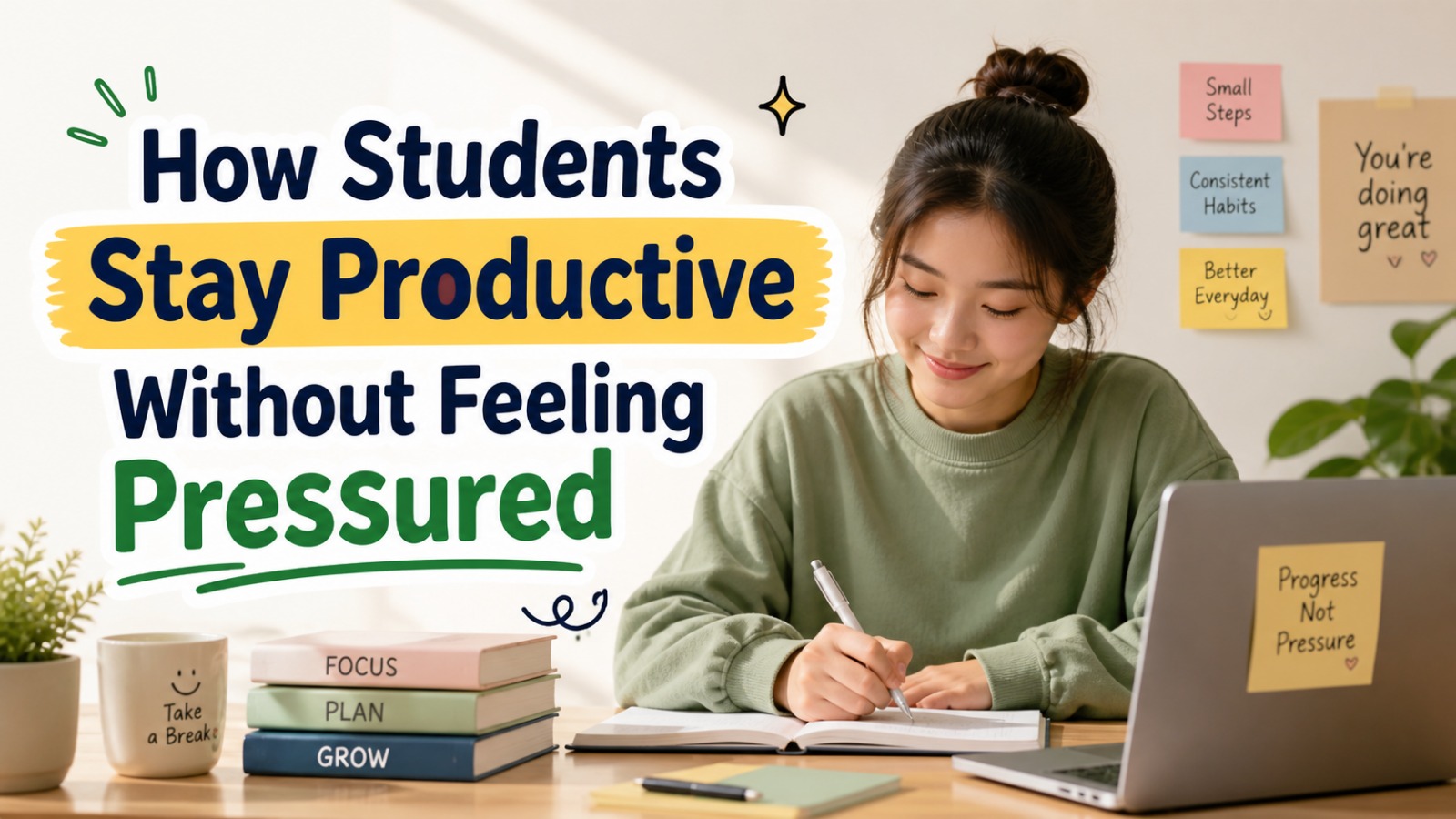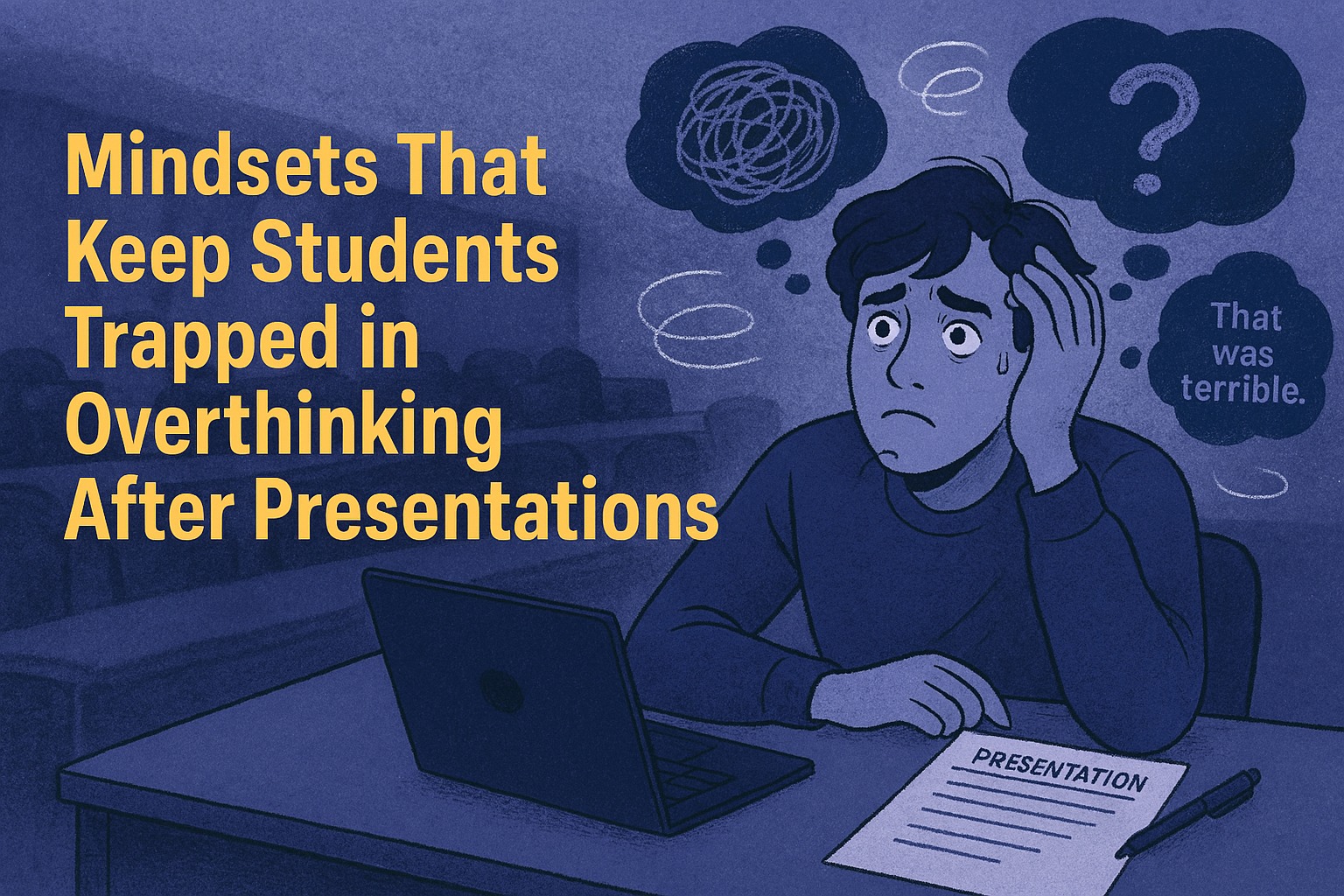
Overthinking after a presentation is a silent struggle shared by many students. Even after stepping off the stage or finishing a Zoom session, the mind continues to replay every word, gesture, and reaction. This constant self-evaluation can lead to anxiety, reduced confidence, and a feeling of never being good enough. But why do students fall into this pattern so easily? It often starts with certain mindsets that keep them trapped in the cycle of overthinking.
FEAR OF JUDGMENT
Many students assume that every peer, professor, or audience member is scrutinizing them closely. This fear of judgment creates a hyperawareness of small mistakes, making them feel exposed long after the presentation is over. When students view every reaction as a reflection of their abilities, overthinking becomes almost automatic.
PERFECTIONISM
The desire to deliver a flawless performance drives students to focus excessively on what could have been done better. Even a minor slip in pronunciation or a brief pause can become a magnified problem in their minds. Perfectionism doesn’t allow space for self-compassion, leaving students stuck in constant mental replay.
COMPARISON WITH OTHERS
Students often compare themselves to peers who seem more confident, articulate, or engaging. This comparison can intensify overthinking, as they measure their performance against an unrealistic standard. Instead of acknowledging their own strengths, they dwell on perceived shortcomings.
FIXATION ON PAST MISTAKES
Replaying past presentations in detail is a hallmark of overthinking. Students may obsess over a single mispronounced word or awkward gesture, forgetting that audiences rarely remember these moments. This fixation prevents them from moving forward and learning from experience in a constructive way.
LACK OF REFLECTIVE STRATEGIES
Many students don’t have tools or strategies to process their presentation experience effectively. Without reflection techniques such as journaling, feedback sessions, or mindfulness exercises, overthinking takes over as the default response. Developing healthy coping strategies can break the cycle and reduce stress.
In conclusion, overthinking after presentations is driven by fear of judgment, perfectionism, comparison, fixation on mistakes, and lack of reflective strategies. Recognizing these mindsets is the first step toward mental clarity and self-compassion. By adopting a growth-oriented approach and practicing reflection, students can move past overthinking and focus on continuous improvement rather than imagined failure.
About the Author
Gusti Ayu Tita P
Author — STEKOM University
An active author focused on academic issues, educational technology, and human resource development in the campus environment.