
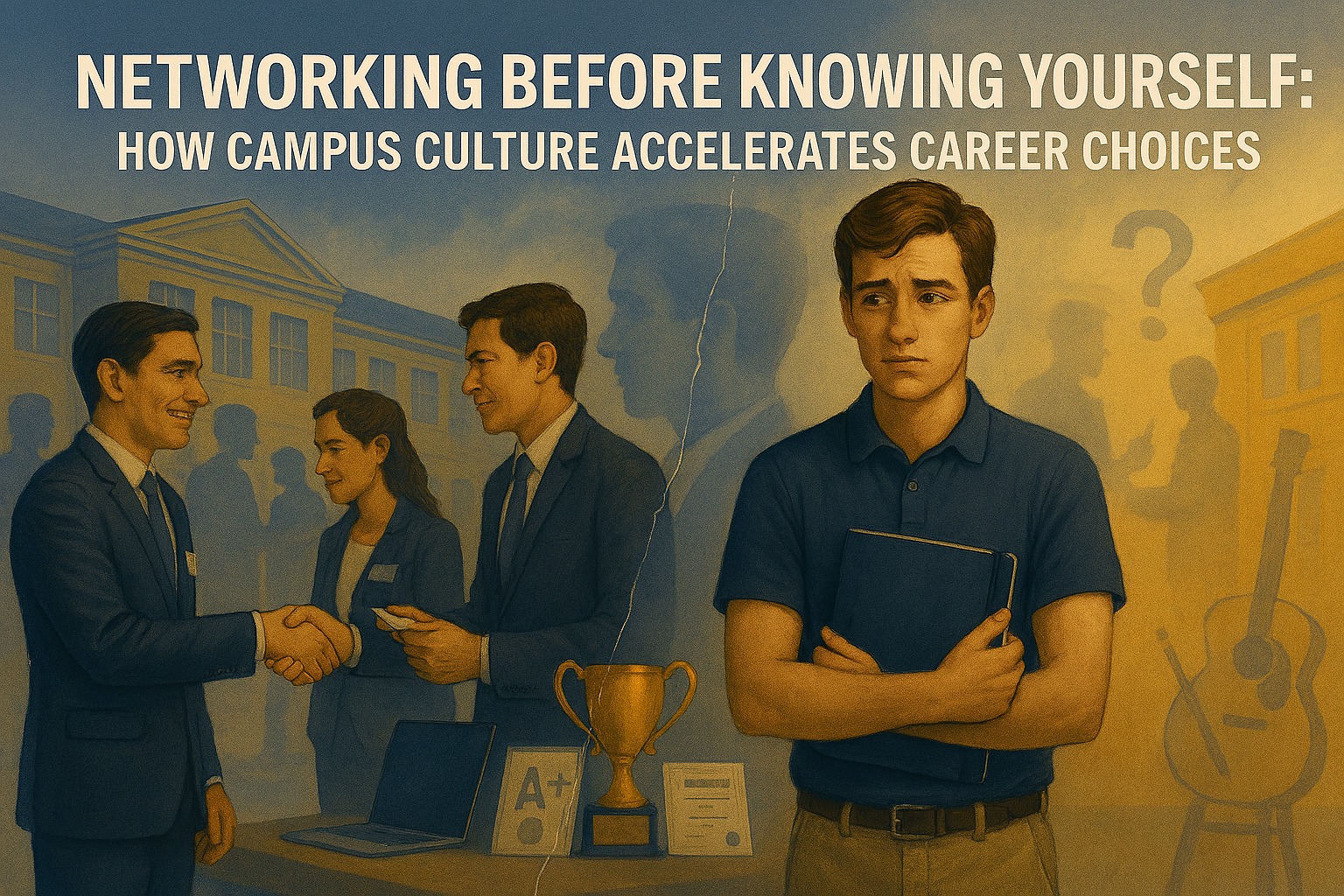
In today’s competitive academic environment, networking has become almost synonymous with success. From the first semester, students are encouraged to attend seminars, connect with alumni, join organizations, and build professional profiles. While these activities offer undeniable benefits, a growing concern is emerging: many students are networking before truly knowing themselves.
Campus culture often accelerates career choices by prioritizing visibility, connections, and early professional positioning. As a result, students may commit to career paths shaped more by opportunity and social influence than by self-awareness. This article explores how campus culture drives early networking, how it impacts career decisions, and why self-discovery remains essential for long-term professional fulfillment.
THE RISE OF NETWORKING CULTURE ON CAMPUS
Universities increasingly promote networking as a critical skill. Career fairs, guest lectures, internship programs, and student organizations are designed to connect students with industry professionals. Social media platforms and professional networking sites further amplify the importance of building a personal brand early.
In many campuses, students who actively expand their networks are perceived as proactive and career-ready. The message is clear: connections open doors. While this is true, the pressure to network can lead students to focus on external relationships before developing internal clarity about their interests, strengths, and values.
HOW CAMPUS CULTURE ACCELERATES CAREER DECISIONS
Campus culture often rewards speed. Securing internships early, choosing a specialization quickly, and mapping out a clear career trajectory are seen as signs of ambition. Students who appear decisive are frequently admired.
However, this acceleration can limit exploration. When surrounded by peers who already seem certain about their future, students may feel compelled to choose a path prematurely. Networking events can unintentionally reinforce this urgency. Conversations with professionals often highlight specific industries and success stories, subtly guiding students toward trending or prestigious careers.
Instead of asking What truly fits me?, students may begin asking Which field has the strongest connections? This shift in focus can significantly influence career decisions.
THE RISK OF EXTERNAL VALIDATION
One of the hidden consequences of early networking is the pursuit of external validation. Praise for landing competitive internships or joining high-profile organizations can shape self-worth. Over time, professional identity may become tied to how others perceive one’s achievements.
When career choices are driven mainly by network opportunities or social approval, students risk building paths that lack personal alignment. While they may achieve measurable success, they might later experience dissatisfaction or identity confusion in their professional lives.
Networking without self-knowledge can lead to impressive resumes but unclear purpose.
WHY SELF-DISCOVERY SHOULD COME FIRST
Self-awareness forms the foundation of sustainable career development. Understanding personal interests, values, work preferences, and long-term goals helps students evaluate opportunities more critically. Networking then becomes a strategic tool rather than a reactive process.
Instead of connecting randomly, self-aware students seek mentors and communities aligned with their authentic aspirations. They ask deeper questions, pursue meaningful experiences, and make career decisions that reflect both competence and conviction.
Campus culture does not have to be a source of pressure. When balanced with reflection, it can provide rich exposure without forcing premature commitment.
FINDING BALANCE BETWEEN NETWORKING AND SELF-KNOWLEDGE
The solution is not to avoid networking but to approach it thoughtfully. Students can benefit from building connections while still allowing room for exploration. Taking time for internships in diverse fields, engaging in reflective practices, and seeking guidance from academic advisors can support clearer decision-making.
Universities also play a role by encouraging career exploration alongside professional preparation. Workshops on self-assessment, personal values, and career mapping can help students align networking efforts with genuine interests.
Ultimately, networking is most powerful when rooted in self-understanding. Career choices shaped by both meaningful connections and personal clarity are more likely to result in long-term satisfaction and resilience.
Campus culture may accelerate decisions, but students still have the agency to pause, reflect, and choose paths that resonate deeply. By knowing themselves first, they can transform networking from a race into a purposeful journey.
About the Author
Gusti Ayu Tita
Author — STEKOM University
An active author focused on academic issues, educational technology, and human resource development in the campus environment.



