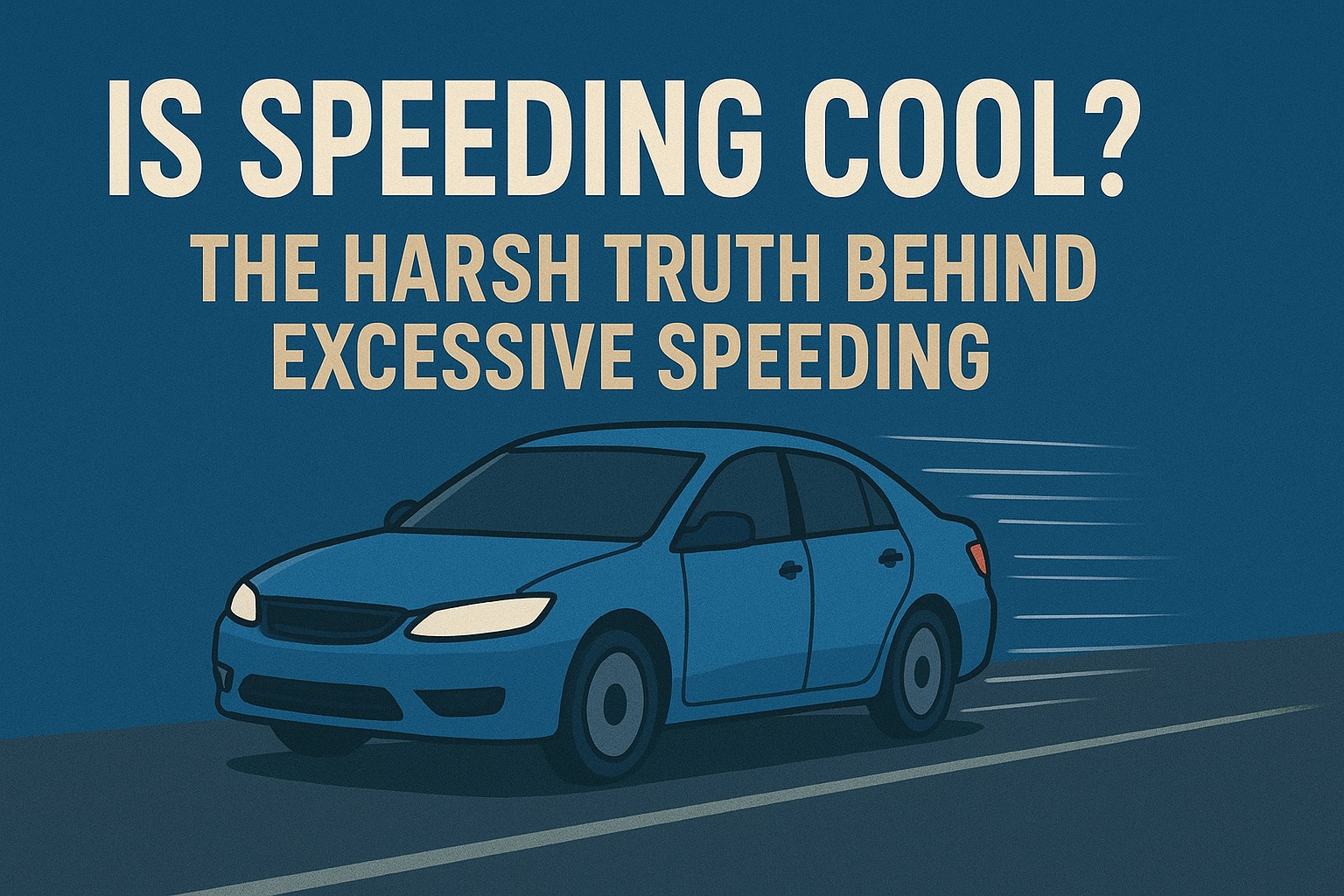
On the road, speed is often seen as a symbol of bravery, confidence, and even prestige. Many people feel more “cool” when they push their vehicles beyond reasonable limits, as if speed itself proves their ability to dominate the road. Yet behind the adrenaline rush lie serious risks that are often ignored. This article explores the lesser-known side of speeding habits, from safety concerns to the social consequences that quietly follow.
The Myth of “Speeding Is Cool” Among Drivers
The idea that speeding is cool does not appear out of nowhere. Popular culture, social media content, and peer environments frequently portray speed as something to be proud of. Overtaking aggressively, loud engine noises, and a rising speedometer needle are often seen as signs of courage.
In reality, this perception is misleading. True courage on the road is not about how fast someone drives, but how wisely they protect their own safety and the safety of others. Changing this mindset is a crucial first step toward reducing the risk of accidents.
The Harsh Facts Behind Excessive Speed
Excessive speed is not just a matter of breaking traffic rules; it is directly related to the limits of human reaction and vehicle performance. The faster a vehicle moves, the less time a driver has to respond to danger.
Some commonly overlooked facts include:
* Braking distances become much longer, making sudden collisions harder to avoid.
* Vehicle control decreases, especially on slippery or damaged roads.
* The risk of fatal injuries increases significantly, as impacts at high speeds are far more severe.
These facts show that speeding is not merely a driving style, but a high-risk decision.
The Impact of Speeding on Safety and Psychology
Driving at excessive speeds affects not only physical safety but also the driver’s psychological state. High speed increases adrenaline levels and often creates a false sense of confidence. This illusion of safety can be dangerous, as it reduces alertness and caution.
Other road users are also psychologically affected. They may feel threatened, shocked, or panicked, which can trigger chain-reaction accidents. Since roads are shared spaces, one reckless decision can endanger many lives.
Social and Legal Consequences Often Overlooked
Speeding does not only lead to accidents; it also carries serious social and legal consequences. When accidents occur, the impact extends to victims’ families, medical expenses, and long-term trauma.
From a legal perspective, speeding violations can result in:
* Traffic fines and penalties
* Suspension or revocation of a driver’s license
* Heavier legal consequences if lives are lost
Unfortunately, these outcomes are often realized only when it is already too late.
Smart Driving: A Much “Cooler” Alternative
If speeding is not the answer, then smart and responsible driving is the truly cool choice. Respecting traffic rules, adjusting speed to road conditions, and prioritizing safety reflect maturity behind the wheel.
Driving safely also shows care for oneself and others. Over time, this attitude can help shape a more orderly and humane road culture.
Conclusion
Speeding may look cool to some, but the harsh reality behind excessive speed reveals risks that far outweigh the momentary thrill. From safety threats and psychological effects to social and legal consequences, all serve as reminders that speed is not everything. Driving wisely is the smartest and most responsible choice to create safer roads for everyone.
About the Author
Gusti Ayu Tita
Author — STEKOM University
An active author focused on academic issues, educational technology, and human resource development in the campus environment.