
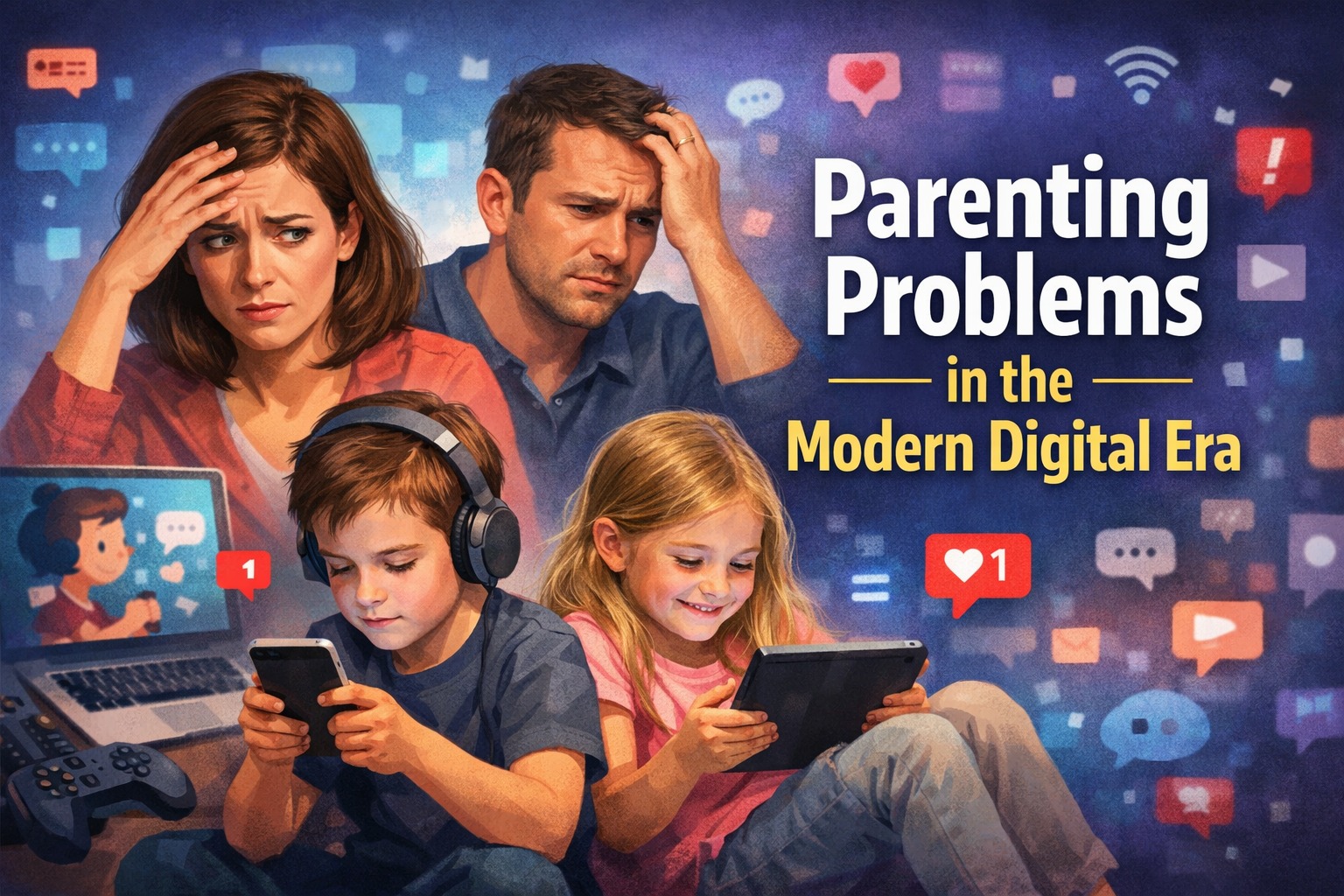
The rapid development of technology has transformed many aspects of human life, including parenting. In today’s digital era, parents are faced with new challenges that did not exist in previous generations. Smartphones, social media, online games, and unlimited internet access have changed how children learn, communicate, and spend their time. While technology offers many benefits, it also creates parenting problems that require attention, understanding, and proper solutions.
Parenting in the modern digital era is no longer limited to providing food, education, and emotional support. Parents must also guide children in using technology wisely. Without proper supervision, digital exposure can negatively affect children’s mental health, behavior, academic performance, and social relationships.
THE IMPACT OF DIGITAL TECHNOLOGY ON CHILDREN
Digital technology has become a part of children’s daily lives. Many children spend hours using smartphones, tablets, or computers for entertainment and communication. Although educational content is widely available online, excessive screen time may lead to several problems.
One major issue is reduced face-to-face interaction. Children who spend too much time online may struggle to develop communication skills and emotional connections with family members or friends. In addition, social media can expose children to cyberbullying, unrealistic beauty standards, and harmful content that affects their confidence and mental well-being.
Another concern is addiction to gadgets and online games. Many parents find it difficult to limit screen time because children become emotionally attached to digital devices. This situation often creates conflicts between parents and children at home.
CHALLENGES FACED BY MODERN PARENTS
Parents today must balance traditional parenting methods with modern digital supervision. One of the biggest challenges is monitoring children’s online activities. Since the internet provides unlimited access to information, children may encounter inappropriate content without parental awareness.
Busy lifestyles also contribute to parenting difficulties. Many parents work long hours and have limited time to communicate with their children. As a result, gadgets are sometimes used as a substitute for parental attention. Over time, this can weaken emotional bonds within the family.
In addition, many parents lack digital literacy. Some adults are unfamiliar with social media platforms, online trends, or gaming communities that children frequently use. This gap makes it harder for parents to understand potential risks and provide effective guidance.
EFFECTIVE STRATEGIES FOR DIGITAL PARENTING
To overcome parenting problems in the digital era, parents need to apply healthy and balanced strategies. Open communication is one of the most important steps. Children should feel comfortable discussing their online experiences, concerns, and problems with their parents.
Setting clear rules about screen time is also essential. Parents can create schedules that balance online activities with studying, physical exercise, family interaction, and sleep. Consistency in applying these rules helps children develop discipline and responsibility.
Parents should also become role models in technology use. Children often imitate adult behavior, so parents should demonstrate healthy digital habits by reducing unnecessary screen time and prioritizing direct communication at home.
Furthermore, digital education is necessary for both parents and children. Learning about online safety, privacy protection, and cyber threats can help families use technology more responsibly and safely.
CONCLUSION
Parenting problems in the modern digital era continue to grow as technology becomes more advanced. Although digital tools provide convenience and educational opportunities, they also create challenges related to communication, mental health, and family relationships. Parents play a crucial role in guiding children to use technology wisely and responsibly.
By maintaining open communication, setting healthy boundaries, and improving digital awareness, families can create a balanced environment where children benefit from technology without becoming dependent on it. Strong parenting remains the key to raising responsible and emotionally healthy children in the digital age.
About the Author
Gusti Ayu Tita
Author — STEKOM University
An active author focused on academic issues, educational technology, and human resource development in the campus environment.



