
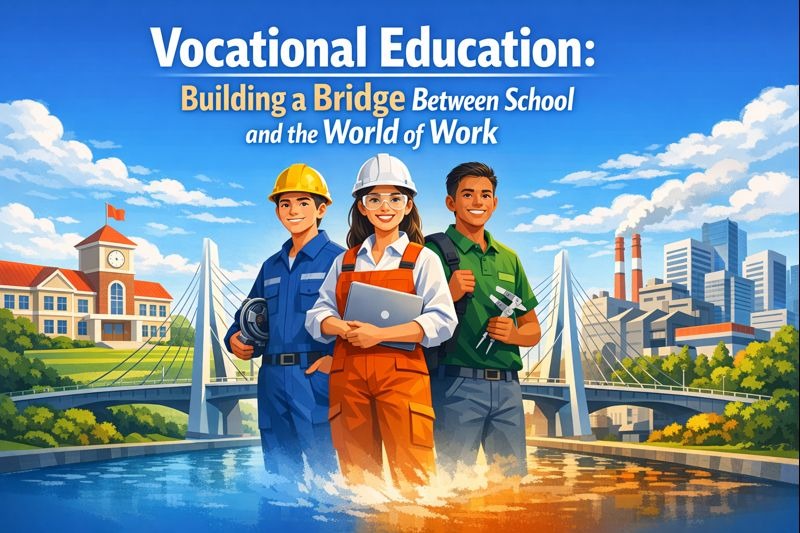
Vocational education is gaining increased attention in Indonesia due to its strategic role in preparing job-ready human resources. Amid growing competition in the labor market, vocational education offers a practical solution that connects classroom theory with hands-on experience. This article discusses comprehensively how vocational education serves as an effective bridge between education and industry needs.
Definition of Vocational Education
Vocational education emphasizes practical skills and specific job competencies. Unlike academic education, which focuses more on theory, vocational education is designed so that graduates possess technical skills directly applicable in the workplace.
In Indonesia, vocational education includes vocational high schools (SMK), polytechnics, academies, and diploma programs in higher education. Curricula are industry-based to remain relevant to labor market developments.
The Role of Vocational Education in the Workplace
Vocational education helps reduce the gap between education and industry. Through practice-based learning, internships, and industry collaboration, students gain real-world experience before entering the workforce.
Graduates are generally more job-ready because they are accustomed to using equipment, technology, and procedures aligned with industry standards. This makes them more adaptive and competitive.
Advantages of Vocational Education
One major advantage is its orientation toward labor market needs. Flexible curricula allow adjustments to technological advances and industry demands.
Vocational education also enables faster employment opportunities. Many institutions partner with businesses and industries, increasing recruitment opportunities after graduation.
Challenges and Development Efforts
Despite its strengths, vocational education faces challenges such as societal perceptions of being a second-choice option, limited practical facilities, and quality disparities among institutions.
Addressing these challenges requires support from government, educational institutions, and industry. Improving instructor quality, updating facilities, and strengthening partnerships are key steps.
The Future of Vocational Education in Indonesia
In the digital and Industry 4.0 era, vocational education plays an increasingly critical role. Demand for skilled workers in technology, manufacturing, and services continues to rise. Adaptive and innovative vocational education will be key to producing globally competitive talent.
With proper management, vocational education will not only bridge school and work but also drive national economic development.
Keywords:
About the Author
Gusti Ayu Tita
Author — STEKOM University
An active author focused on academic issues, educational technology, and human resource development in the campus environment.



