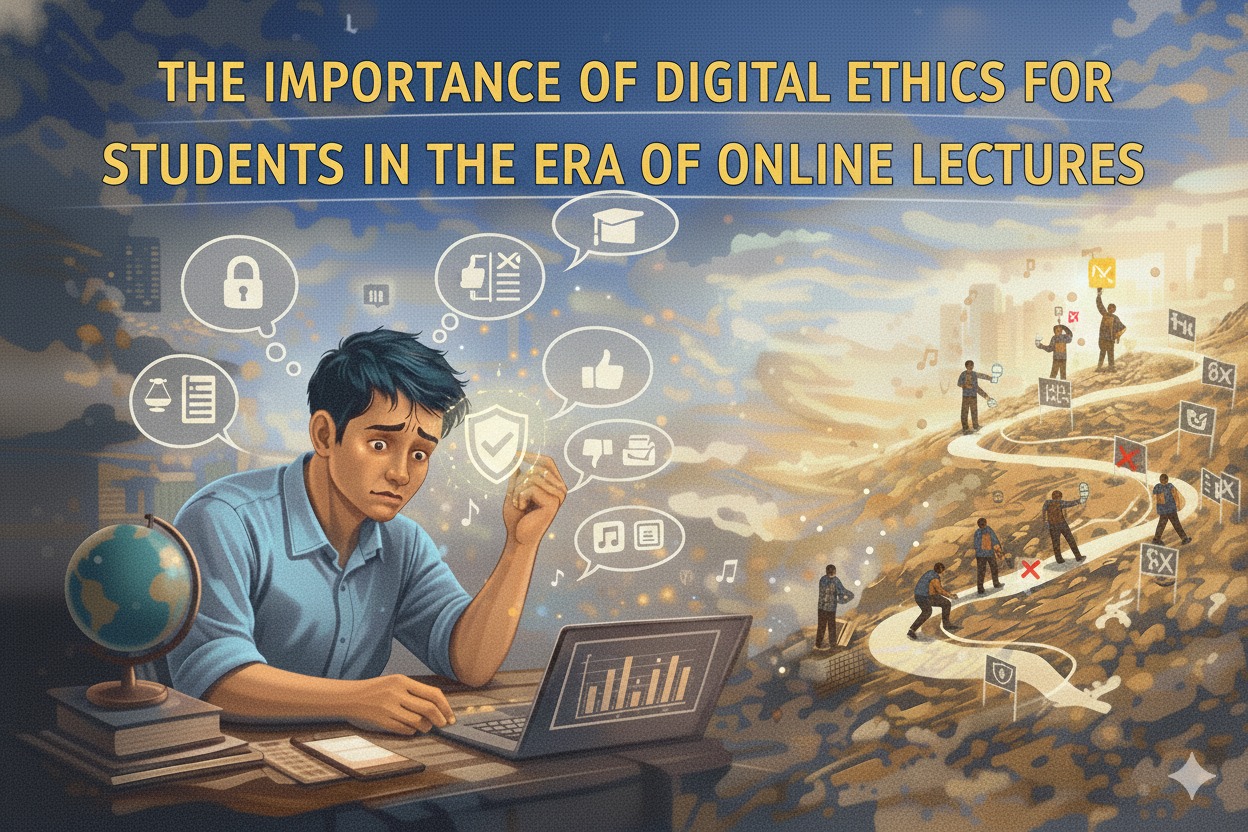
In the era of online learning, students increasingly interact through screens—ranging from Google Classroom, Zoom, and WhatsApp Groups to campus social media platforms.** This intensive digital activity makes digital ethics an essential concept that students must understand. Without proper digital ethics, communication can become chaotic, assignments may be overlooked, and academic reputation can be negatively affected.
This article discusses why digital ethics is a primary necessity for students and how it can be applied in daily academic life.
WHAT IS DIGITAL ETHICS?
Digital ethics refers to the rules, attitudes, and behaviors that should be applied when engaging in online activities. It includes:
* Polite and professional communication
* Responsible use of technology
* Respecting others’ privacy
* Avoiding the spread of hoaxes and plagiarism
* Using the internet for positive purposes
Digital ethics is not merely about restrictions, but about how students can build a positive image in digital spaces.
WHY IS DIGITAL ETHICS IMPORTANT FOR STUDENTS?
a. Building Professionalism
Online learning often serves as a bridge to the professional world. How students write emails, complete digital assignments, or express opinions in group discussions reflects their level of professionalism.
b. Supporting the Learning Process
Digital ethics helps maintain a comfortable online classroom environment. Students who attend classes on time, follow camera rules, and avoid interrupting others contribute to more effective learning.
c. Preventing Academic Issues
Plagiarism, sharing assignments without permission, or using academic materials without proper citation can lead to serious consequences. Understanding digital ethics helps students avoid academic violations.
d. Maintaining a Positive Digital Footprint
All online activities leave a digital trace. Inappropriate posts, negative comments, or harsh language can damage personal reputation. Digital ethics helps students build positive personal branding.
e. Protecting Privacy and Data Security
Students frequently fill out online forms, download materials, and join various platforms. Digital ethics emphasizes the importance of protecting passwords, avoiding suspicious links, and respecting others’ privacy.
FORMS OF DIGITAL ETHICS STUDENTS SHOULD PRACTICE
1. Polite Communication
Use clear and respectful language in Zoom classes, WhatsApp groups, and emails. Avoid excessive abbreviations, all-capital letters, or messages that may be offensive.
2. Respecting Time and the Learning Process
Join classes punctually, mute microphones when not speaking, and follow lecturers’ instructions.
3. Protecting Privacy
Do not share Zoom recordings or classmates’ photos without consent. Privacy is a fundamental right.
4. Anti-Plagiarism Practices
Always cite sources when using theories, images, or data from the internet. Use your own words and fully understand the material before writing.
5. Wise Use of Social Media
Avoid spreading misinformation or posting negative content about lecturers, campuses, or peers.
6. Using the Internet for Positive Purposes
Seek academic references, learn new skills, attend webinars, and use technology to support career development.
NEGATIVE IMPACTS OF IGNORING DIGITAL ETHICS
Without digital ethics, students may face:
* Warnings from lecturers or institutions
* Grade reductions due to plagiarism
* Disrupted learning processes
* Conflicts caused by inappropriate comments
* Data and account security risks
* A negative online reputation
The digital era demands not only technological skills but also maturity in using them.
CONCLUSION
Digital ethics is a crucial foundation for students in the era of online learning. It goes beyond politeness—it shapes character, professionalism, and responsibility in digital spaces. By practicing digital ethics from an early stage, students can become a smart, responsible generation that is well-prepared for the professional world.
About the Author
Gusti Ayu Tita
Author — STEKOM University
An active author focused on academic issues, educational technology, and human resource development in the campus environment.