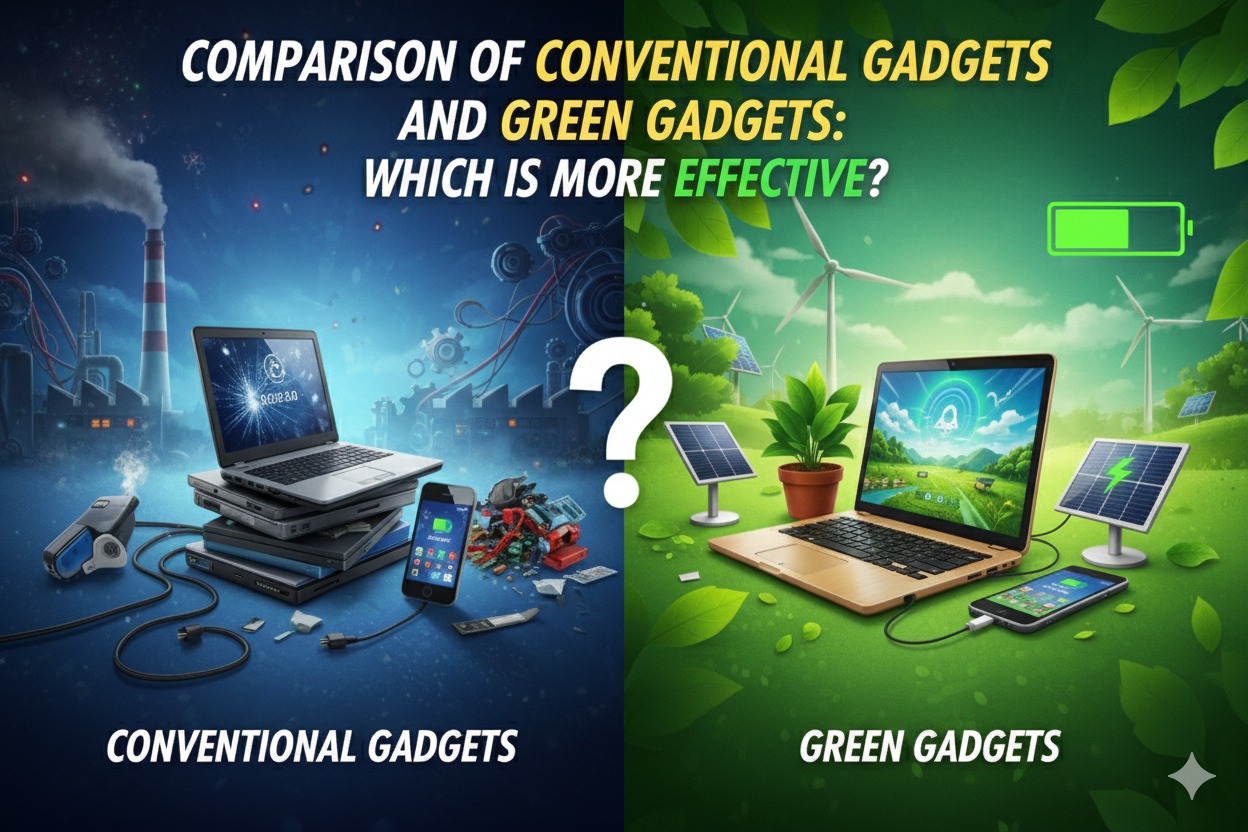
The rapid development of digital technology has brought significant changes to the way gadgets are used. Smartphones, smartwatches, laptops, and wearable devices have become primary necessities in modern society. However, alongside the growing awareness of environmental issues, a new trend has emerged: green gadgets, or eco-friendly devices. Their presence raises an important question: which is actually more effective—conventional gadgets or green gadgets?
UNDERSTANDING CONVENTIONAL GADGETS AND GREEN GADGETS
Conventional gadgets are electronic devices that are mass-produced using standard industrial materials. Their production generally focuses on performance, features, and design, without prioritizing environmental concerns.
In contrast, green gadgets are developed with sustainability in mind. They are typically made from recyclable materials, designed to be energy-efficient, and produced with a lower carbon footprint. Some even utilize alternative energy sources such as solar power.
Green gadgets have emerged as a response to the growing problem of electronic waste (e-waste), which has become a global environmental issue.
COMPARATIVE ASPECTS BETWEEN THE TWO TYPES OF GADGETS
1. Materials and Production Processes
Conventional gadgets are usually made from plastic and non-recyclable metals that decompose slowly. Their production processes generate significant industrial waste, including chemical byproducts and air pollution. In contrast, green gadgets use recycled materials, bioplastics, or organic materials that are more environmentally friendly. Manufacturers of green gadgets also tend to adopt production processes with lower carbon emissions to help reduce global warming impacts.
2. Energy Consumption
Most conventional gadgets do not prioritize energy efficiency. Many devices require frequent charging and consume high levels of electricity during daily use. On the other hand, green gadgets are typically equipped with advanced power-saving technologies. Some even harness alternative energy sources such as solar or kinetic energy. This helps reduce household electricity consumption while lowering the user’s carbon footprint.
3. Usage Efficiency
In terms of performance, conventional gadgets generally offer higher specifications, more comprehensive features, and broader compatibility with applications. Green gadgets, although improving each year, may sometimes lag behind in certain technical specifications because their primary focus is minimizing environmental impact. Nevertheless, advances in material technology and device optimization have made green gadgets increasingly competitive.
4. Durability and Repairability
Conventional gadgets often have good durability, but many are not designed for modular repair. When a single component fails, users tend to replace the entire device, which worsens the e-waste problem. In contrast, green gadgets often adopt modular designs that make repairs easier. Components can be replaced without purchasing a new device, extending product lifespan and reducing waste.
5. Market Price
Conventional gadgets are available across a wide price range, from entry-level to premium models, and are widely accessible in both physical stores and online marketplaces. Green gadgets tend to be more expensive due to the use of specialized materials, eco-friendly production processes, and extensive research into sustainable technology. Limited product availability also contributes to higher prices in the consumer market.
ADVANTAGES OF USING GREEN GADGETS
Green gadgets offer positive impacts such as reducing electronic waste, supporting environmental conservation, and lowering energy consumption. These devices are also suitable for long-term use, especially because modular designs make component replacement easier. Moreover, green gadgets help raise public awareness of global environmental issues.
LIMITATIONS OF GREEN GADGETS
Despite their advantages, green gadgets still face several challenges. Their relatively high prices are a major barrier for consumers. Product choices are also limited, causing many users to remain accustomed to conventional devices. Additionally, the specifications of green gadgets may not always match those of high-end devices released by major manufacturers.
CHALLENGES FOR THE CONVENTIONAL GADGET INDUSTRY
The emergence of green gadgets has pushed major companies to innovate. Some manufacturers have started reducing plastic in packaging, implementing recycling programs, and developing more energy-efficient battery technologies. Market pressure and government policies related to environmental issues are gradually forcing the conventional gadget industry to adapt.
THE FUTURE PROSPECTS OF GREEN GADGETS
Environmental awareness continues to grow, particularly among younger generations. Demand for eco-friendly products is expected to increase as understanding of the impact of e-waste improves. With ongoing innovation and more efficient mass production, green gadgets are predicted to become more affordable and available in a wider range of options.
WHICH IS MORE EFFECTIVE?
The effectiveness of a device depends on user needs. Conventional gadgets are suitable for those who prioritize high performance, affordability, and feature-rich devices. Meanwhile, green gadgets are ideal for users who care about the environment, want to save energy, and seek long-lasting devices. From a sustainability perspective, green gadgets have strong potential to dominate the future market.
CONCLUSION
The comparison between conventional gadgets and green gadgets shows that each has its own value and effectiveness depending on user preferences. Green gadgets offer significant ecological benefits through lower energy consumption, but their price and availability remain challenges.
Conventional gadgets excel in performance and flexibility but fail to address the growing global e-waste problem. With increasing environmental awareness and technological innovation, green gadgets are expected to evolve into a sustainable technological solution for the future.
About the Author
Gusti Ayu Tita
Author — STEKOM University
An active author focused on academic issues, educational technology, and human resource development in the campus environment.