
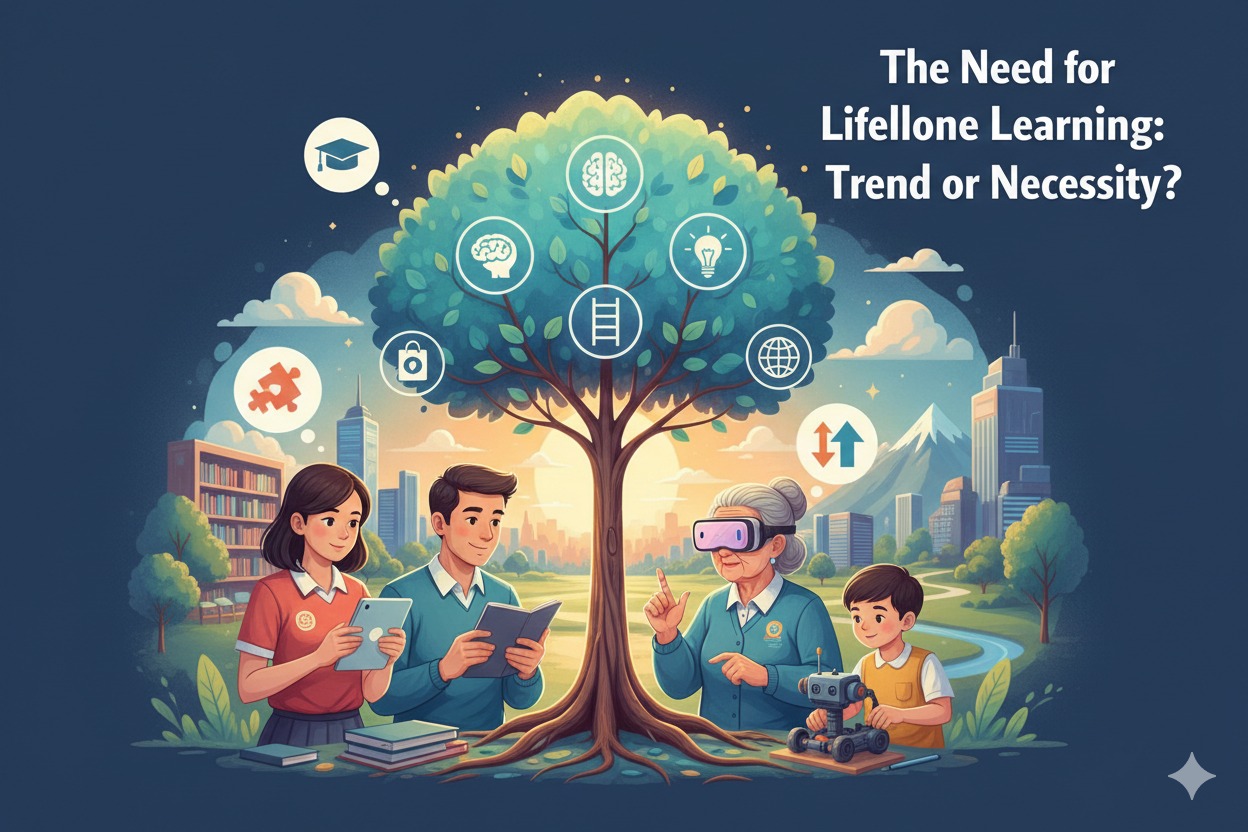
Recently, the term *lifelong learning* has become increasingly common. Many seminars, training programs, and social media platforms encourage us to keep learning even after finishing school or university. This raises an important question: is lifelong learning just a popular trend, or is it truly a necessity? To answer this, let’s take a closer look at what lifelong learning is, why it matters, and how we can practice it in daily life.
What Is Lifelong Learning?
Lifelong learning is the continuous process of acquiring new knowledge, skills, and insights throughout one’s life—not limited to formal education. Learning no longer stops at school; it becomes a lifelong activity that can be done anytime, anywhere, and in various ways.
For example, someone might learn to cook new dishes via YouTube, take online courses on time management, read self-development books, or participate in discussion communities—these are all forms of lifelong learning.
Why Is Lifelong Learning Important?
1. The World Is Constantly Changing
We live in a highly dynamic era. Technology evolves rapidly, labor market demands shift, and life challenges keep changing. To stay relevant, we need to continuously update our knowledge and skills.
2. Future Jobs Require Adaptation
Many stable jobs are now being replaced by automation and artificial intelligence. Lifelong learning helps us remain competitive in the workforce and adapt to emerging professions.
3. Personal Growth
Learning is not just about work. By continuously learning, we can better understand ourselves, broaden our thinking, and become wiser and more open to change.
4. Maintaining Mental Health
Research shows that learning activities help maintain brain health and slow cognitive aging. Even in older age, the brain can continue to grow as long as we keep using it.
Trend or Necessity?
It is true that lifelong learning has become a trend—many online learning platforms are emerging, and people are increasingly attending webinars, reading e-books, or joining learning communities. However, behind this trend lies a real need.
In the digital era, stagnation means falling behind. People who stop learning quickly lose competitiveness—in careers, business, and everyday life. Therefore, lifelong learning is not just a fad; it is essential for survival and growth.
How to Start a Lifelong Learning Culture
Start with Curiosity
Let your curiosity guide you. What do you want to understand more deeply? What topics interest you the most?
Use Easily Accessible Learning Resources
Many learning materials are free or inexpensive: podcasts, educational videos, e-books, online courses, and discussion communities.
Set Small and Realistic Goals
Learning doesn’t have to be massive. Just 15–30 minutes per day reading, watching educational videos, or trying something new is enough.
Track and Evaluate Your Progress
By recording what you learn, you can see your development and stay motivated.
Lifelong learning is not just a temporary trend. It is a real necessity that becomes increasingly important in a rapidly changing world. While learning used to be considered finished after graduation, it now begins when we enter the real world.
Instead of falling behind, it is better to take steps forward. Learning never brings loss; the real loss comes when we stop learning.
About the Author
Gusti Ayu Tita
Author — STEKOM University
An active author focused on academic issues, educational technology, and human resource development in the campus environment.



