
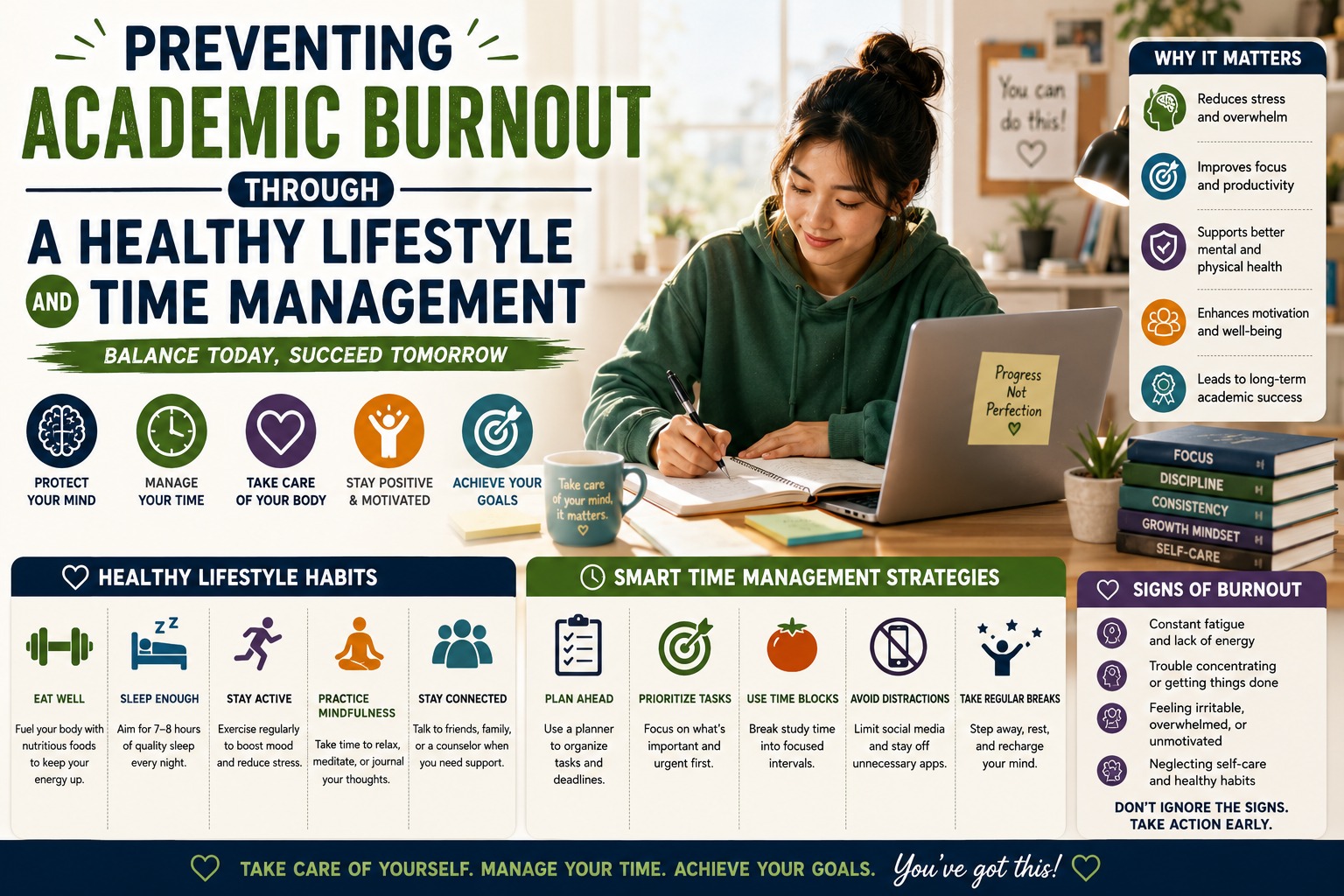
Academic burnout has become a common problem among students in modern educational environments. Continuous assignments, strict deadlines, examinations, and high expectations often create emotional and physical exhaustion. Many students focus heavily on academic achievement without paying attention to their mental and physical well-being. As a result, they may experience stress, fatigue, anxiety, and loss of motivation.
Preventing academic burnout is essential for maintaining both academic performance and overall quality of life. Students who practice healthy lifestyles and effective time management are more likely to stay productive, emotionally balanced, and motivated in their studies. Therefore, understanding how healthy habits and proper scheduling can prevent burnout is important for every student.
UNDERSTANDING ACADEMIC BURNOUT
Academic burnout is a condition of emotional, mental, and physical exhaustion caused by excessive academic stress. Students who experience burnout often feel overwhelmed, unmotivated, and disconnected from their studies. Burnout can reduce concentration, weaken academic performance, and negatively affect mental health.
Several signs indicate academic burnout. Students may feel constantly tired, lose interest in learning, struggle to focus, or become easily frustrated. In some cases, burnout can also cause sleep problems, headaches, and emotional instability.
Academic burnout usually develops gradually. Excessive workloads, lack of rest, poor time management, and unhealthy lifestyles are some of the main causes. If not managed properly, burnout can seriously affect both academic success and personal well-being.
THE IMPORTANCE OF A HEALTHY LIFESTYLE
A healthy lifestyle plays an important role in preventing academic burnout. Physical health and mental health are closely connected, meaning healthy habits can improve emotional stability and learning ability.
MAINTAINING A BALANCED DIET
Nutritious food provides the energy students need to stay focused and productive. Eating balanced meals with sufficient vitamins, protein, and carbohydrates helps maintain concentration and reduces fatigue. Students should avoid excessive caffeine and unhealthy fast food because poor nutrition can increase stress and decrease energy levels.
GETTING ENOUGH SLEEP
Sleep is essential for mental and physical recovery. Students who lack sleep often experience difficulty concentrating, reduced memory performance, and emotional instability. Maintaining consistent sleeping habits helps improve focus, mood, and productivity during academic activities.
EXERCISING REGULARLY
Regular physical activity can reduce stress and improve emotional well-being. Exercise helps release endorphins, which are chemicals that improve mood and reduce anxiety. Activities such as walking, jogging, cycling, or yoga can help students feel more relaxed and energized.
TAKING BREAKS AND RELAXING
Continuous studying without rest can increase mental fatigue. Taking short breaks during study sessions allows the brain to recover and improves concentration. Relaxation activities such as listening to music, meditation, or spending time outdoors can help reduce stress levels.
THE ROLE OF TIME MANAGEMENT IN PREVENTING BURNOUT
Effective time management helps students organize responsibilities without becoming overwhelmed. Poor scheduling often leads to procrastination, last-minute work, and increased stress.
CREATING A STUDY SCHEDULE
Students should create realistic schedules that balance academic responsibilities, rest, and personal activities. Dividing large assignments into smaller tasks makes work feel more manageable and reduces pressure before deadlines.
Prioritizing important tasks also helps students stay organized and avoid unnecessary stress. Using planners or digital calendars can improve productivity and time awareness.
AVOIDING PROCRASTINATION
Procrastination is one of the main causes of academic stress. Delaying assignments often creates panic and emotional pressure near deadlines. Students should develop disciplined study habits and complete tasks gradually to maintain balance and reduce anxiety.
SETTING REALISTIC GOALS
Setting achievable goals helps students stay motivated without feeling overwhelmed. Unrealistic expectations can increase frustration and emotional exhaustion. Students should focus on progress and self-improvement rather than perfection.
THE IMPORTANCE OF SOCIAL SUPPORT
Supportive relationships are important for preventing academic burnout. Friends, family members, teachers, and counselors can provide emotional encouragement during stressful periods.
Talking openly about academic challenges helps students feel understood and less isolated. Students should not hesitate to seek professional help when stress becomes difficult to manage. Counseling services and mental health programs can provide useful coping strategies and emotional guidance.
THE ROLE OF EDUCATIONAL INSTITUTIONS
Schools and universities also play a major role in preventing academic burnout. Educational institutions should create supportive learning environments that prioritize student well-being alongside academic achievement.
Providing counseling services, stress management workshops, and mental health awareness programs can help students cope with academic pressure more effectively. Teachers should also encourage healthy communication and avoid placing excessive pressure on students.
Balanced workloads, flexible learning methods, and positive classroom environments contribute to healthier academic experiences.
CONCLUSION
Academic burnout is a serious issue that can negatively affect student mental health, academic performance, and overall quality of life. Excessive academic pressure, unhealthy lifestyles, and poor time management are major factors that contribute to burnout.
Students can prevent academic burnout by maintaining healthy habits, getting enough rest, exercising regularly, and practicing effective time management. Supportive relationships and positive educational environments also help students manage stress and maintain emotional balance.
By combining healthy lifestyles with proper scheduling, students can achieve academic success while protecting their mental and physical well-being. Preventing burnout is essential for creating more productive, balanced, and fulfilling educational experiences.
About the Author
Gusti Ayu Tita
Author — STEKOM University
An active author focused on academic issues, educational technology, and human resource development in the campus environment.



