
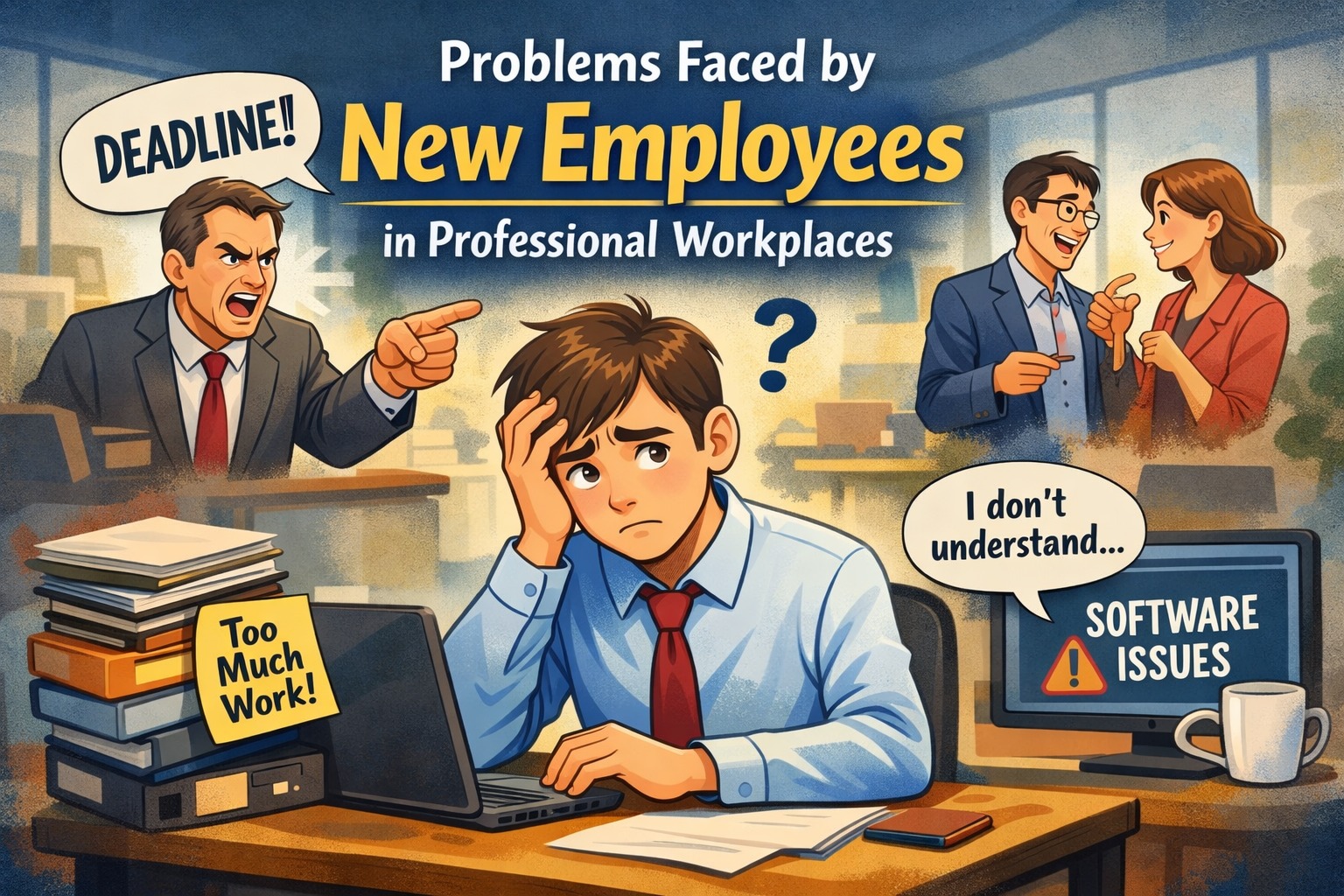
Starting a new job is an exciting milestone for many people. However, entering a professional workplace also comes with various challenges that can affect confidence, productivity, and overall job satisfaction. New employees often need time to adapt to company culture, responsibilities, and communication styles. Understanding these problems can help both employees and companies create a healthier and more productive work environment.
DIFFICULTY ADAPTING TO WORK CULTURE
One of the most common problems faced by new employees is adapting to workplace culture. Every company has its own rules, habits, and expectations. New workers may feel confused about how to behave, communicate, or interact with colleagues.
Some employees struggle to understand office etiquette, teamwork dynamics, or management styles. This adjustment period can create stress and anxiety, especially for people entering the workforce for the first time. Companies that provide orientation programs and mentorship can help employees adapt more quickly.
LACK OF EXPERIENCE AND CONFIDENCE
Many new employees feel insecure because they lack professional experience. Even if they have strong academic backgrounds, practical workplace situations can be very different from classroom learning.
New workers may hesitate to ask questions because they fear making mistakes or appearing unqualified. This lack of confidence can reduce productivity and slow down learning. Supportive supervisors and positive feedback are important to help employees build confidence and improve their performance.
COMMUNICATION CHALLENGES IN THE WORKPLACE
Effective communication is essential in professional environments. However, new employees often face communication barriers when interacting with managers, clients, or coworkers.
Some employees may struggle with formal communication styles, professional email writing, or participating in meetings. Others may feel nervous speaking in front of senior staff members. Poor communication can lead to misunderstandings, missed deadlines, and workplace conflicts.
To overcome this challenge, employees should improve their communication skills through practice, active listening, and professional training opportunities.
WORK PRESSURE AND TIME MANAGEMENT
Professional workplaces often demand high productivity and strict deadlines. New employees may feel overwhelmed when handling multiple tasks at the same time.
Poor time management can lead to stress, fatigue, and reduced work quality. Employees who are not used to fast-paced environments may struggle to prioritize responsibilities effectively. Learning how to organize tasks, manage schedules, and stay focused is essential for long-term success.
Employers can also support workers by providing clear instructions, realistic expectations, and balanced workloads during the adjustment period.
DIFFICULTY BUILDING PROFESSIONAL RELATIONSHIPS
Building positive relationships with coworkers is another challenge for new employees. Some people may feel isolated or uncomfortable in unfamiliar social environments.
Differences in age, background, or communication styles can make workplace interactions difficult. Employees who fail to connect with their teams may experience lower motivation and job satisfaction.
Participating in team activities, showing respect, and maintaining a positive attitude can help employees develop stronger professional relationships over time.
CONCLUSION
New employees face many challenges when entering professional workplaces, including adapting to company culture, managing work pressure, improving communication, and building confidence. Although these difficulties are common, they can be overcome with proper support, continuous learning, and positive workplace environments.
Companies that invest in employee development and mentorship programs will create stronger teams and improve overall productivity. At the same time, new employees should remain open to learning and actively develop their professional skills to achieve career success.
About the Author
Gusti Ayu Tita
Author — STEKOM University
An active author focused on academic issues, educational technology, and human resource development in the campus environment.



